






Royal Arixa Nilambur Teak Dressing Mirror
- Authentic, Premium-Quality Nilambur Wild Teak
- Handcrafted by Skilled Artisans
- Sustainably Sourced and Eco-Friendly
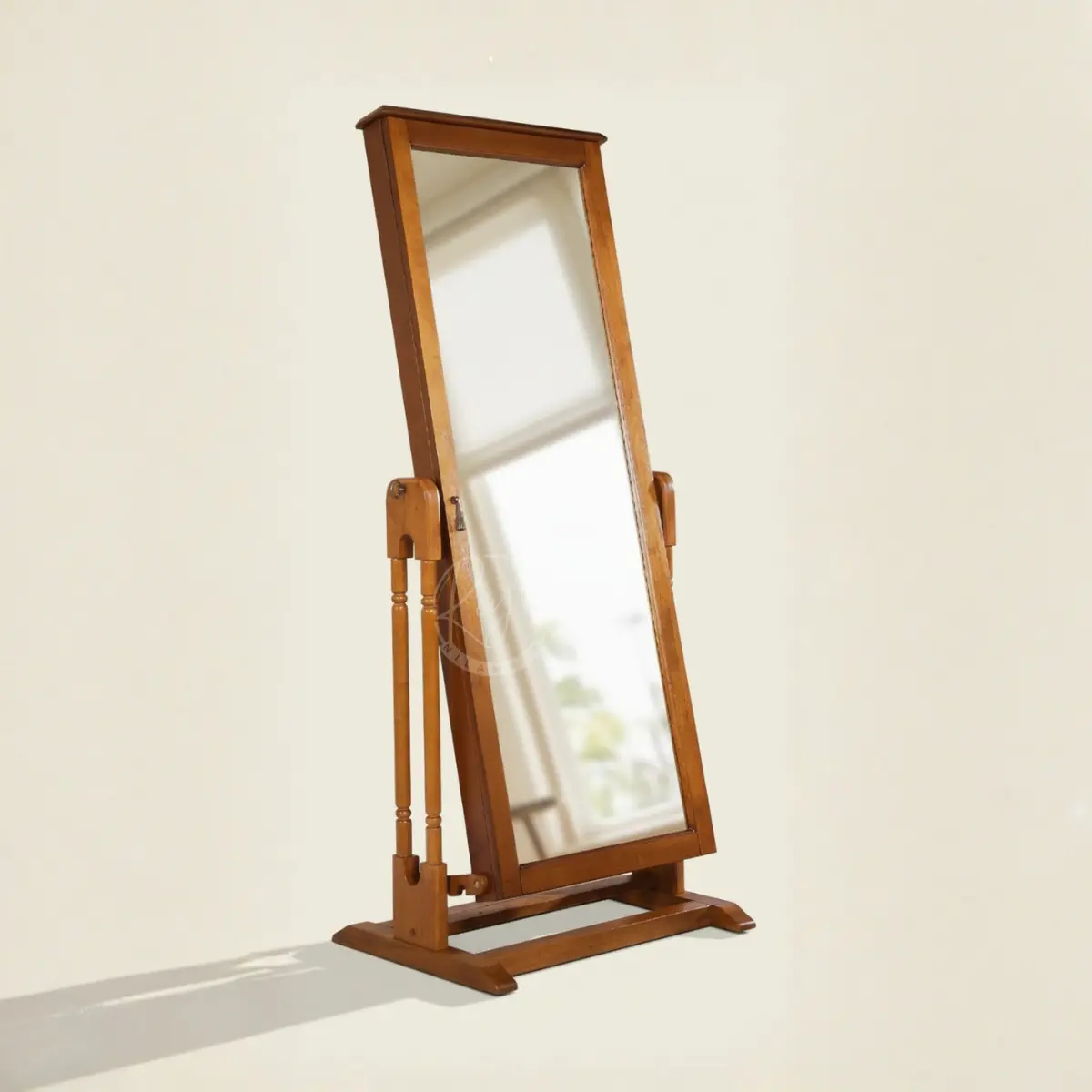
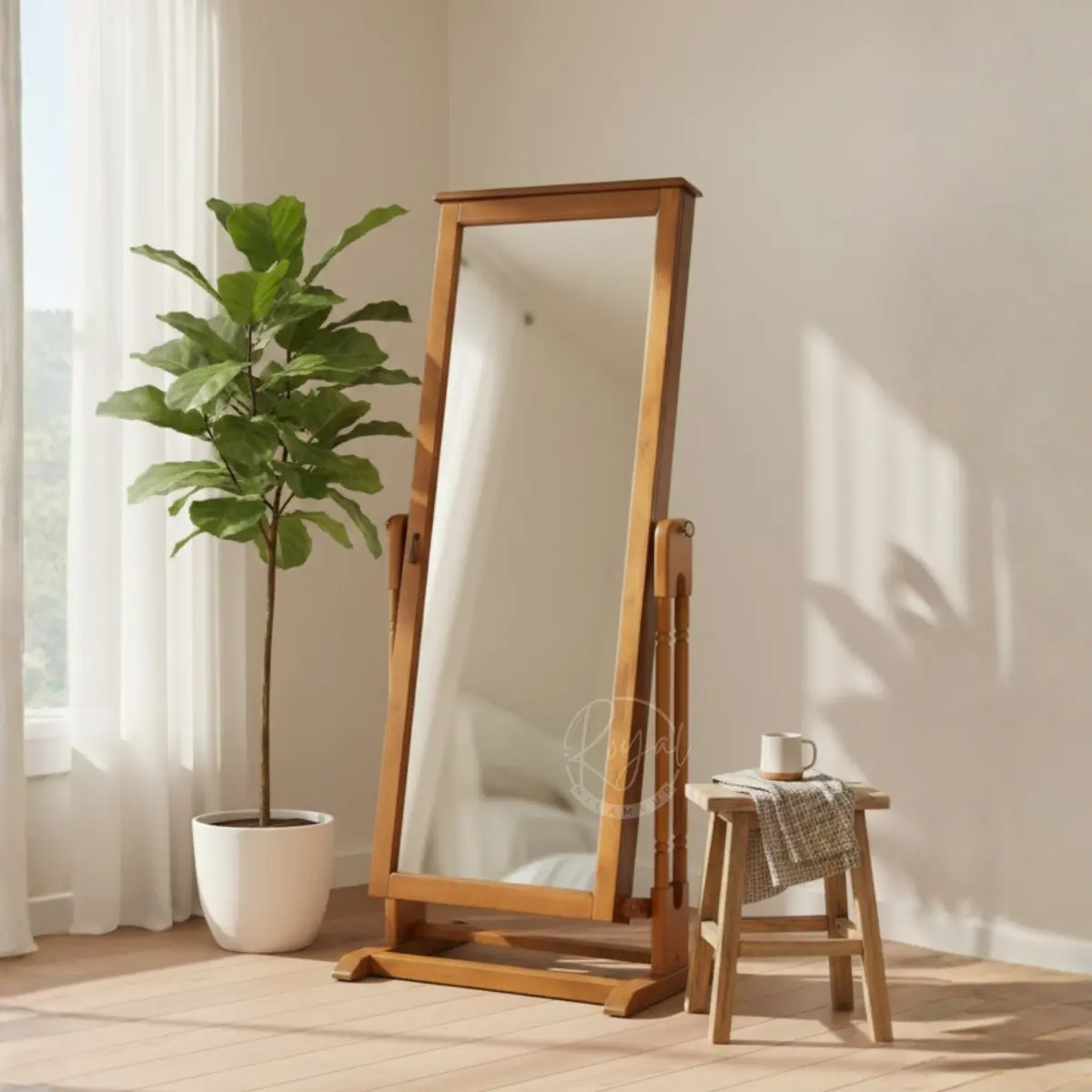
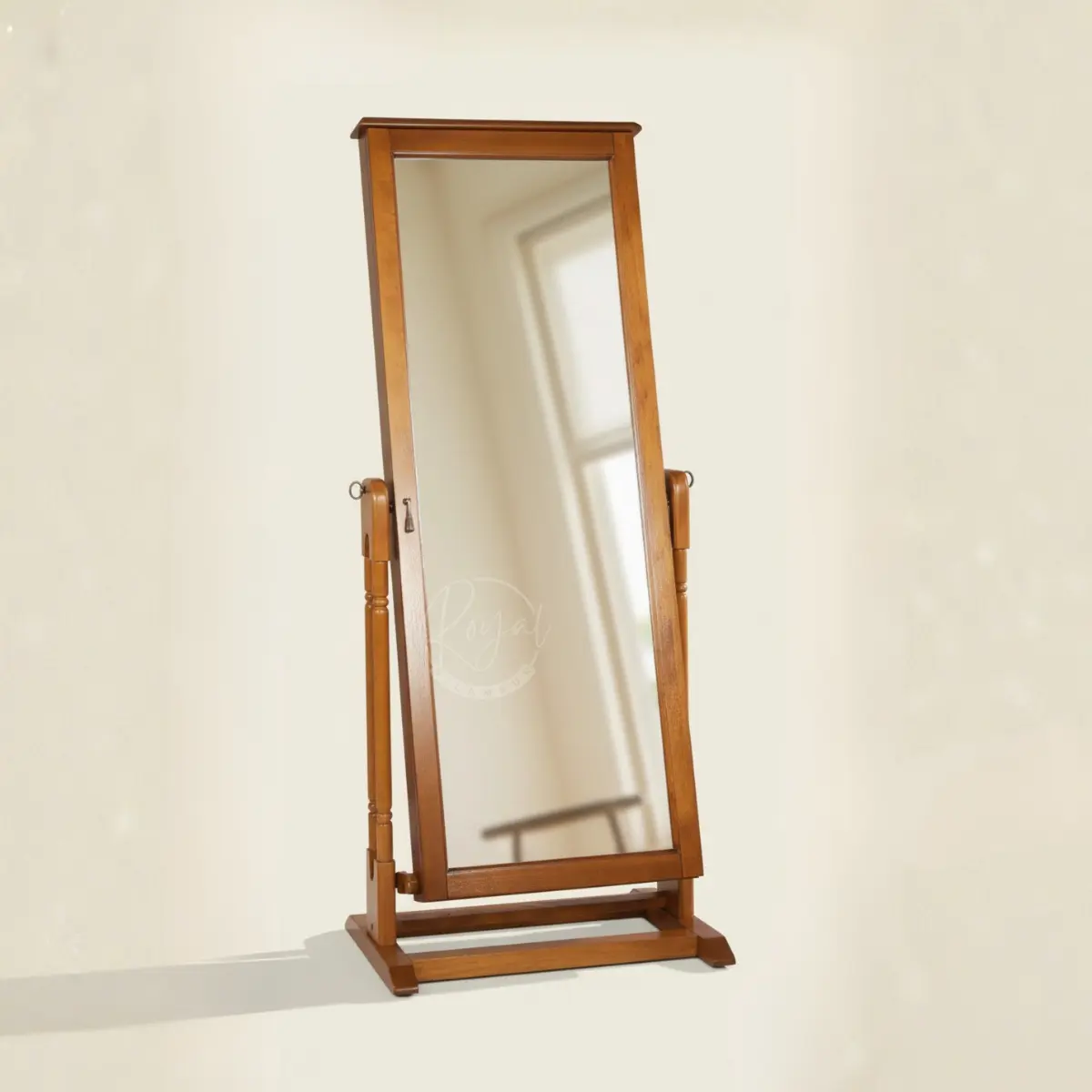
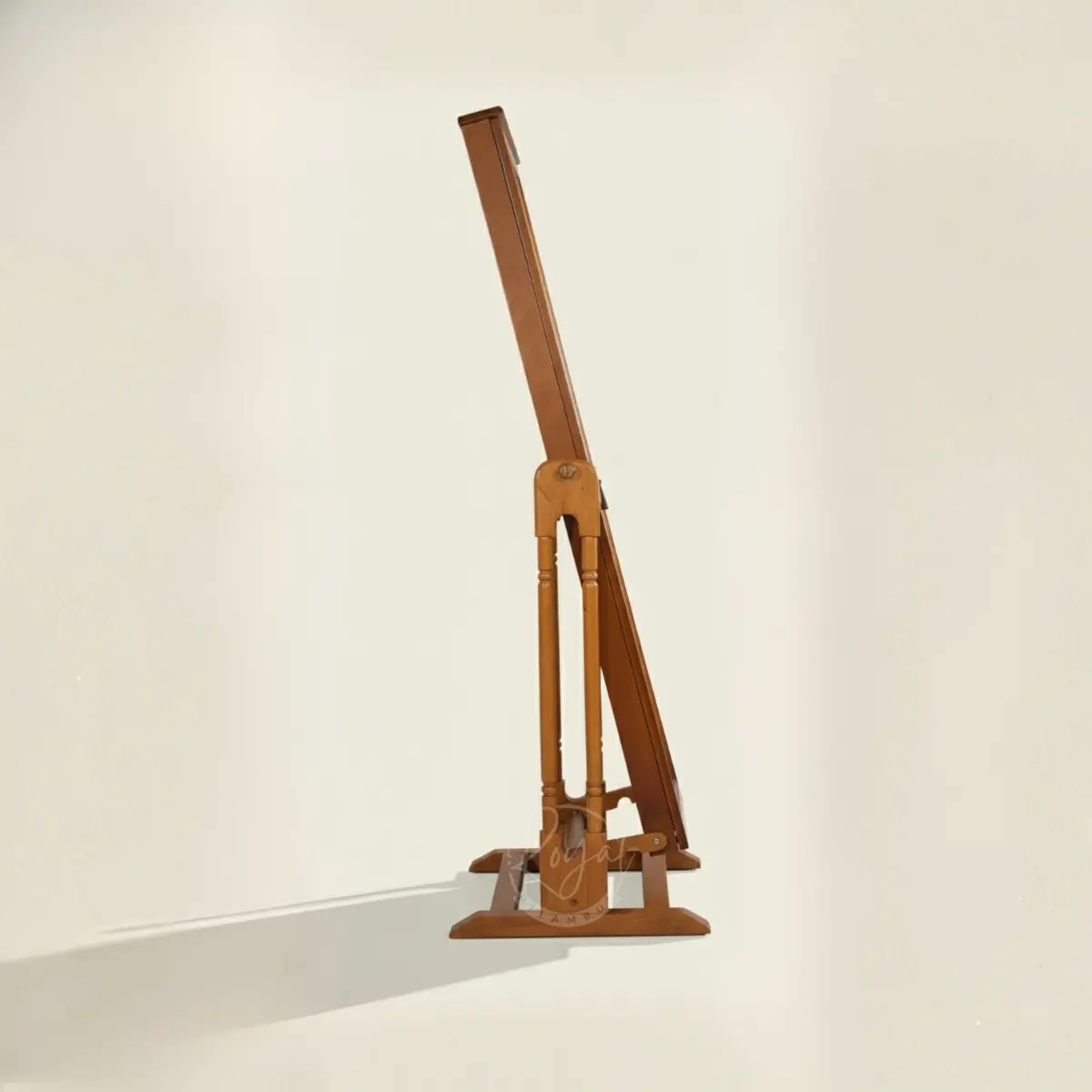
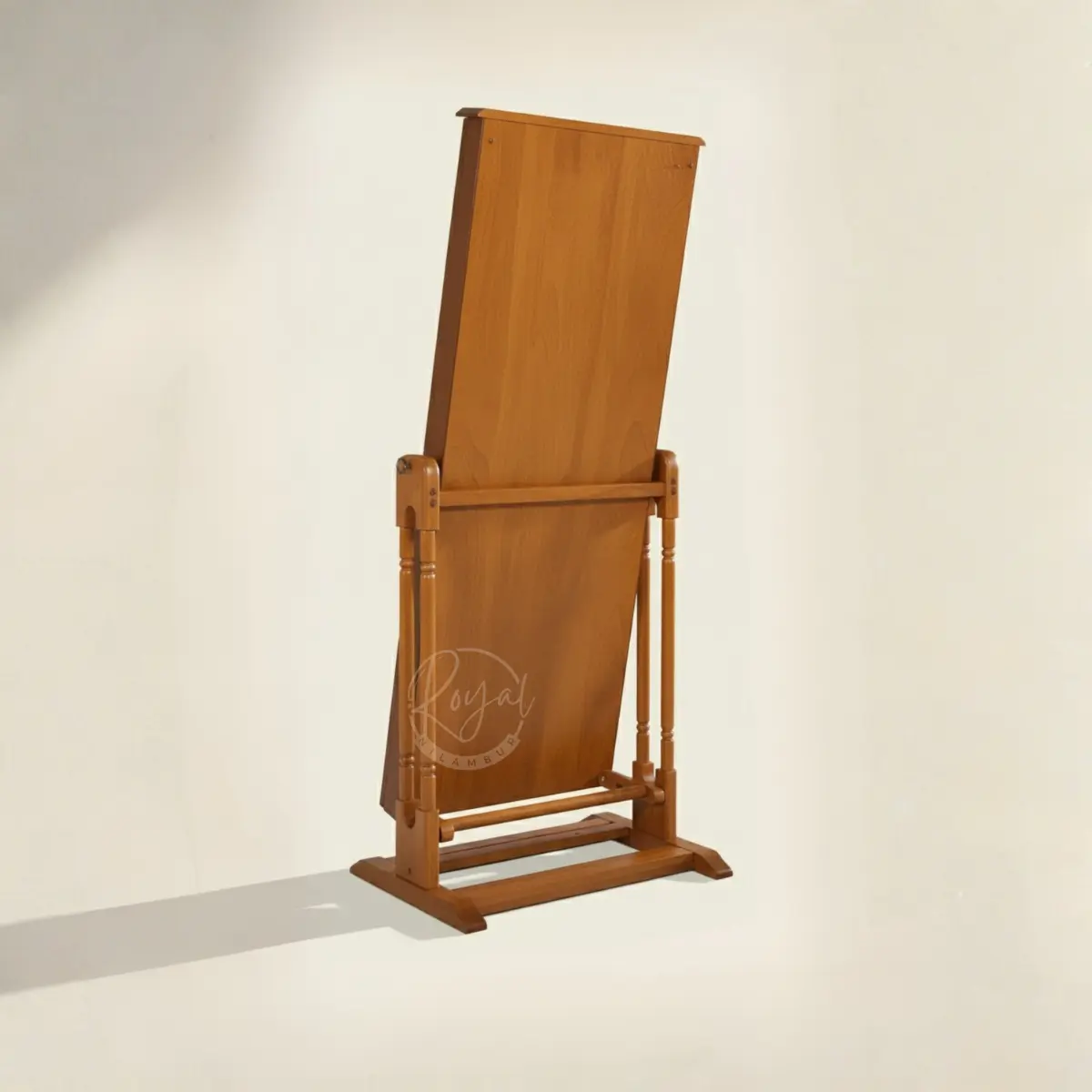
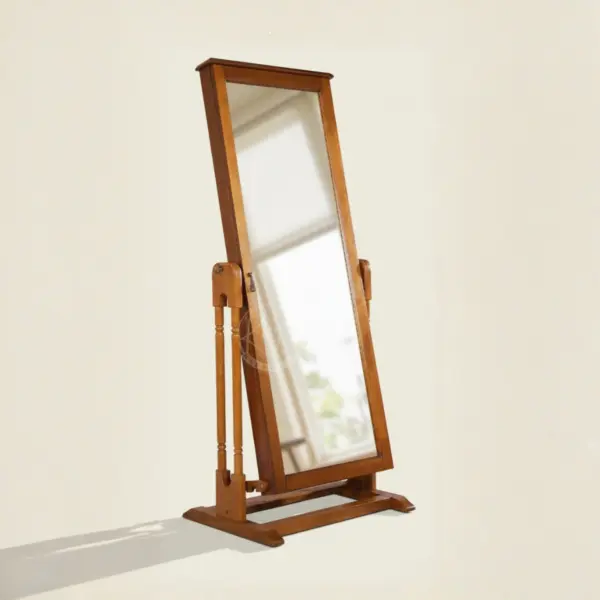
Wooden dressing mirror that embodies timeless elegance—introducing the Royal Arixa. This traditional wooden dressing mirror features a full-length beveled mirror in premium teak frame, adjustable tilt mechanism for optimal viewing angles, and classic cheval stand with curved support legs. Handcrafted from premium Nilambur teak with rich golden honey tones and decorative turned accents. Perfect for bedrooms seeking furniture that combines beauty with practical functionality.
₹36,500.00 Original price was: ₹36,500.00.₹33,000.00Current price is: ₹33,000.00.
Enjoy the convenience of free delivery to Kerala, Karnataka, Tamil Nadu, Andhra Pradesh and Telangana! If you're located somewhere else, please don't hesitate to reach out to us; we're here to help you!
- Delivery Areas: We deliver to Kerala, Karnataka, and Tamil Nadu. If you live outside these states, feel free to contact us for special arrangements.
- Crafting & Delivery Time: As we handcraft every piece with care, shipping usually takes about 3 weeks. We’ll keep you updated every step of the way.
- Quality Assurance: Rest assured, our products undergo strict quality checks before leaving our workshop.
- Defect Handling: If your product has a manufacturing defect, we’re here to help! We’ll either repair it or offer an exchange, depending on the issue. Repairs will be arranged for minor defects to ensure your product is as good as new.
- Complaint Period: We encourage you to inspect your order upon delivery and report any issues within 12 hours for a quick resolution.
- Order Cancellations: Changed your mind? No problem! You can cancel your order within 12 hours by contacting our customer care team. We’ll process the cancellation immediately.
- Refund Process: Once your order is canceled, we’ll initiate the refund. Your refund will reflect in your account as per your bank’s standard processing time.
To maintain the beauty of your Nilambur teak wood furniture for generations, follow this simple and effective care guide.:
- Regular Cleaning: Wipe your teak furniture with a soft cloth and a mix of mild soap and water to remove dirt and grime. For deeper cleaning, you can use a teak-specific cleaner. Be gentle to avoid damaging the wood’s surface.
- Avoid Harsh Chemicals: Stick to mild cleaning solutions. Avoid abrasive cleaners or steel wool, which can damage the wood's surface.
- Protect from Sunlight: Keep your teak wood away from direct sunlight to prevent fading or drying out. Use curtains or shades to reduce exposure if the furniture is near windows.
- Oil and Seal: Although teak naturally produces oils, you can occasionally apply a teak protector or sealer to maintain its golden color and protect it from UV rays and moisture. Avoid over-oiling, as teak wood doesn’t need it frequently.
Product details
| Color |
Golden – Natural Nilambur Teak Color |
|---|---|
| Material |
Authentic Nilambur Wild Teak Wood |
| Warranty |
Royal Nilambur Lifetime Assurance Warranty |
| Brand |
Royal Nilambur |
Description
The Royal Arixa wooden dressing mirror brings elegant functionality to bedrooms and dressing rooms. This beautifully proportioned full-length mirror features a premium teak frame, adjustable tilting mechanism, and traditional cheval stand design—creating a dressing solution that feels both classic and practical. Crafted from premium Nilambur teak in rich golden tones with decorative turned accents, this heritage design serves as a functional focal point showcasing India's furniture-making excellence.
What makes this wooden dressing mirror special is its authentic traditional design execution. The generous full-length mirror provides complete outfit viewing from head to toe—essential for dressing with confidence. The adjustable tilt mechanism allows positioning at various angles accommodating different heights and viewing preferences. The cheval stand design with curved support legs provides stable freestanding placement without wall mounting. The decorative turned spindles and finials add refined elegance. Every element reflects time-honored furniture design principles.
The proportions of this wooden dressing mirror create commanding presence without overwhelming spaces. The tall frame provides ample mirror surface while the arched base feet ensure stability. The support structure angles backward appropriately, creating secure stance preventing tipping. The frame width balances visual substance with elegant proportions. The turned accents add decorative interest without excessive ornamentation. The overall dimensions suit bedrooms, dressing rooms, or walk-in closets beautifully.
This wooden dressing mirror works beautifully in bedrooms embracing traditional, colonial, or transitional aesthetics. The classic cheval design suits master bedrooms where furniture should feel substantial and refined. The warm golden teak tones coordinate with various color palettes and decor styles. The quality construction ensures this isn't temporary furniture—it's designed to serve families for generations.
The natural teak finish on this wooden dressing mirror displays rich golden honey tones with distinctive grain patterns visible throughout the frame. The wood's inherent beauty needs no heavy staining—the protective finish enhances natural character. Over time, the teak develops deeper luster, ensuring your mirror grows more beautiful with age.
Experience elegant reflection with the Royal Arixa wooden dressing mirror—where traditional craftsmanship meets functional beauty.
Discovering Traditional Dressing Mirror Design
Finding a wooden dressing mirror that achieves genuine traditional elegance—not cheap particle board frames with plain glass—requires exceptional craftsmanship and quality materials. The Royal Arixa wooden dressing mirror embodies both beautifully. Handcrafted by Royal Nilambur with traditional techniques and premium teak, this mirror delivers the classical beauty and lasting durability that heirloom furniture should provide.
This wooden dressing mirror succeeds through commitment to authentic cheval mirror design principles. The freestanding format allows placement anywhere without wall mounting—flexibility valuable for changing room layouts or taking the mirror when moving homes. The full-length proportions provide complete viewing from head to toe—essential for dressing with confidence knowing exactly how outfits appear. The adjustable tilt accommodates users of different heights and personal viewing preferences. These functional considerations combine with beautiful teak construction creating furniture that serves beautifully while looking exceptional.
The historical significance of this wooden dressing mirror connects to furniture traditions spanning centuries. Cheval mirrors (the term derives from French meaning "horse" referencing the supporting frame structure) emerged in European furniture during the 18th century, quickly becoming essential bedroom furnishings for those who could afford them. Full-length mirrors represented significant investment—glass manufacturing technology limited mirror sizes and quality, making large clear mirrors expensive luxuries. The freestanding cheval design protected these valuable mirrors while allowing angle adjustment. This wooden dressing mirror continues that heritage tradition using modern mirror technology with traditional furniture craftsmanship.
The Royal Arixa wooden dressing mirror represents bedroom furniture designed for generational service. This isn't disposable furniture with plastic frames and low-quality mirrors discarded after a few years—it's investment piece built to serve decades. The traditional design transcends passing trends. The premium teak frame ensures physical durability. The quality mirror maintains clarity indefinitely with proper care. The solid construction means this mirror will serve your family for generations, potentially becoming treasured heirloom passed down to children and grandchildren.
Traditional wooden dressing mirror design creates bedroom environments that feel refined and well-appointed. The substantial teak frame demonstrates quality immediately—viewers recognize solid wood construction versus cheap alternatives. The full-length mirror provides practical utility making dressing easier and more confident. The elegant proportions create visual interest without overwhelming spaces. The natural wood tones add warmth and character. This is furniture that makes bedrooms feel like sophisticated personal spaces rather than merely functional sleeping areas.
The attention to detail throughout this wooden dressing mirror demonstrates craftsmanship philosophy where every element receives careful consideration. The frame corners join with precise miters. The turned spindles maintain consistent profiles. The tilt mechanism operates smoothly through its range. The base feet sit level on floors. The finish coats build evenly without runs or thin spots. This consistency reflects pride in workmanship—the craftsmen's reputations depend on quality rather than merely meeting minimum standards. Your wooden dressing mirror represents their commitment to excellence.
The practical advantages of this wooden dressing mirror extend beyond aesthetic considerations. The freestanding design means no wall holes or potential wall damage from mounting. The tilt adjustment allows positioning for different users or different purposes—clothing evaluation, makeup application, hair styling all benefit from different viewing angles. The substantial construction means the mirror stays positioned rather than shifting constantly. The quality materials ensure the mirror will maintain its appearance and functionality through years of daily use without deterioration that would plague cheaper alternatives.
The cultural significance of mirrors in bedroom furniture reflects their importance beyond mere utility. Mirrors historically represented wealth and sophistication—their expense and the craftsmanship required to create them meant only affluent households afforded quality mirrors. Having a full-length dressing mirror signaled social status and appreciation for refined living. While mirrors became more accessible over time, quality wooden dressing mirrors like this one continue that tradition of excellence, representing investment in quality furnishings that elevate daily life through beauty and functionality.
Understanding Cheval Mirror Heritage
The cheval mirror design of this wooden dressing mirror represents specific furniture form with distinct heritage and functional advantages. Understanding this design tradition reveals why cheval mirrors have remained popular across centuries and why this format continues serving bedrooms exceptionally well.
The term "cheval" derives from French word for horse, referencing how the mirror frame straddles the supporting stand somewhat like a saddle sits on a horse. This wooden dressing mirror demonstrates classic cheval construction—tall rectangular mirror in frame supported by curved legs creating stable freestanding structure. The design emerged during the late 18th century as glass manufacturing improved enabling larger mirror plates. The freestanding format protected valuable mirrors while allowing mobility and angle adjustment impossible with wall-mounted alternatives.
The structural advantages of this wooden dressing mirror's cheval design provide stability without excessive weight or bulk. The curved support legs create wide footprint preventing tipping while elegant arches reduce visual heaviness. The backward angle of the frame creates natural stability—gravity helps hold the mirror in position rather than fighting against the structure. The tilt mechanism allows angle adjustment within safe range. These engineering considerations create furniture that appears elegant while performing reliably through decades of daily use.
The historical development of cheval mirrors reflected changing bedroom practices and social customs. As clothing became more elaborate and fashion-consciousness increased, full-length mirrors transitioned from luxuries to practical necessities. This wooden dressing mirror serves that same essential function today—enabling users to evaluate complete outfits before leaving home, ensuring clothing fits properly and coordinates successfully. While smartphones enable quick photos, nothing replaces seeing yourself directly in quality mirror under proper lighting conditions.
The social significance historically associated with cheval mirrors adds meaning layers to this wooden dressing mirror beyond practical considerations. Owning quality full-length mirror signaled wealth, refinement, and attention to personal appearance. The mirror occupied prominent bedroom positions, often becoming focal points. While modern contexts differ, quality furniture like this wooden dressing mirror continues signaling appreciation for excellence and investment in creating beautiful, well-appointed living spaces. The mirror represents more than utility—it's statement about valuing quality and beauty in daily life.
The design variations within cheval mirror traditions influenced this wooden dressing mirror's specific form. Some historical cheval mirrors featured highly ornate frames with extensive carving and gilding. Others embraced restrained elegance through beautiful wood and refined proportions. This wooden dressing mirror follows the latter tradition—the beauty derives from premium teak, expert craftsmanship, and classical proportions rather than excessive ornamentation. This approach creates timeless elegance that won't feel dated as tastes evolve over decades of service.
The functional superiority of this wooden dressing mirror's cheval design over alternatives becomes apparent through use. Wall-mounted mirrors require installation potentially damaging walls and limiting placement flexibility. Leaning mirrors risk tipping and can't adjust angles easily. Over-door mirrors obstruct door function and provide limited viewing. This wooden dressing mirror's freestanding cheval design avoids all these limitations while providing stability, adjustability, and placement flexibility unmatched by alternatives. The traditional design persists because it works exceptionally well.
The room layout flexibility enabled by this wooden dressing mirror's freestanding design provides significant practical advantage. Place it near windows for natural lighting during dressing. Move it to different wall positions as room arrangements change. Take it to new homes when relocating. Use it in bedrooms, dressing rooms, or walk-in closets as needs evolve. This mobility and flexibility mean the mirror adapts to changing circumstances rather than requiring new furniture when situations change. The wooden dressing mirror serves current needs while accommodating future possibilities.
The heirloom potential of this wooden dressing mirror reflects both its timeless design and durable construction. Family members can use the same mirror across generations—what serves you beautifully will serve your children and grandchildren equally well. The classical proportions and styling won't feel dated in 30 or 50 years. The teak construction will maintain integrity indefinitely with basic care. The mirror becomes more than furniture—it transforms into family heirloom carrying memories and connections across time. This potential for generational service distinguishes quality furniture from temporary disposable alternatives.
Adjustable Tilt Mechanism Engineering
The tilt adjustment mechanism in this wooden dressing mirror represents crucial functional element enabling users of different heights and preferences to position the mirror optimally. Understanding the engineering and craftsmanship behind this mechanism reveals the thoughtful design making this mirror so practical and user-friendly.
The tilt mechanism design in this wooden dressing mirror typically employs pivot points at the mirror frame's midpoint height or slightly above. The frame pivots on these points, secured by hardware—pins, bolts, or brackets—passing through the support structure into the frame sides. This wooden dressing mirror's mechanism allows controlled movement through useful range while preventing the mirror from pivoting too far risking imbalance. The range typically spans from nearly vertical to perhaps 20-30 degrees backward tilt—sufficient for various viewing needs without compromising stability.
The friction control in this wooden dressing mirror's adjustment mechanism determines how easily the mirror moves and how well it maintains chosen positions. Too little friction means the mirror won't stay positioned—it will drift from desired angles frustrating users constantly readjusting. Too much friction makes adjustment difficult requiring excessive force potentially stressing joints. Quality mechanisms achieve proper balance—smooth enough for easy adjustment, resistant enough to maintain positions reliably. This wooden dressing mirror's mechanism provides that ideal balance through careful hardware selection and proper installation.
The hardware quality used in this wooden dressing mirror's tilt mechanism significantly impacts long-term functionality. Cheap hardware wears quickly—friction points develop play, threads strip, finishes corrode. Quality hardware maintains performance through decades of adjustments. The wooden dressing mirror employs quality mechanisms—likely brass, bronze, or quality steel properly finished—ensuring reliable operation throughout its service life. This hardware quality represents hidden value distinguishing quality furniture from apparently similar but inferior alternatives using cheap components that fail prematurely.
The installation precision required for this wooden dressing mirror's tilt mechanism demonstrates advanced joinery skills. The pivot points must align perfectly—misalignment creates binding, uneven resistance, or frame stress. The hardware must install securely without splitting wood or creating weak points. The mechanism must achieve proper friction levels through careful assembly. These technical demands require craftsmen understanding both woodworking and mechanical principles. The wooden dressing mirror's smooth reliable adjustment proves these skills were applied successfully during construction.
The user experience provided by this wooden dressing mirror's adjustment mechanism enhances daily satisfaction significantly. Effortless adjustment to preferred angle means using the mirror becomes pleasant rather than frustrating. The mirror stays positioned reliably eliminating constant readjustment irritation. Different household members can easily adjust to their preferences. Makeup application, outfit evaluation, full-body viewing each benefit from different angles—easy adjustment serves all these purposes excellently. This functional excellence may seem minor until experiencing inferior mirrors with poor adjustment mechanisms that frustrate users constantly.
The maintenance requirements for this wooden dressing mirror's tilt mechanism remain minimal with quality construction. Periodic tightening of hardware if looseness develops maintains proper function. Occasional lubrication of pivot points with appropriate materials ensures smooth operation. Checking for wood movement around mounting points preserves long-term integrity. These simple maintenance tasks take minutes occasionally but ensure the mechanism maintains performance through decades of service. The wooden dressing mirror rewards basic care with reliable function throughout its lifespan.
The safety considerations embedded in this wooden dressing mirror's tilt mechanism design prevent accidents that could damage mirror or injure users. The mechanism limits tilt range preventing the mirror from pivoting so far it becomes unstable. The friction resists sudden movements—the mirror won't slam backward if bumped unexpectedly. The quality construction means hardware won't fail suddenly creating hazardous situations. These safety features operate invisibly but provide important protection particularly in homes with children or pets where unexpected interactions with furniture occur regularly.
The engineering sophistication in this wooden dressing mirror's tilt mechanism might appear simple but represents refined design solving multiple requirements simultaneously. The mechanism must be strong enough to support mirror weight safely. It must allow smooth easy adjustment. It must maintain positions reliably. It must operate without squeaking or binding. It must install without compromising frame integrity. It must remain reliable through thousands of adjustments over decades. Achieving all these requirements simultaneously requires significant engineering and craftsmanship expertise. This wooden dressing mirror demonstrates how traditional furniture design incorporates sophisticated functional engineering within elegant traditional aesthetics.
Premium Teak Frame Construction
The teak frame surrounding this wooden dressing mirror represents more than decorative border—it's structural element protecting the mirror while providing visual elegance and lasting durability. Understanding the craftsmanship behind premium teak frame construction reveals the quality distinguishing exceptional mirrors from inferior alternatives.
The frame joinery for this wooden dressing mirror requires precision carpentry creating strong beautiful corners. Miter joints—cuts at 45-degree angles creating 90-degree corners—require extremely accurate sawing and tight fitting. Gaps in mitered corners show prominently ruining the refined appearance. This wooden dressing mirror's frames display tight miters proving expert craftsmanship. The joints likely include reinforcement—splines, keys, or dowels mechanically strengthening what glue bonds. This belt-and-suspenders approach ensures the corners remain tight through decades of service as wood ages and buildings settle.
The frame dimensioning for this wooden dressing mirror follows proportional principles creating visual balance. Frames too narrow appear insubstantial failing to protect mirror edges adequately or provide sufficient visual weight. Frames too wide overwhelm the mirror reducing usable reflective surface while appearing clunky. Traditional frame widths typically range from 2-4 inches depending on mirror size—wider for larger mirrors maintaining proper proportions. This wooden dressing mirror's frame width achieves ideal balance looking substantial without excessive bulk. These proportional decisions separate refined furniture from pieces where dimensions were arbitrary rather than carefully considered.
The frame profile detailing on this wooden dressing mirror adds visual interest through dimensional variation. Flat frames appear plain and unfinished. Shaped profiles with bevels, rounds, or decorative moldings create sophistication and elegance. This wooden dressing mirror's frame likely features shaped edges—perhaps rounded, chamfered, or featuring subtle decorative profiles—creating visual interest without excessive ornamentation. These details require additional milling and finishing labor but elevate the piece from basic to refined. The profile choices reflect traditional furniture vocabulary where specific molding profiles carried design meaning and historical associations.
The mirror retention method within this wooden dressing mirror's frame ensures the mirror remains secure while allowing potential replacement if breakage occurs. Traditional methods employed wooden strips (glazing beads) fastened with small nails or screws holding mirrors against backing. Modern approaches might use metal clips or brackets. Whatever specific method this wooden dressing mirror employs, quality execution ensures the mirror sits flat without rattling or shifting while remaining removable if necessary. This retention quality separates furniture-grade mirrors from cheap alternatives where mirrors often fit poorly creating visual distortions and operational frustrations.
The wood selection for this wooden dressing mirror's frame demonstrates quality priorities. Premium Nilambur teak provides the strength, stability, and beauty required for frame application. The straight-grained sections resist warping ensuring frames remain flat and true. The beautiful figure displays prominently in wide frame components showcasing teak's natural beauty. The natural durability means frames resist damage from handling and incidental contact during daily use. These material advantages justify teak's premium status—the wood simply performs better than alternatives while looking more beautiful.
The finishing process for this wooden dressing mirror's frame involves multiple careful steps creating durable beautiful surface. The wood receives thorough sanding progressing through finer grits achieving smoothness. Frame corners receive extra attention ensuring perfect transitions where members meet. Quality finishing oils or other protectants penetrate to seal and protect while enhancing natural color and grain. Multiple finish coats build protection layers. Final buffing creates the smooth satin surface that invites touch while resisting fingerprints and moisture. This finishing excellence ensures the frame maintains beauty through years of bedroom service.
The corner detail execution on this wooden dressing mirror reveals craftsmanship quality. Examining corners from various angles shows how precisely miters meet—gaps, misalignments, or irregular grain matches indicate lesser craftsmanship while perfect seamless corners prove expert work. This wooden dressing mirror's corners should display the latter—tight joints, aligned grain where possible, and consistent finish coverage. These details require patience, skill, and quality control standards prioritizing perfection over mere adequacy. Such details distinguish heirloom furniture from quickly manufactured production pieces.
The frame durability provided by this wooden dressing mirror's teak construction ensures the mirror will serve generations without frame deterioration. Pine or cheaper hardwood frames can shrink, warp, or joint looseness over time—especially in bedroom environments where humidity varies seasonally. Teak's exceptional stability prevents these issues. The frames maintain their geometry year after year. The corners stay tight. The wood resists denting from incidental contact. This durability means your investment maintains both function and appearance indefinitely rather than deteriorating into disappointment requiring eventual replacement.
The Art of Mirror Selection and Installation
The mirror itself within this wooden dressing mirror represents crucial component requiring careful selection and expert installation. Understanding mirror quality factors and installation techniques reveals the attention to detail distinguishing premium dressing mirrors from inferior alternatives that frustrate users with poor reflections or installation issues.
The mirror glass quality in this wooden dressing mirror significantly affects the reflection clarity and longevity. Premium mirrors use thicker glass—typically 4-6mm for furniture applications rather than thin 2-3mm glass used in cheap mirrors. This wooden dressing mirror employs quality thickness providing rigidity preventing flexing that distorts reflections. The glass manufacturing quality affects clarity—bubbles, waves, or color variations plaguing inferior glass create frustrating reflections. Premium mirrors display crystal-clear reflection across their entire surface without distortions, color shifts, or imperfections. This optical quality transforms daily mirror use from frustrating necessity to pleasant experience.
The silvering process creating reflective backing on this wooden dressing mirror's glass determines reflection quality and durability. Modern mirrors typically use aluminum or silver deposited on glass backs creating reflective surface. Quality silvering provides uniform bright reflection without streaking or dark spots. The process includes protective coatings preventing the reflective layer from tarnishing or corroding—critical for long-term appearance. This wooden dressing mirror's quality silvering will maintain bright clear reflection for decades while inferior mirrors develop black spots or haziness as silvering degrades prematurely.
The beveling on this wooden dressing mirror's edges adds decorative elegance while serving practical purposes. Beveled edges feature angled grinding around mirror perimeters creating prismatic effect at edges while finishing the glass smoothly. The beveling catches light creating subtle sparkle around mirror borders—elegant detail adding refinement. Practically, beveling removes the sharp glass edges that could otherwise chip or present cutting hazards during handling. The bevel width typically ranges from half-inch to inch or more—this wooden dressing mirror likely features moderate beveling adding elegance without overwhelming the overall design.
The mirror backing protection on this wooden dressing mirror prevents silvering damage extending mirror lifespan considerably. The reflective metallic layer on glass backs remains vulnerable to moisture, chemical exposure, and physical damage. Quality mirrors include protective backing layers—paint, paper, or other materials—sealing the silvering from environmental exposure. This wooden dressing mirror's backing protection ensures moisture from cleaning or humidity won't corrode the silvering. This protection represents hidden quality distinguishing mirrors that maintain appearance for decades from those requiring replacement after years as silvering deteriorates.
The mirror installation within this wooden dressing mirror's frame requires careful technique ensuring flat secure mounting without distortion. Mirrors must sit on even backing preventing flexing—even slight unevenness creates distorted reflections. Cushioning materials (felt, foam, or rubber strips) between mirror back and frame prevent glass-to-wood contact that could create stress points. The retention method must secure the mirror firmly without creating pressure points risking glass cracking. This wooden dressing mirror's expert installation ensures flat distortion-free reflection that will maintain quality through decades of service.
The mirror size maximization within this wooden dressing mirror's frame provides maximum functional reflection surface. Frame design balances structural requirements and visual proportions while maximizing usable mirror area. Frames unnecessarily wide reduce mirror size wasting valuable reflection surface. This wooden dressing mirror achieves ideal balance—sufficient frame width for structural integrity and visual substance while maximizing reflection area serving users effectively. This optimization reflects thoughtful design prioritizing user benefit.
The mirror orientation accuracy in this wooden dressing mirror ensures true vertical alignment when the mirror sits in its typical position. Mirrors mounted slightly askew create subtly distorted reflections frustrating users who can't identify the issue causing clothes to appear off somehow. This wooden dressing mirror's expert installation ensures perfect alignment—the mirror hangs truly vertical (or at chosen angle) providing accurate reflection. This precision requires careful measurement and installation technique during construction ensuring user satisfaction through proper optical performance.
The safety considerations in this wooden dressing mirror's construction protect users from potential glass hazards. The substantial frame protects mirror edges from impact that could crack glass. The secure mounting prevents mirrors from falling or shifting. Quality glass resists casual impacts better than thin cheap glass. Some premium mirrors include safety backing preventing dangerous shatter if breakage occurs. These safety features operate invisibly but provide important protection ensuring this wooden dressing mirror remains safe furniture in family homes across decades of service.
Decorative Turning and Ornamentation
The decorative turned elements adorning this wooden dressing mirror represent traditional furniture ornamentation requiring lathe-work skill and design sensitivity. Understanding these decorative elements reveals the craftsmanship elevating this piece from merely functional mirror to refined furniture.
The turned spindles connecting this wooden dressing mirror's frame to its support structure serve both functional and decorative purposes. Functionally, these elements space the mirror frame away from the support legs allowing tilting movement. Decoratively, they add visual interest and refinement through their shaped profiles. The turning creates elegant forms impossible with square or simple round stock—swells, hollows, and tapers combine creating pleasing profiles. This wooden dressing mirror's spindles demonstrate traditional turning vocabulary where specific profile elements carry design meaning and historical associations.
The finial elements adorning this wooden dressing mirror add finishing touches completing the design elegantly. Finials might crown the frame top corners or support structure posts—anywhere the design benefits from decorative completion. Traditional finial forms include balls, urns, acorns, or pointed caps—this wooden dressing mirror likely employs forms consistent with its overall aesthetic. The finials require careful turning creating proper proportions and smooth profiles. These seemingly minor details significantly impact perceived quality—well-executed finials signal overall craftsmanship quality while poor finials undermine even otherwise good furniture.
The consistency among turned elements throughout this wooden dressing mirror demonstrates turner skill. Multiple spindles or finials must match sufficiently that viewers perceive uniformity. Achieving this consistency requires either working from precise measurements or developing sufficient skill that muscle memory reproduces forms reliably. Examining this wooden dressing mirror's turned elements reveals the remarkable uniformity distinguishing master work from novice attempts where variations become distractingly obvious.
The profile design for this wooden dressing mirror's turned elements follows traditional vocabulary refined across generations. The shapes aren't arbitrary but proven forms that look correct to eyes trained through exposure to quality furniture. Gentle swells create visual interest. Narrow sections provide delicate contrast. Transitions flow smoothly without abrupt changes. The turner internalized these principles through apprenticeship learning to create proper proportions intuitively. This wooden dressing mirror's turning succeeds because profiles follow time-tested design principles creating forms that feel inherently right.
The finishing quality on this wooden dressing mirror's turned elements requires special attention. Turned surfaces must be sanded while spinning to achieve smoothness—hand sanding after removal from the lathe risks creating flat spots ruining circular profiles. The craftsman applies sandpaper to spinning work progressing through finer grits until surfaces feel glass-smooth. Finish application similarly happens on the lathe when possible ensuring even coating. This wooden dressing mirror's perfectly smooth turned elements demonstrate proper lathe finishing technique executed patiently.
The integration of turned elements into this wooden dressing mirror's overall design creates visual coherence. The turned profiles relate stylistically to other design elements—frame proportions, support structure forms, overall aesthetic vocabulary. This integration prevents the turning from feeling arbitrarily applied instead ensuring it contributes to unified design. This wooden dressing mirror's turned elements work harmoniously with other components creating refined furniture where every element contributes to successful whole.
The cultural significance of turned ornamentation connects this wooden dressing mirror to furniture-making traditions across cultures and centuries. Woodturning represents among humanity's oldest wood shaping techniques—evidence of turned objects dates back thousands of years. The lathe enabled creating forms impossible with other tools—perfect cylinders, elegant curves, precise replication. This wooden dressing mirror continues these traditions preserving craft knowledge while creating furniture serving contemporary needs. The turned elements represent living heritage rather than merely decorative additions.
Check our minimalist furniture care for tips. Explore our Nilambur teak minimalist collection.
Check our traditional furniture care guide for specific tips. Explore our Nilambur teak traditional collection for coordinating pieces.
The appreciation potential for this wooden dressing mirror's turned ornamentation grows through understanding the skill required. Examining the consistent profiles, smooth surfaces, and elegant proportions reveals the mastery underlying seemingly simple elements. These aren't generic manufactured components but handcrafted pieces demonstrating years of skill development. This wooden dressing mirror embodies craftsman virtuosity—subtle perhaps but profound upon examination. Owning this mirror means living daily with skilled craftsmanship creating quiet but genuine excellence.
About Us

Royal Nilambur
Handcrafted premium Nilambur teak wood furniture.

Have questions?
We're here to help! Please feel free to contact us.
Error: Contact form not found.
At Royal Nilambur, we are driven by a deep respect for nature and tradition. We believe that furniture should be more than just functional—it should be a lasting legacy that tells a story, honors craftsmanship, and reflects values of sustainability and heritage. Through our creations, we inspire people to cherish the beauty of nature in their homes and to invest in pieces that hold meaning beyond their material value.

Handcrafted Excellence

Premium Nilambur Teak Wood

Customizable Designs

Life Time Warranty
Customer Reviews
Only logged in customers who have purchased this product may leave a review.
Why should I choose Royal Nilambur Wild Teak Furniture?
Royal Nilambur offers more than just furniture; we bring you timeless pieces crafted from the finest Nilambur wild teak, known for its exceptional strength and beauty. Each piece is handcrafted by skilled artisans who carry forward the rich tradition of Indian craftsmanship. When you choose us, you're investing in high-quality, durable furniture that reflects your refined taste and commitment to sustainability.
Is Nilambur teak really worth the investment?
Absolutely! Nilambur teak is one of the most prized woods in the world. It is known for its longevity, resistance to decay, and luxurious appearance. It's a premium material that only increases in value over time. With Royal Nilambur, you're not just buying furniture — you're investing in heirloom-quality pieces that will serve your family for generations.
Can I customize my furniture?
Of course! We understand that every home is unique, and we offer customization options to ensure that your furniture fits perfectly with your space and style. Whether you want to adjust the size, finish, or design, our team is here to bring your vision to life.
How do I know the quality of the furniture is authentic?
Royal Nilambur is dedicated to providing only the finest, ethically sourced Nilambur teak, which holds Geographical Indication (GI) certification. This certification ensures that our teak comes exclusively from the Nilambur region, which is recognized for producing the highest quality teak in the world. Our skilled artisans handcraft each piece using time-honored techniques that ensure strength, durability, and timeless aesthetic appeal. Additionally, we offer a warranty for every piece, giving you peace of mind that you've invested in a product that meets the highest standards of quality and authenticity.



Reviews
Clear filtersThere are no reviews yet.