





Royal Nivon Nilambur Teak Wood Bookshelf
- Authentic, Premium-Quality Nilambur Wild Teak
- Handcrafted by Skilled Artisans
- Sustainably Sourced and Eco-Friendly
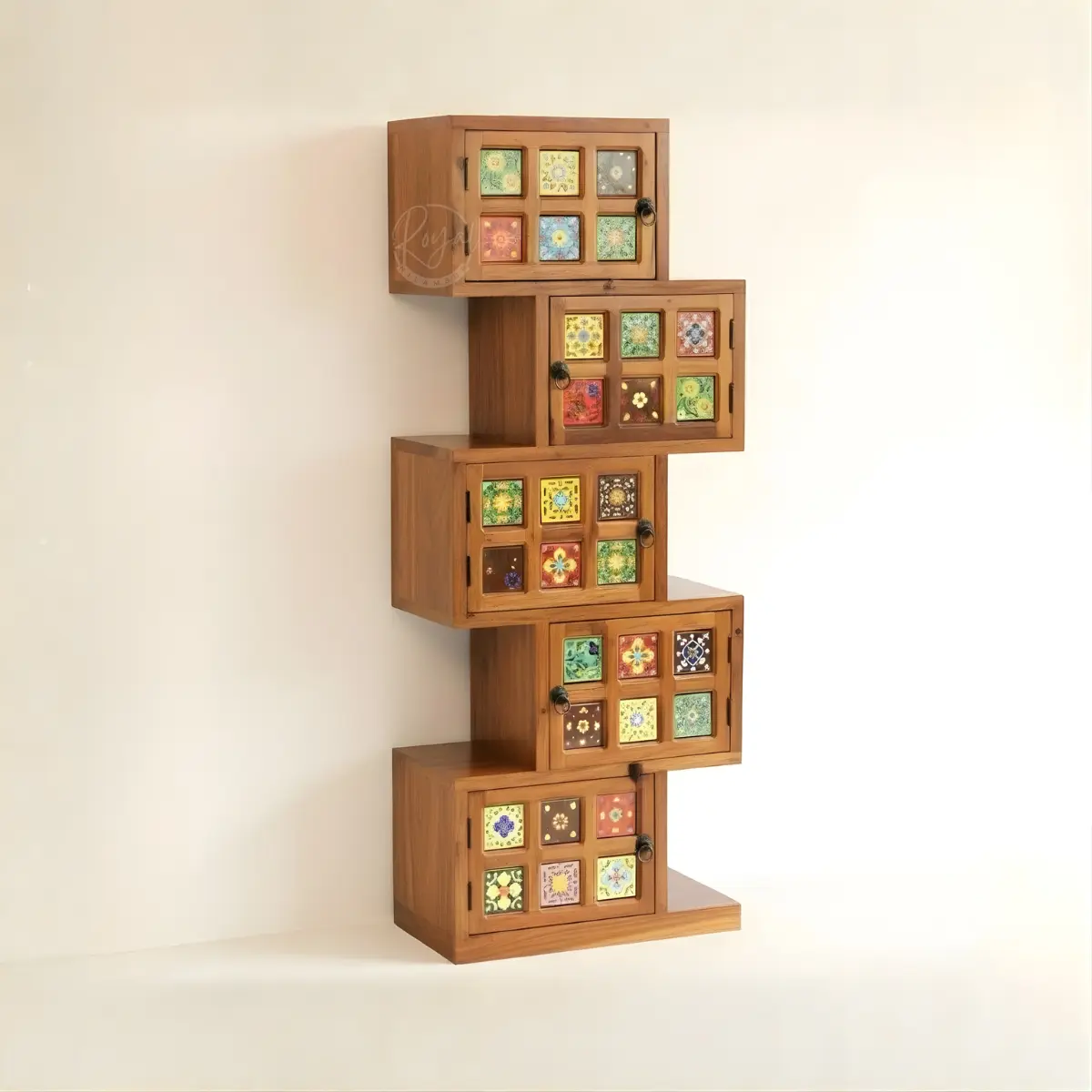
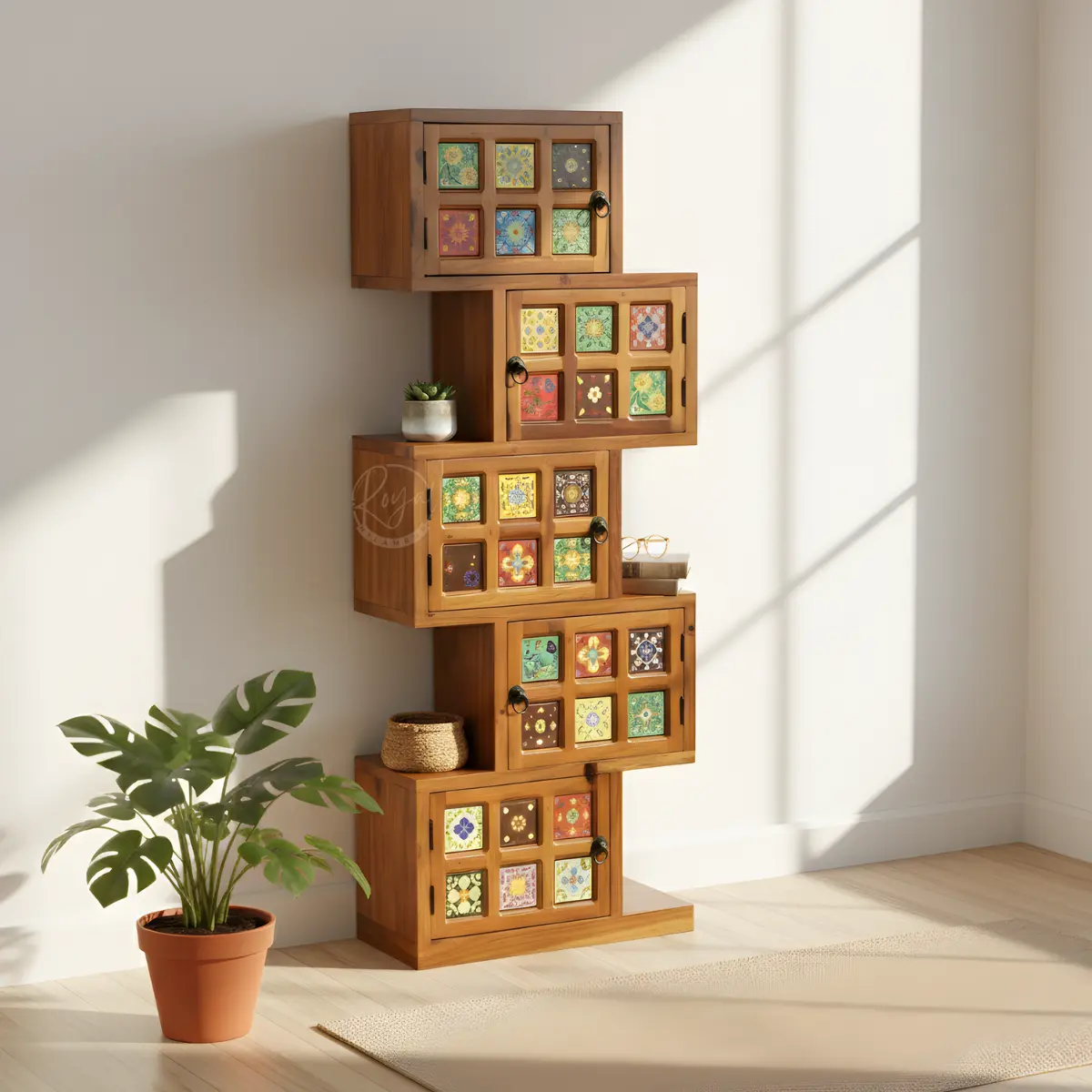
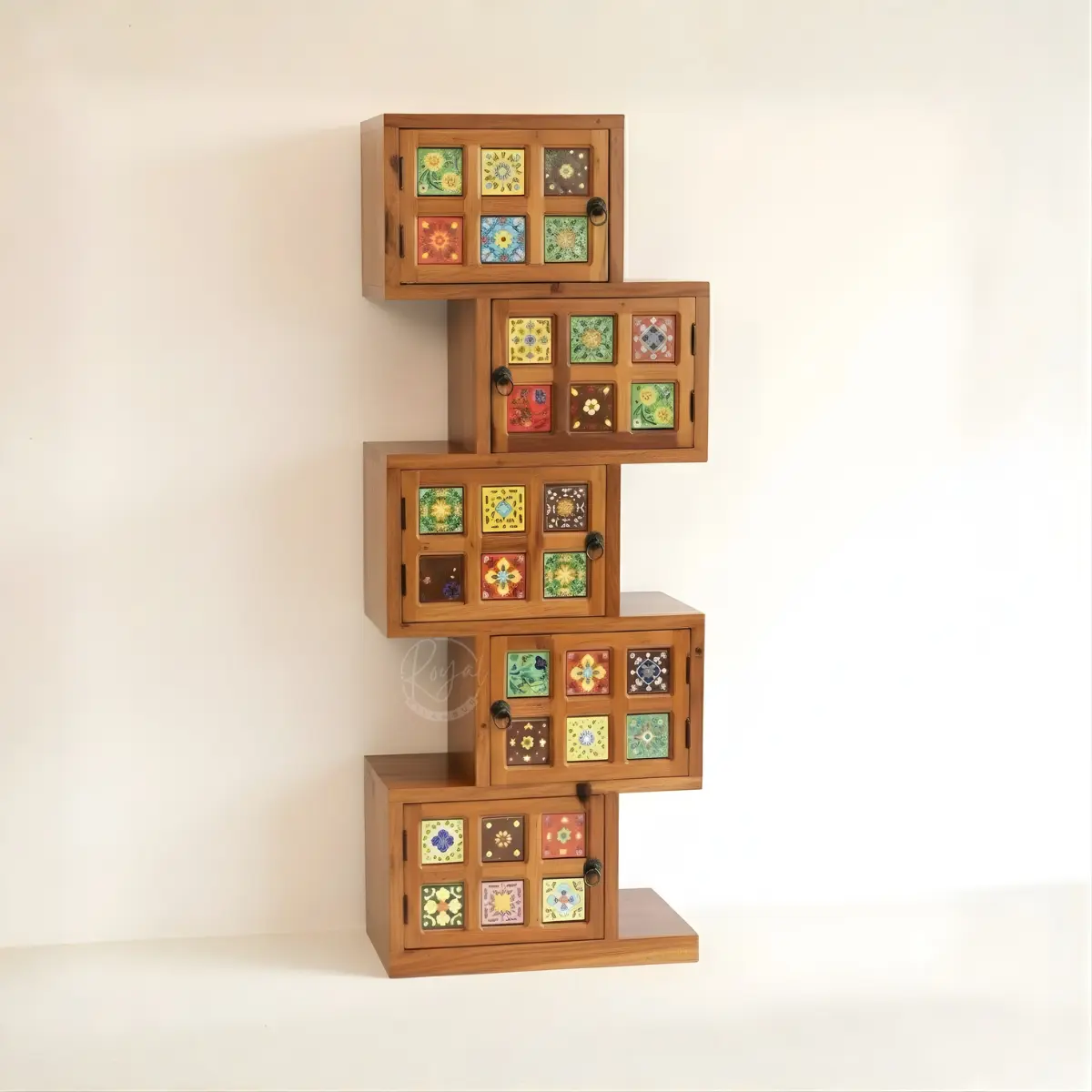
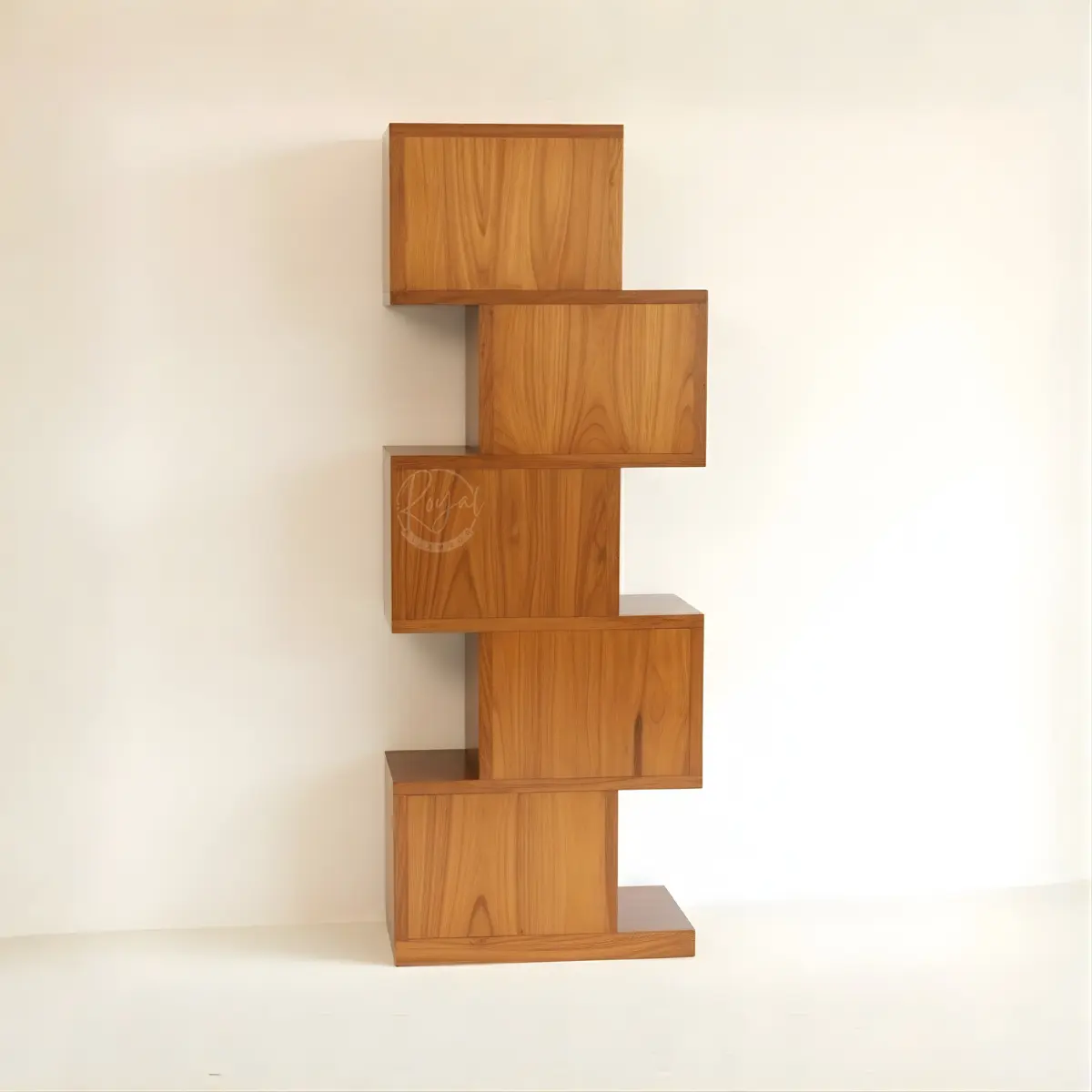
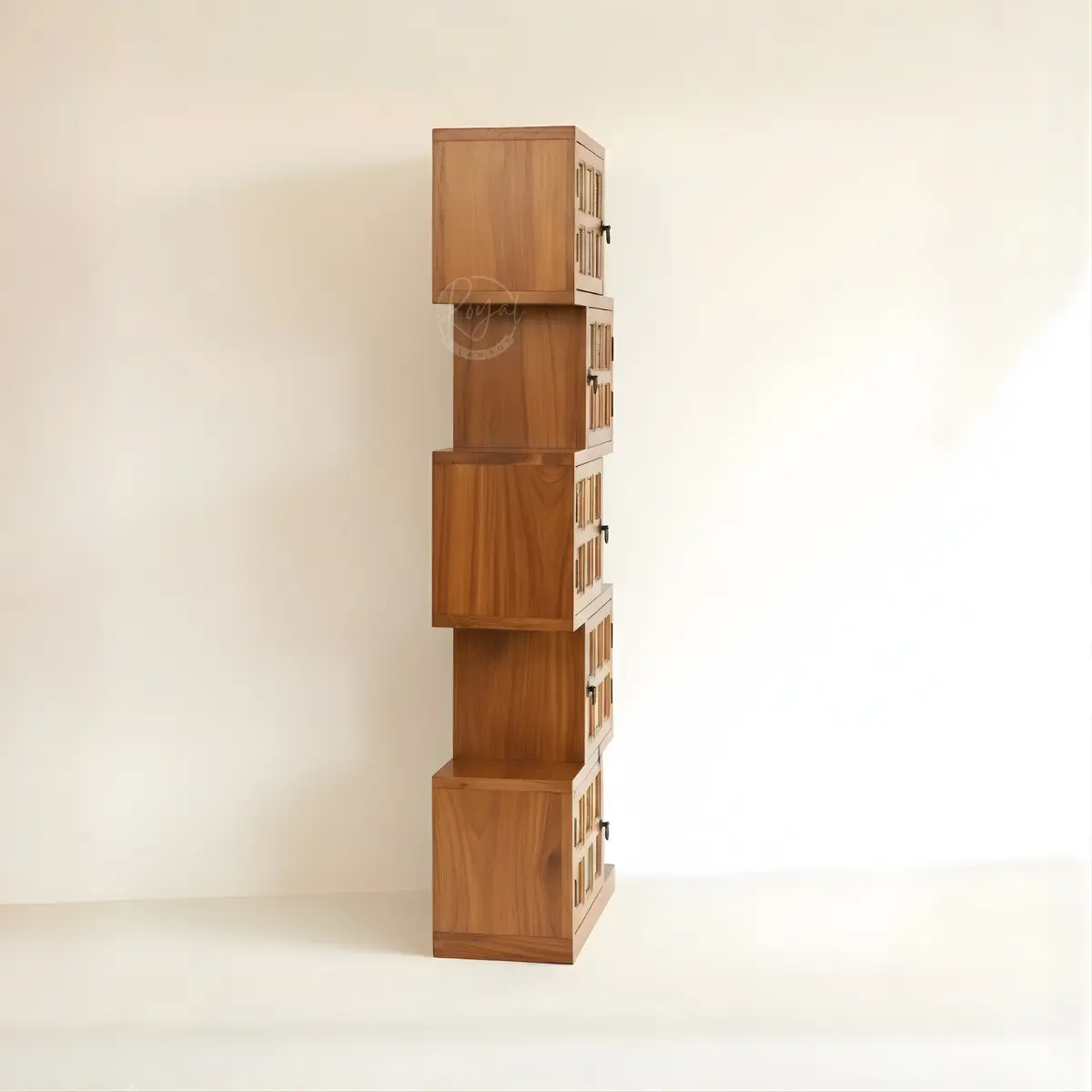
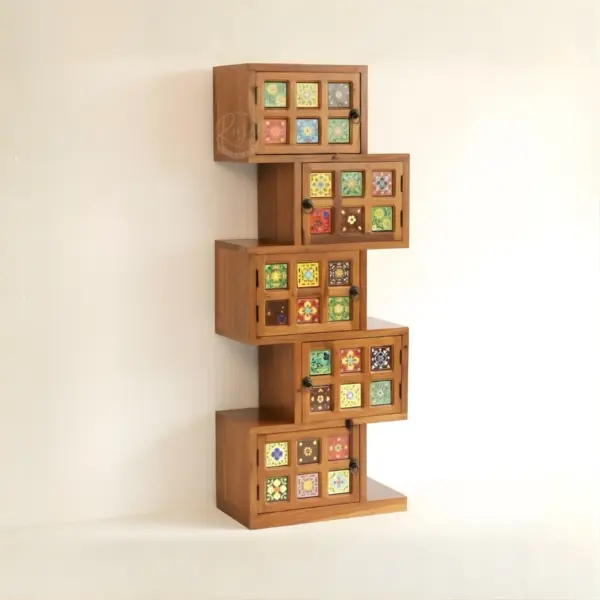
Wooden bookshelf that embodies artistic innovation—introducing the Royal Nivon. This modular wooden bookshelf features five stackable units, each with six hand-painted decorative ceramic tile door inserts creating stunning visual impact. Offset open shelving provides display space while enclosed storage protects belongings. Handcrafted from premium Nilambur teak with rich golden tones and natural grain beauty. Perfect for spaces seeking furniture that combines functional storage with gallery-worthy artistic expression. A true statement piece.
₹41,500.00 Original price was: ₹41,500.00.₹38,499.00Current price is: ₹38,499.00.
Enjoy the convenience of free delivery to Kerala, Karnataka, Tamil Nadu, Andhra Pradesh and Telangana! If you're located somewhere else, please don't hesitate to reach out to us; we're here to help you!
- Delivery Areas: We deliver to Kerala, Karnataka, and Tamil Nadu. If you live outside these states, feel free to contact us for special arrangements.
- Crafting & Delivery Time: As we handcraft every piece with care, shipping usually takes about 3 weeks. We’ll keep you updated every step of the way.
- Quality Assurance: Rest assured, our products undergo strict quality checks before leaving our workshop.
- Defect Handling: If your product has a manufacturing defect, we’re here to help! We’ll either repair it or offer an exchange, depending on the issue. Repairs will be arranged for minor defects to ensure your product is as good as new.
- Complaint Period: We encourage you to inspect your order upon delivery and report any issues within 12 hours for a quick resolution.
- Order Cancellations: Changed your mind? No problem! You can cancel your order within 12 hours by contacting our customer care team. We’ll process the cancellation immediately.
- Refund Process: Once your order is canceled, we’ll initiate the refund. Your refund will reflect in your account as per your bank’s standard processing time.
To maintain the beauty of your Nilambur teak wood furniture for generations, follow this simple and effective care guide.:
- Regular Cleaning: Wipe your teak furniture with a soft cloth and a mix of mild soap and water to remove dirt and grime. For deeper cleaning, you can use a teak-specific cleaner. Be gentle to avoid damaging the wood’s surface.
- Avoid Harsh Chemicals: Stick to mild cleaning solutions. Avoid abrasive cleaners or steel wool, which can damage the wood's surface.
- Protect from Sunlight: Keep your teak wood away from direct sunlight to prevent fading or drying out. Use curtains or shades to reduce exposure if the furniture is near windows.
- Oil and Seal: Although teak naturally produces oils, you can occasionally apply a teak protector or sealer to maintain its golden color and protect it from UV rays and moisture. Avoid over-oiling, as teak wood doesn’t need it frequently.
Product details
| Color |
Golden – Natural Nilambur Teak Color |
|---|---|
| Material |
Authentic Nilambur Wild Teak Wood |
| Warranty |
Royal Nilambur Lifetime Assurance Warranty |
| Brand |
Royal Nilambur |
Description
The Royal Nivon wooden bookshelf transforms ordinary storage into extraordinary art piece. This uniquely designed modular unit features five individual stackable components, each displaying six hand-painted ceramic tiles in vibrant colors creating kaleidoscope of visual interest. The offset configuration alternates enclosed storage compartments with open display shelves—creating dynamic asymmetrical composition that delights the eye while serving practical storage needs. Crafted from premium Nilambur teak with artistic ceramic tile integration, this design represents fusion of functional furniture and decorative art.
What makes this wooden bookshelf special is its unprecedented combination of art and utility. The thirty hand-painted ceramic tiles (six per unit across five units) create ever-changing color story—each tile features unique patterns and colors from warm oranges and reds to cool blues and greens. The tiles aren't mere decoration but integral design elements transforming cabinet doors into artistic canvases. The modular stacking design allows creative arrangements—stack all five units for dramatic vertical tower or separate units for distributed storage. The open shelves interrupt the stacked cabinets creating visual rhythm and practical display spaces.
The proportions of this wooden bookshelf create commanding presence. The full five-unit tower reaches impressive height becoming room focal point. Each unit maintains compact footprint suitable for smaller spaces while providing generous storage capacity. The offset design creates interesting depth variations—some units protrude further creating dimensional complexity. The balance between enclosed and open storage serves both practical needs (protecting items from dust) and aesthetic desires (displaying treasured objects).
This wooden bookshelf works beautifully in interiors embracing eclectic, bohemian, global, or artistic aesthetics. The colorful tiles suit spaces celebrating color and pattern. The unique design appeals to those seeking furniture expressing personality and creativity. The quality teak construction ensures this artistic piece serves generations becoming treasured family heirloom.
The natural teak finish on this wooden bookshelf displays rich golden honey tones beautifully complementing the vibrant ceramic tiles. The wood's grain patterns add organic warmth balancing the tiles' geometric patterns. Over time, the teak develops deeper patina while the ceramic tiles maintain their vibrant colors indefinitely.
Experience artistic storage with the Royal Nivon wooden bookshelf—where functional furniture becomes gallery-worthy art.
Discovering Artistic Modular Storage Design
Finding a wooden bookshelf that achieves genuine artistic innovation—not merely functional storage but furniture transcending utility to become art—requires exceptional design vision and craftsmanship excellence. The Royal Nivon wooden bookshelf embodies both magnificently. Created by Royal Nilambur with artistic sensibility and structural expertise, this bookshelf delivers visual drama and practical functionality that transformative furniture should provide.
This wooden bookshelf succeeds through radical reimagining of storage furniture conventions. Traditional bookshelves serve purely utilitarian purposes—holding books and objects efficiently but rarely inspiring aesthetic excitement. This wooden bookshelf challenges those limitations. The hand-painted ceramic tiles transform cabinet doors into artistic canvases. The asymmetrical stacking creates sculptural presence. The vibrant colors inject personality and joy. The modular design invites creative arrangement and reconfiguration. These innovations elevate storage from mundane necessity to celebrated focal point.
The design philosophy underlying this wooden bookshelf rejects false dichotomy between function and beauty. Conventional wisdom suggests furniture must choose—either practical and plain or beautiful and impractical. This wooden bookshelf proves that false choice unnecessary. The enclosed cabinets provide dust-free storage protecting books, electronics, or personal items practically. The open shelves display treasured objects beautifully. The sturdy teak construction ensures structural reliability. The artistic tile work creates visual celebration. Function and beauty achieve complete synthesis.
The Royal Nivon wooden bookshelf represents furniture designed to spark conversation and inspire daily joy. Guests inevitably comment on its unique appearance—the vibrant tiles, the creative stacking, the artistic sensibility. Living with this wooden bookshelf means experiencing daily visual pleasure from furniture typically taken for granted. The morning coffee routine brightens seeing the colorful tiles. The evening relaxation feels more pleasant in spaces this bookshelf enhances. This emotional dimension of ownership distinguishes transformative furniture from merely adequate alternatives.
Modular design furniture like this wooden bookshelf offers practical advantages beyond aesthetic benefits. The five separate units stack for dramatic impact but can separate for distributed storage throughout homes. Use three units in living room, two in bedroom—adapting as needs change. Moving becomes easier—five smaller units handle more readily than single massive piece. Future room rearrangements accommodate easily by restacking differently. This flexibility extends furniture relevance across decades of changing circumstances and evolving spaces.
The attention to detail throughout this wooden bookshelf demonstrates craftsmanship philosophy where every element receives careful consideration. The tiles select for color harmony creating cohesive palette despite individual variation. The teak frames construct with precision joinery ensuring structural integrity. The hinges install perfectly allowing smooth door operation. The finish coats apply evenly enhancing both wood and tile. This comprehensive quality reflects standards prioritizing excellence throughout rather than focusing only on prominent features.
The cultural fusion embodied in this wooden bookshelf creates globally influenced design appealing to contemporary sensibilities. The ceramic tile tradition draws from Spanish, Portuguese, Mexican, and Mediterranean heritage—cultures celebrating colorful decorative tilework. The teak carpentry represents Indian woodworking excellence. The modular stacking suggests contemporary Scandinavian design thinking. This wooden bookshelf synthesizes global influences creating furniture feeling simultaneously rooted in tradition and thoroughly contemporary.
The practical storage capacity of this wooden bookshelf surpasses initial impressions. Five enclosed cabinets provide substantial protected storage. The four open shelf sections (one per offset between units) display decorative items. The vertical orientation maximizes storage while minimizing floor footprint—valuable for urban apartments or smaller rooms. The wooden bookshelf proves that artistic furniture needn't sacrifice practical utility. Beauty and function coexist successfully when design approaches problems creatively rather than conventionally.
Understanding Hand-Painted Ceramic Tile Artistry
The thirty hand-painted ceramic tiles adorning this wooden bookshelf represent traditional craft requiring artistic skill and technical ceramic knowledge. Understanding tile artistry reveals the exceptional value and authentic craftsmanship distinguishing this furniture from mass-produced alternatives using cheap printed patterns or plastic simulations.
The ceramic tile creation process for this wooden bookshelf begins with quality clay forming tile blanks. The clay must be properly prepared—removing air bubbles, achieving consistent moisture, wedging thoroughly—ensuring uniform firing results. The tiles form through pressing or hand-molding achieving consistent thickness and dimensions. Initial bisque firing hardens the clay creating porous surface ready for glaze application. This foundation quality determines final tile durability and appearance—this wooden bookshelf employs quality tiles manufactured properly.
The glazing process creating this wooden bookshelf's vibrant colors requires artistic skill and ceramic chemistry knowledge. Glazes are complex mixtures—silica, fluxes, colorants, modifiers—that melt during firing creating glass-like coating. Different colorants produce different hues—cobalt for blues, copper for greens, iron for warm earth tones. The glaze consistency affects application—too thick creates runs, too thin produces weak coverage. The artist applies glazes by hand—painting designs, creating patterns, layering colors. This wooden bookshelf's tiles showcase hand-painting artistry visible in brushstroke variations and color nuances impossible with mechanical printing.
The firing process for this wooden bookshelf's tiles transforms applied glazes into permanent vitrified surfaces. High-temperature kilns—typically 1800-2300°F for earthenware or stoneware—melt the glazes creating glass coating bonded permanently to clay bodies. The firing atmosphere affects results—oxidation produces certain colors, reduction creates others. Temperature variations within kilns create natural variation—tiles from the same batch show subtle differences. This wooden bookshelf's tiles likely display these natural variations contributing to handmade character that uniform factory tiles lack.
The color palette selection for this wooden bookshelf creates visual harmony despite diverse hues. The tiles span warm oranges, reds, and yellows through cool blues and greens with neutral browns and whites providing balance. This rainbow effect could feel chaotic but careful tile selection and arrangement creates cohesive appearance. Recurring color themes connect tiles visually. The balanced distribution prevents color clustering. The neutral wood frame grounds the vibrant colors. This wooden bookshelf demonstrates sophisticated color composition creating excitement without overwhelming viewers.
The pattern designs on this wooden bookshelf's tiles draw from traditional decorative tile heritage. Geometric patterns reference Islamic tile traditions. Floral motifs echo Spanish and Mexican Talavera traditions. Mandala-like designs suggest Indian decorative arts. These patterns aren't random but intentional references to global tile-making traditions. The wooden bookshelf celebrates ceramic art history while creating contemporary furniture. This cultural depth adds meaning layers beyond mere decoration.
The tile installation in this wooden bookshelf requires precise carpentry. The frames must recess appropriately for tile thickness—flush mounting creates clean appearance. The tiles secure with adhesive and possibly mechanical retention preventing loosening or rattling. The spacing must accommodate tile dimensions precisely—gaps or excessive force would show or risk tile damage. The installation sequence matters—tiles install before final assembly avoiding damage during construction. This wooden bookshelf's perfect tile integration proves meticulous craftsmanship throughout production.
The durability of ceramic tiles on this wooden bookshelf ensures lasting beauty. Quality glazed tiles resist scratching, staining, and fading indefinitely. The vitrified glaze surface proves harder than most materials contacting it during normal use. Ceramic doesn't fade from sunlight unlike printed alternatives. Water and cleaning products don't affect properly glazed tiles. This wooden bookshelf's tiles will maintain their vibrant appearance through decades of service—permanent decoration unlike finishes that degrade requiring eventual refinishing.
The artistic variation among this wooden bookshelf's tiles creates the handmade character distinguishing authentic craft from factory production. No two tiles exactly match—colors vary slightly, patterns show brushstroke individuality, glazing displays natural variation. Some might consider this inconsistency defects. Actually, these variations prove authenticity. Machines produce identical results—perfect but soulless. Hands create variation—individual but alive. This wooden bookshelf celebrates handmade character rejecting sterile uniformity of mass production. Each unit becomes unique even among Royal Nivon bookshelves.
Modular Stacking System Engineering
The modular stacking design of this wooden bookshelf represents engineering innovation creating structural stability while enabling creative configuration flexibility. Understanding the engineering reveals sophisticated problem-solving underlying the seemingly playful asymmetrical design.
The unit-to-unit stacking stability in this wooden bookshelf requires careful design preventing toppling or shifting. Each unit likely features alignment elements—dowels, recesses, or other features—ensuring upper units position precisely on lower units. The footprint width creates stable base preventing easy tipping. The weight distribution through the stack maintains center of gravity safely within the base footprint. The offset design creates visual asymmetry but careful engineering ensures structural stability. This wooden bookshelf achieves dramatic appearance without compromising safety.
The individual unit construction for this wooden bookshelf creates standalone strength ensuring each module maintains integrity independently. The frames construct with proper joinery—likely mortise-and-tenon or dowel joints—creating rigid boxes. The back panels provide racking resistance preventing parallelogram distortion. The shelves may mortise into side panels or use dados—either approach creates structural connection rather than merely resting loose. Each unit could function independently if separated. This individual strength enables the modular concept practically.
The weight capacity considerations for this wooden bookshelf require engineering analysis ensuring safe use. Books prove surprisingly heavy—even modest collections weigh hundreds of pounds. The shelves must support significant loads without sagging. The units must stack safely supporting combined weight of contents and upper units. The lower units particularly experience significant compression. The teak construction provides excellent strength but design must size components appropriately for anticipated loads. This wooden bookshelf's conservative proportions and quality construction provide reliable capacity for normal residential use.
The anti-tip considerations for this wooden bookshelf ensure safety particularly in homes with children or pets. Tall furniture poses tipping hazards if pulled or climbed. This wooden bookshelf should include wall anchoring provisions—hardware allowing secure attachment preventing tip-over accidents. The modular nature actually improves safety—individual units present lower tipping risk than a single tall bookcase. Users should follow safety guidelines anchoring furniture appropriately. The wooden bookshelf's design facilitates safe use when installed properly.
The offset design engineering in this wooden bookshelf creates the distinctive staircase silhouette defining its aesthetic character. The units stack in alternating positions—some protruding left, others right, creating zigzag profile. This offset serves both visual and functional purposes. Visually, it creates dynamic sculptural presence. Functionally, it exposes open shelves for display. The engineering ensures stability despite asymmetry—careful weight distribution and alignment features maintain safety. This wooden bookshelf proves engineering and aesthetics needn't conflict but can enhance each other.
The assembly considerations for this wooden bookshelf balance ease of setup with structural integrity. The units likely ship assembled individually—easier than flat-pack assembly requiring extensive consumer effort. The stacking process should be straightforward—clear orientation indicators, easy alignment features, minimal fuss. Some configurations might benefit from temporary assembly aid—simple jig or guide ensuring precise placement. The assembly process affects user satisfaction—frustrating setup diminishes appreciation while smooth assembly enhances positive impressions. This wooden bookshelf's thoughtful design facilitates satisfying setup experience.
The configuration flexibility of this wooden bookshelf invites creative personalization. Stack all five units for dramatic vertical tower. Use three units creating medium-height bookcase with two units elsewhere. Arrange units side-by-side creating horizontal configuration. Experiment with different offset directions creating custom profiles. This flexibility means the wooden bookshelf adapts to changing needs and spaces rather than locking users into single predetermined arrangement. This adaptability extends furniture relevance across decades of changing circumstances.
The stability testing for this wooden bookshelf ensures reliable safe performance before release. Quality manufacturers conduct actual physical testing—loading shelves, stacking units, applying lateral forces simulating real-world use. Computer modeling might supplement but can't replace actual physical validation. Testing reveals potential issues allowing design refinement before production. This wooden bookshelf underwent development ensuring stability meeting safety standards and providing confident use. The engineering excellence operates invisibly but critically ensuring the artistic design performs reliably.
Premium Nilambur Teak Frame Construction
The teak frame construction of this wooden bookshelf provides both structural foundation and visual warmth balancing the vibrant ceramic tiles. Understanding the frame carpentry reveals the quality craftsmanship underlying the artistic surface treatment.
The frame joinery for this wooden bookshelf requires precision carpentry creating strong durable boxes. Corner joints likely employ mortise-and-tenon or dowel construction—both methods create mechanical strength exceeding adhesive-only connections. The joints must align precisely—gaps would show prominently on this visible furniture. The glue application must be thorough without excessive squeeze-out requiring cleanup. The clamping must apply even pressure ensuring tight joints throughout. This wooden bookshelf's perfect frames prove expert joinery throughout five individual units.
The panel construction in this wooden bookshelf's backs and possibly sides addresses wood movement while maintaining strength. Solid wood panels would risk cracking as they expand and contract with humidity changes. Modern construction might employ plywood backs—dimensionally stable and strong—edged with solid teak matching the frames. The panels fit within grooves or rabbets in the frames. The installation allows appropriate movement preventing stress. This wooden bookshelf's construction accommodates wood behavior ensuring long-term integrity.
The shelf installation within this wooden bookshelf's units creates weight-bearing surfaces without visible supports disrupting the clean interior aesthetic. The shelves might use dado joints—grooves in the side panels receiving shelf ends creating strong connection. Alternatively, concealed pins or shelf supports allow adjustment while maintaining clean appearance. The shelf thickness must provide adequate strength without excessive visual bulk. The number and spacing of shelves balances storage capacity with flexibility. This wooden bookshelf's shelf design serves practical needs while maintaining elegant simplicity.
The door frame construction for this wooden bookshelf presents unique challenges accommodating the ceramic tiles. The frames must recess appropriately creating flush tile mounting. The frame members must size adequately for strength despite tile recesses reducing thickness. The joinery must remain strong despite the additional machining. The frames must stay flat preventing door warping that would misalign tiles or prevent proper closure. This wooden bookshelf's door frames demonstrate advanced carpentry solving multiple technical requirements simultaneously.
The hinge installation on this wooden bookshelf ensures smooth reliable door operation through decades of use. Quality hinges—likely brass or quality steel—provide strength and corrosion resistance. The hinge mortising must be precise creating flush mounting without binding or gaps. The screw holes must align perfectly—misalignment creates stress risking screw failure or wood splitting. The hinge number and placement must support door weight reliably. This wooden bookshelf's smooth door operation proves meticulous hardware installation.
The finish application for this wooden bookshelf enhances and protects the teak while coordinating with the ceramic tiles. The finish selection affects appearance—high gloss creates reflective surface, satin provides subdued elegance, matte creates natural appearance. The application technique affects quality—spray application creates even coating, brushing risks streaks unless executed skillfully. Multiple thin coats build proper protection while maintaining visual appeal. The finish must coordinate with tiles—complementing rather than competing with their vibrant colors. This wooden bookshelf's finish achieves ideal balance enhancing both wood and tiles.
The dimensional accuracy throughout this wooden bookshelf ensures proper stacking and alignment. The units must maintain consistent heights enabling stable stacking. The widths must match creating visual coherence. The offsets must calculate precisely creating the intended profile. These dimensional requirements demand accurate machining throughout production—sloppy work would accumulate errors producing unusable results. This wooden bookshelf's perfect geometry proves quality control throughout manufacturing ensuring each unit meets specifications enabling successful assembly.
The wood selection for this wooden bookshelf prioritizes straight-grained teak providing maximum strength and stability. The grain should run along frame members maximizing longitudinal strength. The color and figure should display attractively—visible frame surfaces showcase the teak beauty. Any imperfections like knots or cracks must be rejected—structural integrity and appearance both demand quality wood. This wooden bookshelf benefits from careful material selection ensuring both performance and beauty throughout its service life.
Color Theory and Visual Impact
The color palette of this wooden bookshelf creates powerful visual impact requiring sophisticated understanding of color theory and composition. Analyzing the color strategy reveals the artistic sophistication underlying what might appear as random colorful decoration.
The rainbow spectrum represented in this wooden bookshelf's tiles creates comprehensive color range touching all major hues. Warm colors—reds, oranges, yellows—inject energy and excitement. Cool colors—blues, greens, purples—provide calm balance. Neutral browns and creams offer visual rest. This complete spectrum creates richness and variety preventing color monotony. The wooden bookshelf becomes ever-changing kaleidoscope as viewing angle and lighting shift throughout the day. The color diversity ensures the piece remains visually interesting rather than becoming invisible through familiarity.
The color distribution strategy across this wooden bookshelf prevents clustering that would create visual imbalance. The tiles distribute colors throughout the five units avoiding concentration of specific hues in single areas. This distribution creates visual unity—the entire piece reads as cohesive composition rather than disconnected elements. The variety within each unit creates local interest while the consistency across units maintains overall harmony. This sophisticated distribution reflects deliberate design rather than random tile assignment.
The teak frame color relationship with the ceramic tiles creates crucial grounding effect. The neutral golden-brown teak provides calm backdrop allowing the vibrant tiles to shine without competing. If the frame used dark wood, it would create excessive contrast making tiles appear to float disconnected. If the frame were painted white, it would create gallery-wall effect rather than integrated furniture. The warm teak color harmonizes with warm tile colors while contrasting sufficiently with cool tiles creating definition. This wooden bookshelf's color relationships demonstrate sophisticated palette coordination.
The psychological effects of this wooden bookshelf's colors influence space ambiance and occupant mood. Warm colors create energy, excitement, and warmth—appropriate for social spaces like living rooms. Cool colors promote calm, relaxation, and concentration—valuable in offices or reading areas. The balanced mix creates versatile furniture working in various settings. The overall cheerful palette lifts spirits and creates optimistic atmosphere. This emotional dimension transforms furniture from functional object to mood-enhancing environment component.
The cultural associations of colors in this wooden bookshelf add meaning layers for culturally aware viewers. Many tiles employ blue prominently—color associated with spirituality, protection, and tranquility across cultures. Reds and oranges suggest energy, celebration, and warmth. Greens connect to nature, growth, and renewal. These associations operate subtly but contribute to the wooden bookshelf's appeal beyond purely visual response. The colors communicate meanings enriching the viewing experience for those receptive to cultural symbolism.
The seasonal color relevance of this wooden bookshelf creates year-round appropriate appearance. The warm oranges, reds, and yellows feel perfect for autumn. The cool blues and greens suit summer. The earthy browns work for winter. The bright multicolor celebrates spring. Unlike seasonal decorations requiring storage and rotation, this wooden bookshelf remains appropriate continuously. The comprehensive palette ensures it feels right regardless of season—versatility that single-color furniture cannot match.
The lighting interaction with this wooden bookshelf's colors creates dynamic visual experience changing throughout the day. Morning sunlight emphasizes certain tiles while leaving others shadowed. Afternoon light angles differently highlighting previously dim areas. Evening artificial lighting creates entirely different appearance. The ceramic glazes reflect light complexly—their glossy surfaces catch highlights creating sparkle. This variability means the wooden bookshelf never looks identical—it presents fresh appearance depending on time and lighting creating ongoing visual interest preventing the familiarity breeding indifference.
The color saturation strategy in this wooden bookshelf balances intensity with coordination. Some tiles employ vibrant saturated colors creating focal points. Others use more muted tones providing visual relief. This intensity variation creates visual rhythm preventing either overwhelming intensity or boring uniformity. The saturation strategy demonstrates sophisticated color orchestration creating dynamic composition that engages without exhausting viewers. This wooden bookshelf proves colorful furniture can be sophisticated rather than juvenile when executed with artistic intelligence.
Functional Storage Solutions
The practical storage provided by this wooden bookshelf demonstrates that artistic furniture can serve real functional needs effectively. Understanding the storage capabilities reveals how beauty and utility achieve successful integration.
The enclosed cabinet storage in this wooden bookshelf provides dust-free protection for contents. Five individual cabinets offer substantial capacity for books, electronics, files, crafts supplies, or personal items requiring protection. The doors shield contents from dust accumulation and light exposure—valuable for items requiring dark storage or benefiting from dust protection. The cabinets provide privacy—contents remain hidden rather than constantly visible. This enclosed storage serves practical needs that open shelving cannot address. The wooden bookshelf combines display and concealment successfully.
The open shelf display areas in this wooden bookshelf create opportunities for decorative curation and accessible storage. Four open sections (where offset units create exposed shelving) provide display surfaces for treasured objects, plants, photos, or decorative items deserving visibility. The open access facilitates grabbing frequently used items without opening doors. The visual break between enclosed cabinets prevents the wooden bookshelf from appearing like solid block. The open shelves provide design opportunity—users can style them personally expressing individual taste.
The vertical storage orientation of this wooden bookshelf maximizes capacity while minimizing floor footprint. Five stacked units create substantial storage volume reaching dramatic heights. The vertical emphasis suits urban apartments or smaller rooms where floor space proves precious. The height creates impressive presence becoming room focal point. The accessibility consideration requires thought—upper cabinets may require step stools for regular access. The wooden bookshelf proves ideal for storing items accessed with varying frequency—frequently used items occupy lower units, occasional items store higher.
The categorical storage organization enabled by this wooden bookshelf's modular design facilitates systematic organization. Dedicate specific units to specific categories—one unit for office supplies, another for craft materials, another for books, etc. The visual separation helps maintain organization—everything has designated home. The closed doors conceal varied contents without requiring perfect organization visible through glass doors. The modular nature means reassigning unit purposes occurs easily as needs change. This wooden bookshelf adapts to organizational systems rather than imposing rigid predetermined usage.
The display staging opportunities within this wooden bookshelf allow expressing creativity and personality. The open shelves become mini galleries for curated collections. Rotate displayed items seasonally maintaining fresh appearance. Group items thematically creating coherent vignettes. Add lighting emphasizing displayed treasures. Layer objects creating dimensional interest. The wooden bookshelf becomes canvas for personal expression—the storage furniture transforms into display art vehicle. This creative potential distinguishes engaging furniture from purely utilitarian alternatives.
The capacity analysis for this wooden bookshelf reveals impressive storage volume within relatively compact footprint. Assuming each cabinet measures approximately 18" wide × 12" deep × 12" high (estimates based on visual proportions), each provides roughly 1.5 cubic feet capacity. Five cabinets total approximately 7.5 cubic feet enclosed storage. The four open shelves add additional display capacity. This volume stores substantial book collections, extensive supply collections, or varied household items. The wooden bookshelf provides genuine practical storage alongside its artistic appearance.
The accessibility considerations for this wooden bookshelf influence placement and usage decisions. The highest unit requires reaching approximately 6-7 feet high—requiring step stool or limiting to taller household members. Store less-frequently accessed items higher prioritizing convenient heights for daily use items. Consider user heights when determining unit configurations—shorter users might prefer stacking fewer units for better accessibility. The wooden bookshelf's modular nature allows adapting configuration to user needs rather than forcing single predetermined arrangement.Consider pairing with a minimalist table for cohesive dining.
Check our minimalist furniture care for tips. Explore our Nilambur teak minimalist collection.
Check our traditional furniture care guide for specific tips. Explore our Nilambur teak traditional collection for coordinating pieces.
The weight loading strategy for this wooden bookshelf requires planning ensuring safe use without exceeding structural capacity. Books prove deceptively heavy—even moderate collections weigh hundreds of pounds. Distribute weight throughout the stack avoiding concentrating all heavy items in single units. Load lower units more heavily distributing weight toward base improving stability. Avoid overloading shelves beyond reasonable capacity risking sagging or structural stress. The wooden bookshelf provides reliable service when loaded thoughtfully within sensible limits.
About Us

Royal Nilambur
Handcrafted premium Nilambur teak wood furniture.

Have questions?
We're here to help! Please feel free to contact us.
Error: Contact form not found.
At Royal Nilambur, we are driven by a deep respect for nature and tradition. We believe that furniture should be more than just functional—it should be a lasting legacy that tells a story, honors craftsmanship, and reflects values of sustainability and heritage. Through our creations, we inspire people to cherish the beauty of nature in their homes and to invest in pieces that hold meaning beyond their material value.

Handcrafted Excellence

Premium Nilambur Teak Wood

Customizable Designs

Life Time Warranty
Customer Reviews
Only logged in customers who have purchased this product may leave a review.
Related Products
Why should I choose Royal Nilambur Wild Teak Furniture?
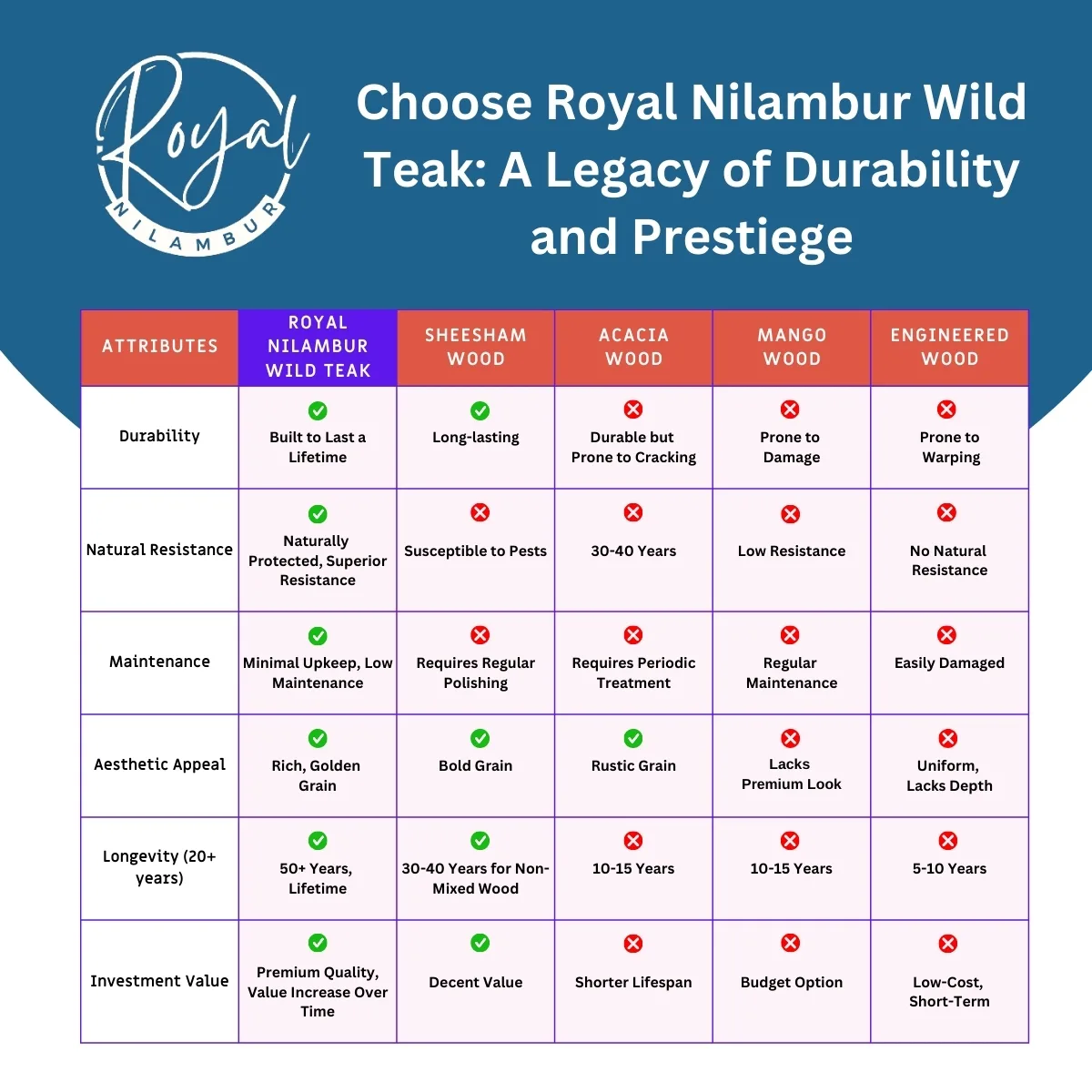
Royal Nilambur offers more than just furniture; we bring you timeless pieces crafted from the finest Nilambur wild teak, known for its exceptional strength and beauty. Each piece is handcrafted by skilled artisans who carry forward the rich tradition of Indian craftsmanship. When you choose us, you're investing in high-quality, durable furniture that reflects your refined taste and commitment to sustainability.
Is Nilambur teak really worth the investment?
Absolutely! Nilambur teak is one of the most prized woods in the world. It is known for its longevity, resistance to decay, and luxurious appearance. It's a premium material that only increases in value over time. With Royal Nilambur, you're not just buying furniture — you're investing in heirloom-quality pieces that will serve your family for generations.
Can I customize my furniture?
Of course! We understand that every home is unique, and we offer customization options to ensure that your furniture fits perfectly with your space and style. Whether you want to adjust the size, finish, or design, our team is here to bring your vision to life.
How do I know the quality of the furniture is authentic?
Royal Nilambur is dedicated to providing only the finest, ethically sourced Nilambur teak, which holds Geographical Indication (GI) certification. This certification ensures that our teak comes exclusively from the Nilambur region, which is recognized for producing the highest quality teak in the world. Our skilled artisans handcraft each piece using time-honored techniques that ensure strength, durability, and timeless aesthetic appeal. Additionally, we offer a warranty for every piece, giving you peace of mind that you've invested in a product that meets the highest standards of quality and authenticity.



Reviews
Clear filtersThere are no reviews yet.