





Royal Aevon Nilambur Teak Wood Cane Bench
- Authentic, Premium-Quality Nilambur Wild Teak
- Handcrafted by Skilled Artisans
- Sustainably Sourced and Eco-Friendly
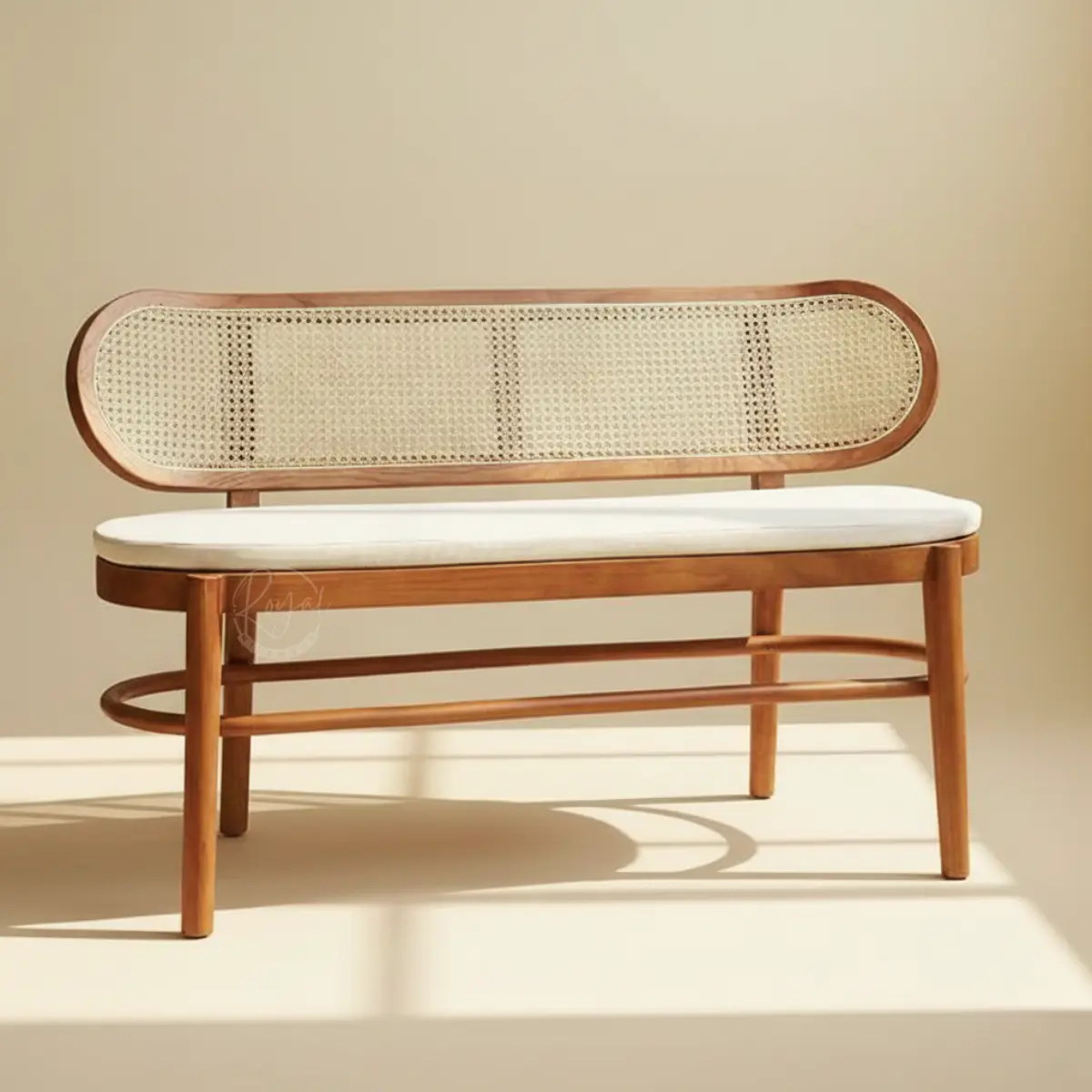
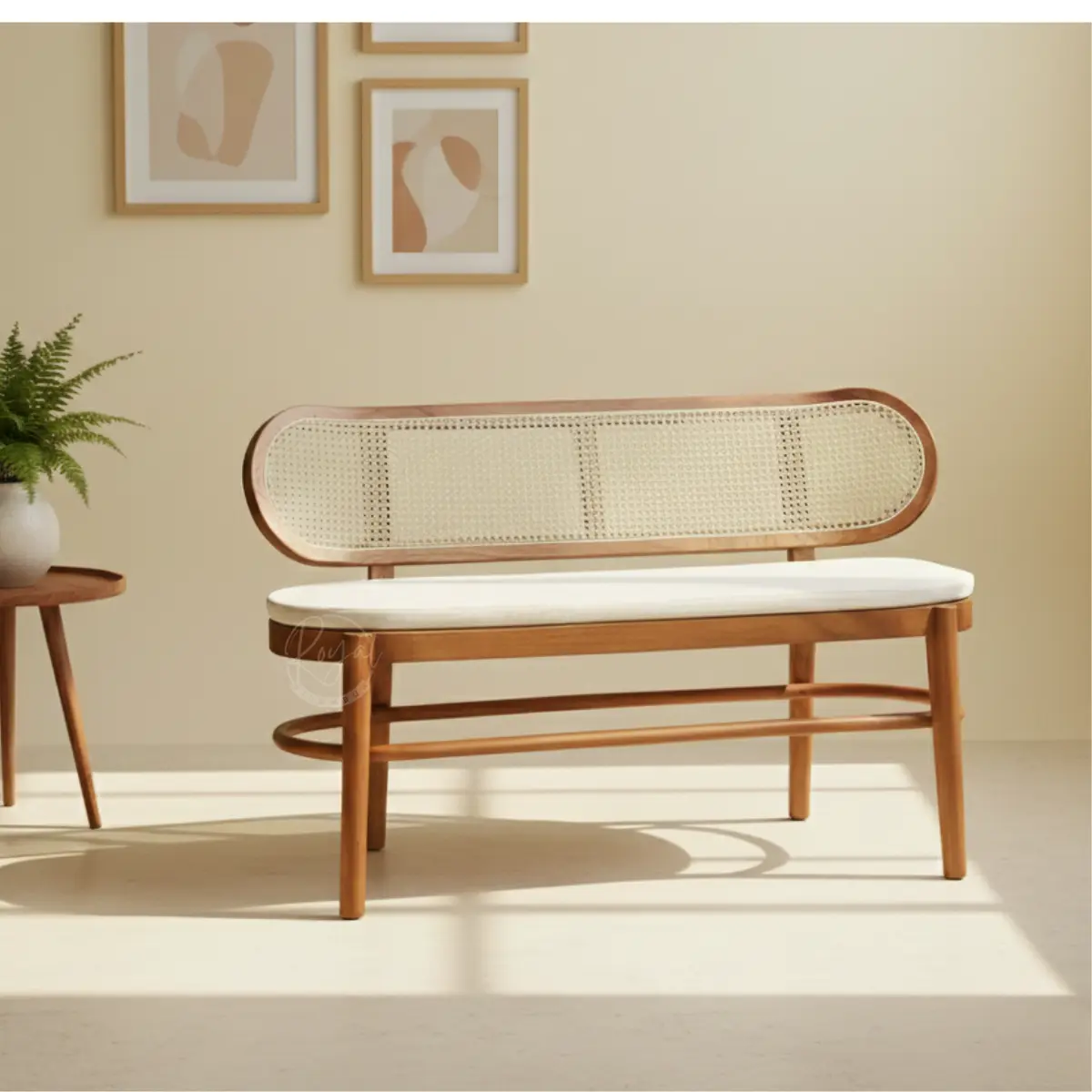
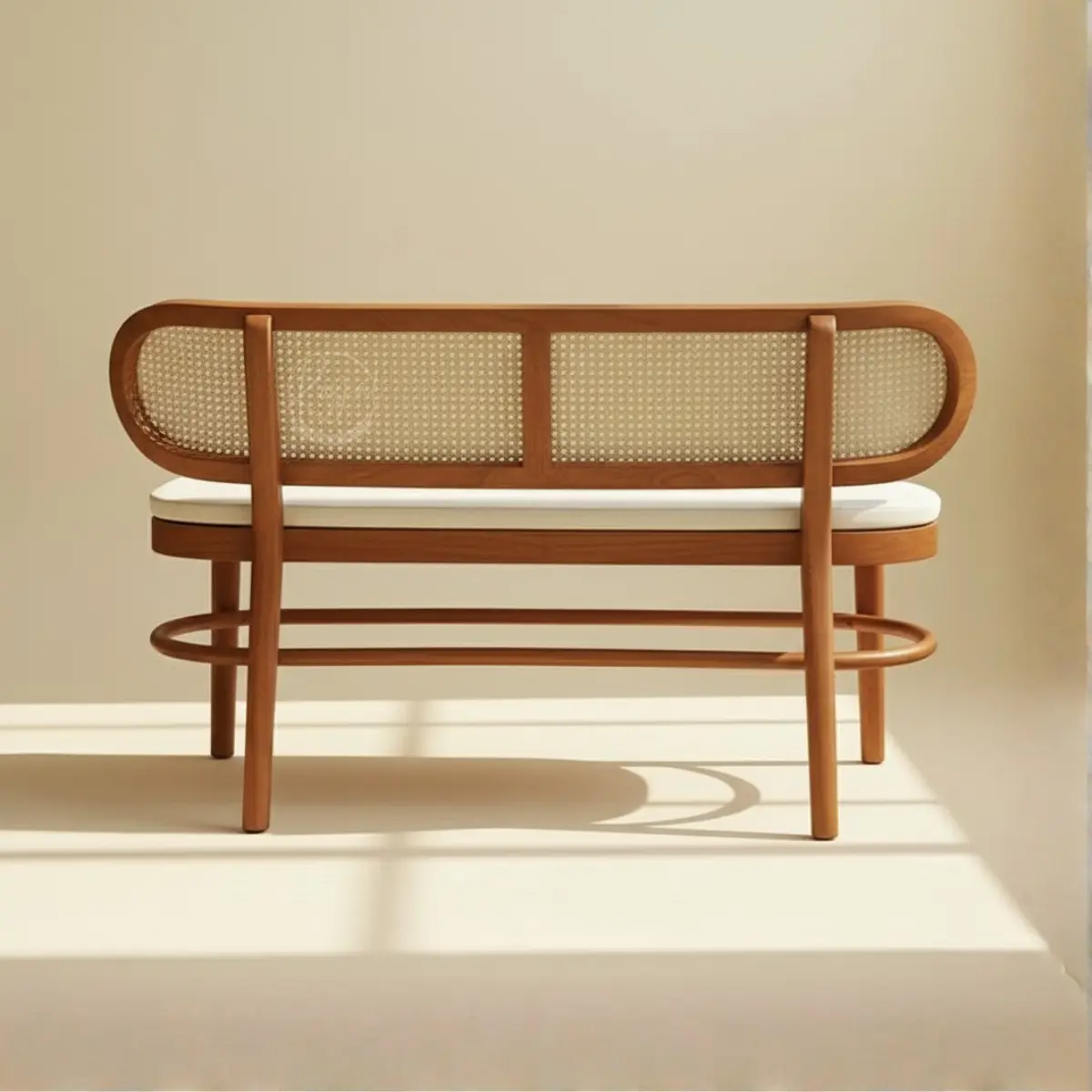
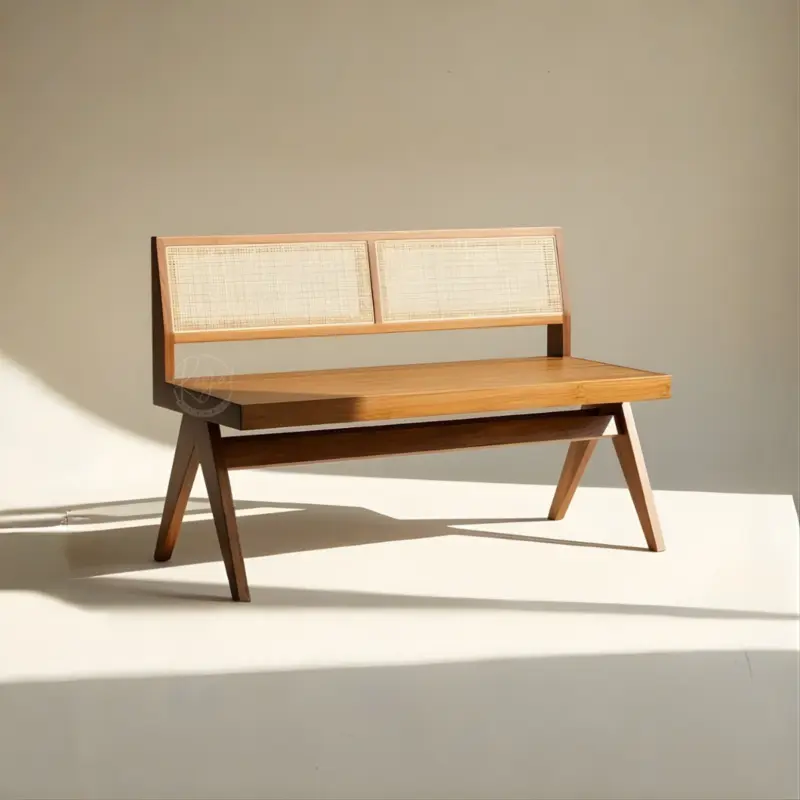
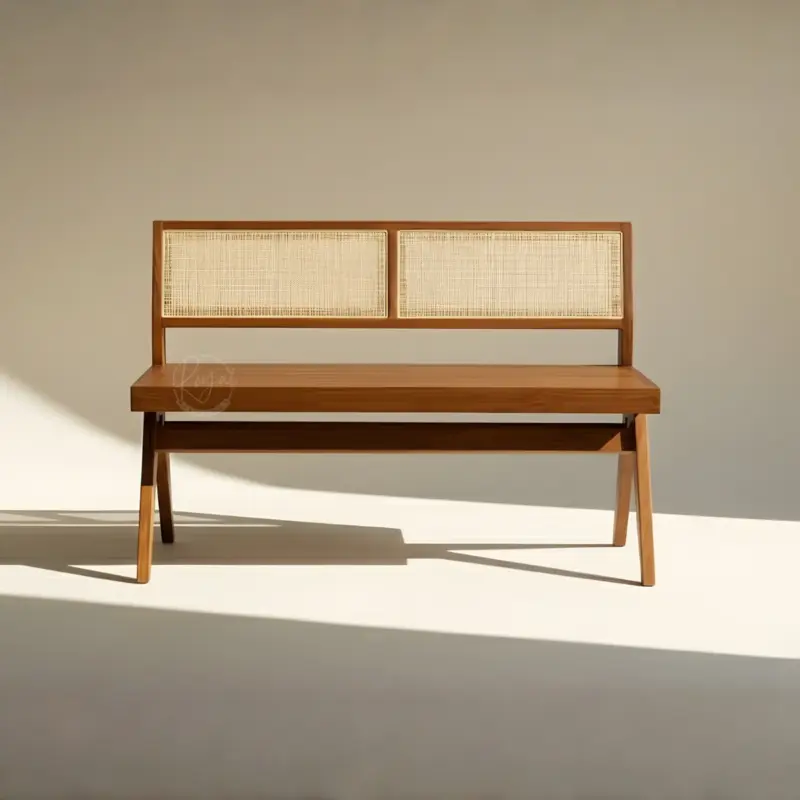
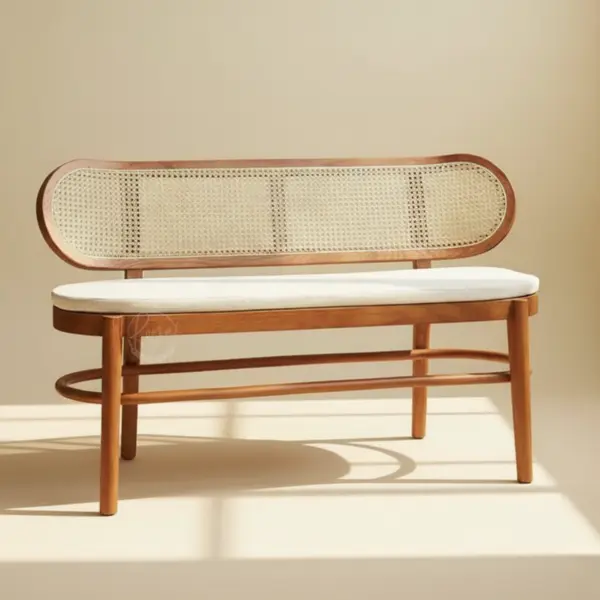
Wooden cane bench that embodies mid-century elegance—introducing the Royal Aevon. This contemporary wooden cane bench features a gracefully curved hand-woven cane backrest, soft rounded frame edges, and comfortable cushioned seat. Handcrafted from premium Nilambur teak with rich golden honey tones showcasing natural grain beauty. Perfect for entryways or living spaces seeking furniture that combines flowing organic design with lasting quality through expert craftsmanship and authentic materials.
₹46,500.00 Original price was: ₹46,500.00.₹44,999.00Current price is: ₹44,999.00.
Enjoy the convenience of free delivery to Kerala, Karnataka, Tamil Nadu, Andhra Pradesh and Telangana! If you're located somewhere else, please don't hesitate to reach out to us; we're here to help you!
- Delivery Areas: We deliver to Kerala, Karnataka, and Tamil Nadu. If you live outside these states, feel free to contact us for special arrangements.
- Crafting & Delivery Time: As we handcraft every piece with care, shipping usually takes about 3 weeks. We’ll keep you updated every step of the way.
- Quality Assurance: Rest assured, our products undergo strict quality checks before leaving our workshop.
- Defect Handling: If your product has a manufacturing defect, we’re here to help! We’ll either repair it or offer an exchange, depending on the issue. Repairs will be arranged for minor defects to ensure your product is as good as new.
- Complaint Period: We encourage you to inspect your order upon delivery and report any issues within 12 hours for a quick resolution.
- Order Cancellations: Changed your mind? No problem! You can cancel your order within 12 hours by contacting our customer care team. We’ll process the cancellation immediately.
- Refund Process: Once your order is canceled, we’ll initiate the refund. Your refund will reflect in your account as per your bank’s standard processing time.
To maintain the beauty of your Nilambur teak wood furniture for generations, follow this simple and effective care guide.:
- Regular Cleaning: Wipe your teak furniture with a soft cloth and a mix of mild soap and water to remove dirt and grime. For deeper cleaning, you can use a teak-specific cleaner. Be gentle to avoid damaging the wood’s surface.
- Avoid Harsh Chemicals: Stick to mild cleaning solutions. Avoid abrasive cleaners or steel wool, which can damage the wood's surface.
- Protect from Sunlight: Keep your teak wood away from direct sunlight to prevent fading or drying out. Use curtains or shades to reduce exposure if the furniture is near windows.
- Oil and Seal: Although teak naturally produces oils, you can occasionally apply a teak protector or sealer to maintain its golden color and protect it from UV rays and moisture. Avoid over-oiling, as teak wood doesn’t need it frequently.
Product details
| Color |
Golden – Natural Nilambur Teak Color |
|---|---|
| Material |
Authentic Nilambur Wild Teak Wood |
| Warranty |
Royal Nilambur Lifetime Assurance Warranty |
| Brand |
Royal Nilambur |
Description
The Royal Aevon wooden cane bench brings mid-century modern sophistication to contemporary homes. This beautifully proportioned seating piece features a gracefully curved cane backrest, soft rounded frame edges, cushioned seat, and reinforced stretcher base—creating seating that feels both elegant and inviting. Crafted from premium Nilambur teak with natural hand-woven cane, this modern design serves as a statement piece that honors mid-century furniture design principles while providing exceptional comfort.
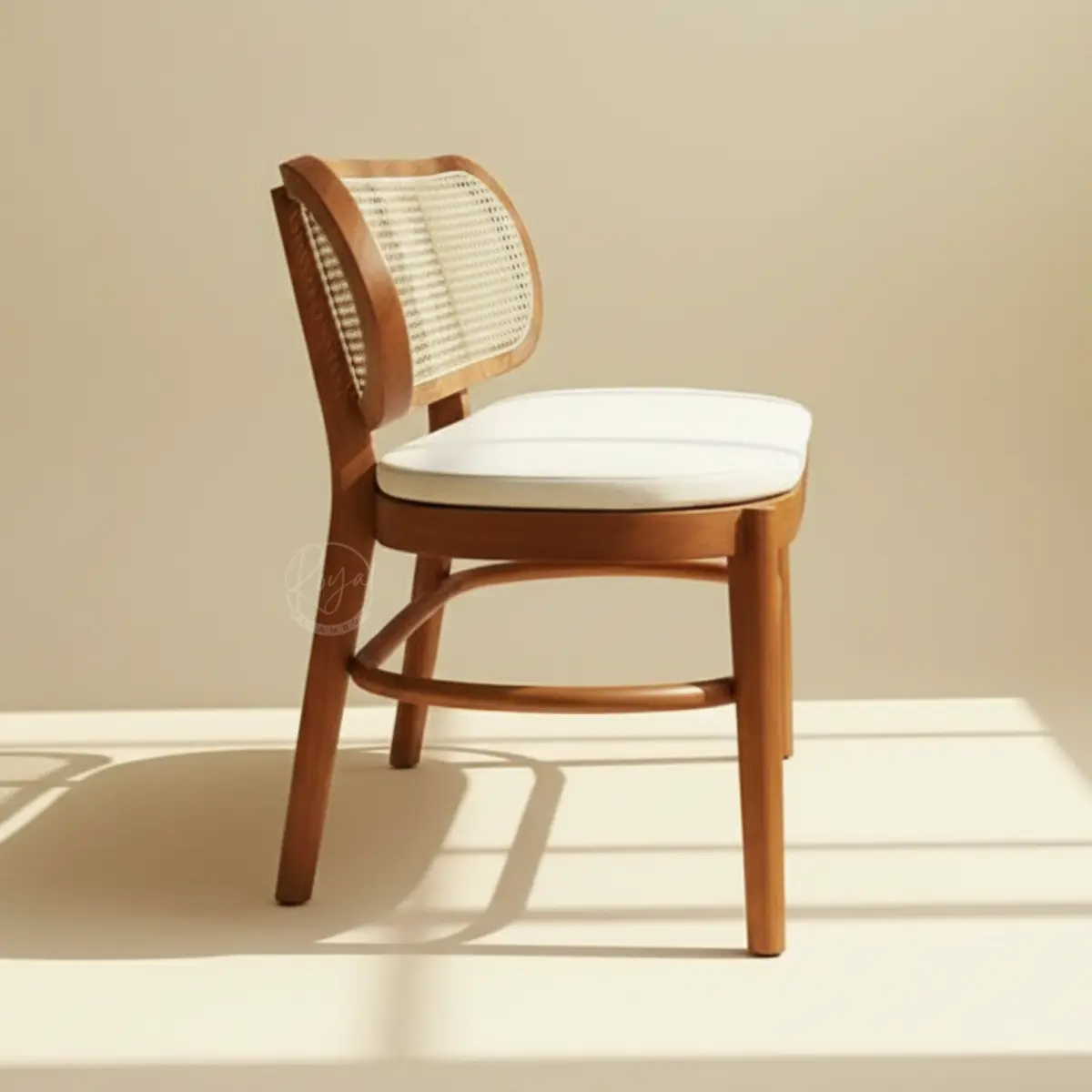
What makes this wooden cane bench special is its flowing organic design execution. The curved cane backrest creates gentle embrace providing comfortable back support while adding visual softness—the arched form feels welcoming rather than rigid. The rounded frame edges eliminate sharp corners creating tactile pleasure and visual elegance throughout. The hand-woven cane provides breathable comfort and artisanal character. The cushioned seat offers comfortable padding for extended sitting. The lower stretcher rail adds structural reinforcement while creating visual interest at the base. Every element reflects mid-century furniture philosophy where beauty and function unite seamlessly.
The proportions of this wooden cane bench create versatile elegance suitable for various spaces. The length accommodates two adults comfortably or provides generous single seating. The seat height works for entryway benches, dining benches, or living room seating. The backrest height provides comfortable support without excessive bulk. The depth balances comfortable sitting with space efficiency. The overall dimensions work beautifully in entryways, dining areas, bedrooms, or living rooms.
This wooden cane bench works beautifully in interiors embracing mid-century modern, Scandinavian, contemporary, or transitional aesthetics. The curved design suits spaces where furniture should feel approachable and organic. The warm teak tones coordinate with diverse color palettes. The quality construction ensures this isn't temporary furniture—it's designed to serve families for generations.
The natural teak finish on this wooden cane bench displays rich golden honey tones with distinctive grain patterns. The hand-woven cane adds natural texture and breathability. Over time, the teak develops deeper luster while the cane ages gracefully, ensuring your bench grows more distinguished with use.
Experience elegant seating with the Royal Aevon wooden cane bench—where curved design meets lasting quality.
Discovering Curved Mid-Century Bench Design
Finding a wooden cane bench that achieves genuine mid-century elegance with flowing curves—not angular stiffness but organic grace—requires exceptional design vision and craftsmanship mastery. The Royal Aevon wooden cane bench embodies both beautifully. Handcrafted by Royal Nilambur with attention to curved forms and quality construction, this bench delivers the timeless appeal and lasting comfort that iconic seating should provide.
This wooden cane bench succeeds through commitment to organic curved design principles. Where many mid-century pieces employ angular geometry, this bench embraces curves creating softer more welcoming aesthetic. The arched cane backrest provides gentle embrace. The rounded frame edges feel pleasant to touch. The overall silhouette flows gracefully without harsh transitions. These curved elements create furniture that feels approachable and inviting rather than austere or intimidating. The wooden cane bench demonstrates how mid-century design can achieve warmth alongside its characteristic clean lines.
The historical context of curved furniture designs influences this wooden cane bench's character. Designers like Finn Juhl, Arne Jacobsen, and Hans Wegner explored organic forms in their furniture creating pieces that felt sculptural and human-centered. Their work rejected the harsh angles dominating early modern design favoring curves that related to human bodies and natural forms. This wooden cane bench continues that tradition of humanistic design where furniture serves people comfortably while expressing artistic vision through flowing forms.
The Royal Aevon wooden cane bench represents seating designed for real living while maintaining design integrity. This isn't show piece too precious for daily use—it's practical seating built for families. The cushioned seat provides genuine comfort for extended sitting. The sturdy teak construction withstands daily household use. The cane back offers comfortable support while remaining easy to maintain. The design succeeds because it prioritizes user experience alongside aesthetic excellence. This wooden cane bench proves beautiful furniture can be lived with rather than merely admired.
Curved design furniture like this wooden cane bench creates interiors that feel softer and more welcoming than angular alternatives. The flowing lines create visual rhythm guiding eyes smoothly rather than stopping at sharp corners. The organic forms relate to natural shapes—leaves, waves, hills—creating subconscious comfort. The gentle curves suggest embrace and comfort rather than rigid formality. Spaces featuring this wooden cane bench feel more relaxed and inviting—appropriate for homes where people should feel comfortable rather than intimidated by overly formal environments.
The attention to curve quality throughout this wooden cane bench demonstrates craftsmanship mastery. Creating smooth consistent curves in wood requires considerably more skill than cutting straight lines. The backrest curve must flow gracefully without flat spots or irregularities. The frame edge rounding must transition smoothly throughout. The leg curves must maintain elegance while providing structural strength. This curve quality separates master craftsmanship from lesser work where curves appear awkward or inconsistent. Your wooden cane bench displays the refined execution distinguishing heirloom furniture from mediocre alternatives.
The practical advantages of this wooden cane bench extend beyond aesthetic considerations. The length provides seating for two adults or generous space for one. The backrest support makes extended sitting comfortable unlike backless benches causing fatigue. The cushioned seat prevents hardness fatigue during longer sitting periods. The appropriate height serves multiple purposes from entryway bench to dining seating. This wooden cane bench delivers functional benefits making it genuinely useful rather than merely decorative furniture occupying space without serving real needs.
The cultural significance of mid-century curved furniture connects this wooden cane bench to broader design movements emphasizing human needs over pure aesthetic theory. Mid-century humanistic design represented reaction against earlier modernism critics perceived as cold and uncomfortable. Designers prioritized ergonomics, comfort, and emotional warmth alongside clean aesthetics. While this wooden cane bench represents premium craftsmanship using exceptional teak, it continues those humanistic principles creating beautiful comfortable furniture serving real human needs rather than merely making design statements.
Understanding Curved Cane Backrest Artistry
The curved cane backrest in this wooden cane bench represents advanced craft requiring both cane weaving expertise and curved frame construction mastery. Understanding this complex element reveals the exceptional skill distinguishing quality furniture from cheaper alternatives using flat panels or simple constructions.
The curved frame construction for this wooden cane bench's backrest requires advanced woodworking techniques. Creating the graceful arch demands either steam-bending solid wood or cutting curves from wider stock. Steam-bending involves heating wood with steam making it pliable, then clamping over forms creating permanent curves—challenging with dense teak. More likely, craftsmen cut these curves from wide teak planks. This approach wastes material but ensures grain follows curves for maximum strength and beauty. The wooden cane bench's smooth continuous curves prove expert execution of whichever method was employed.
The cane weaving within curved frame presents unique challenges for this wooden cane bench. Standard cane weaving assumes flat rectangular frames with holes spaced regularly around perimeters. Curved frames complicate this—the perimeter curve changes the geometric relationships between holes. The weaver must account for these variations maintaining pattern consistency despite irregular spacing. The tension must adjust throughout accommodating the curve without creating loose areas or excessive tightness. This wooden cane bench's perfect cane panel within its curved frame demonstrates master weaver skill overcoming these technical challenges.
The pattern design for this wooden cane bench's backrest appears to feature vertical accent bands within the standard octagonal cane pattern. These darker vertical stripes create visual rhythm breaking the regular cane pattern creating decorative interest. Creating these accents requires planning the weaving strategically—perhaps using different weaving patterns in specific sections or possibly darker cane strands creating contrast. This decorative sophistication elevates the cane work from purely functional to artistically considered. The wooden cane bench displays cane weaving as craft art rather than merely utilitarian technique.
The frame preparation for this wooden cane bench's curved backrest requires precision drilling of holes for cane installation. The holes must space evenly following the curve—irregular spacing would disrupt the weaving pattern creating visual distraction. The holes must angle slightly toward panel backs—straight holes risk cane pulling through under tension. The holes must size precisely for cane diameter. All this precision must be achieved on curved surfaces rather than simple flat frames. This wooden cane bench's flawless cane installation proves meticulous frame preparation underlying successful weaving.
The finishing process for this wooden cane bench's curved backrest involves coordinating wood and cane treatments. The teak frame receives multiple finish coats protecting and enhancing natural beauty. The cane may receive light finish application protecting from soiling while maintaining natural appearance and breathability—over-finishing would stiffen the cane reducing its flexible comfort. The finish must transition cleanly between wood and cane without overlap creating messy appearance. This wooden cane bench's perfect finishing proves careful attention throughout the final production stages.
The structural engineering of this wooden cane bench's backrest ensures stability despite the curved form. The arch must resist forces from people leaning backward against it. The frame connections at base must be exceptionally strong preventing the backrest from loosening or flexing excessively. The cane tension must balance flexibility for comfort with firmness for support. The overall assembly must remain rigid preventing wobbling or shifting. This wooden cane bench's solid feel proves the engineering expertise underlying its graceful appearance.
The ergonomic benefits of this wooden cane bench's curved backrest enhance user comfort significantly. The arch follows spinal curves providing natural support. The gentle backward lean encourages comfortable relaxed sitting rather than rigid upright posture. The cane flexibility conforms to backs rather than remaining rigidly flat. The breathable cane prevents heat buildup during extended sitting. These ergonomic advantages make the wooden cane bench genuinely comfortable for real use rather than merely appearing comfortable superficially.
The aesthetic impact of this wooden cane bench's curved backrest creates the piece's defining visual character. The flowing arch creates sculptural presence—this bench reads as art object not merely functional furniture. The curve creates dynamic visual interest from all viewing angles—side views emphasize the arch dramatically while front views show its graceful span. The cane pattern within curves adds textural richness. The overall effect creates statement piece commanding attention while maintaining elegance preventing overpowering spaces. This wooden cane bench demonstrates how single design element can define entire furniture piece's character and appeal.
Rounded Edge Frame Construction
The rounded edges throughout this wooden cane bench's frame represent detail-oriented craftsmanship transforming simple construction into refined furniture. Understanding the significance and execution of edge rounding reveals quality distinctions separating premium furniture from basic alternatives.
The edge rounding technique for this wooden cane bench requires patient careful work. The craftsman uses shaping tools—planes, rasps, sanders—progressively rounding sharp edges into smooth curves. The rounding must remain consistent throughout—variable radius would appear sloppy. The transitions from top surfaces to rounded edges must flow smoothly without sudden changes. The corners where multiple edges meet require special attention ensuring three-dimensional smooth transitions. This wooden cane bench's perfectly consistent edge rounding throughout proves meticulous handwork applied comprehensively rather than merely on most visible areas.
The radius selection for this wooden cane bench's edge rounding creates specific tactile and visual effects. Tight small-radius rounding creates crisp defined edges retaining geometric clarity. Larger radius rounding creates softer more organic feel approaching pillow-like softness. The radius choice affects both touch sensation and visual character—tighter radius appears more precise and formal, larger radius feels more casual and comfortable. This wooden cane bench's moderate radius achieves ideal balance—soft enough for comfort, defined enough for visual clarity.
The safety benefits of this wooden cane bench's rounded edges protect users from injury that sharp edges could cause. Hard corners create collision hazards particularly dangerous for children or in busy households. Rounded edges reduce injury severity from inevitable bumps and contacts. This safety consideration matters especially for entry furniture like this bench where traffic concentrates and quick movements occur. The wooden cane bench provides family-friendly safety through thoughtful detail design rather than requiring retrofit corner guards or padding marring appearance.
The visual softness created by this wooden cane bench's rounded edges enhances the overall design aesthetic. The curves echo and complement the curved backrest creating design unity throughout. The soft edges make the bench appear more approachable and less austere—inviting use rather than seeming formal and untouchable. The edge rounding catches light creating subtle highlights and shadows adding visual interest to otherwise plain surfaces. This wooden cane bench demonstrates how simple edge treatment significantly impacts overall appearance and character.
The tactile pleasure provided by this wooden cane bench's rounded edges enhances daily experience. Hands sliding along edges feel smooth pleasant curves rather than hard corners. Sitting and standing involve hand contact with edges—rounded forms feel better than sharp angles. Legs resting against seat edges experience comfortable contact rather than pressure from hard edges. These tactile advantages matter more during actual use than they appear in photographs—the wooden cane bench reveals its quality through physical interaction.
The finishing challenges for rounded edges in this wooden cane bench require special technique. Sanding curved edges demands following contours maintaining consistent radius—flat sanding would create facets destroying the curve. Finish application on edges risks drips and runs as gravity pulls liquid finish—thin multiple coats prevent these issues better than single heavy coat. Buffing rounded edges for final smoothness requires careful technique. The wooden cane bench's perfectly finished edges throughout prove comprehensive quality control during production.
The maintenance advantages of this wooden cane bench's rounded edges reduce long-term care requirements. Sharp edges show damage readily—minor impacts chip and dent edges prominently. Rounded edges prove more forgiving—minor damage becomes less noticeable distributed across curves rather than concentrated at vulnerable corners. Cleaning rounded edges proves easier than hard corners where dirt and finish accumulate in crevices. The wooden cane bench's rounded construction provides practical long-term benefits alongside immediate aesthetic and comfort advantages.
The cost implications of this wooden cane bench's comprehensive edge rounding reflect the labor investment required. Rounding edges throughout furniture adds significant production time—each edge requires individual attention and careful work. This labor investment increases costs but delivers substantial value through improved appearance, comfort, and safety. The wooden cane bench's price reflects this quality investment—the rounded edges represent visible evidence of craftsmanship throughout distinguishing it from cheaper alternatives cutting corners (literally) to reduce production costs.
Premium Nilambur Teak Quality
The foundation of this wooden cane bench's excellence lies in Nilambur teak—wood representing India's forestry heritage offering natural superiority. The consistent warm golden color and beautiful flowing grain patterns visible throughout the bench showcase teak's exceptional characteristics making it ideal for curved furniture requiring both strength and beauty.
The Nilambur teak heritage begins with plantations established in 1842 in Kerala's Malappuram district. These historic forests have produced premium timber for over 180 years under scientific forestry management. The Royal Aevon wooden cane bench benefits from this prestigious heritage—wood shaped by optimal tropical growing conditions and sustainable practices refined across generations. This isn't generic teak but premium timber from legendary forests recognized globally for exceptional quality.
The grain characteristics of Nilambur teak showcase throughout this wooden cane bench in flowing patterns. The straight grain runs along frame members providing visual flow and structural strength. The subtle figure adds interest without dominating—the wood enhances rather than overwhelming the design. The grain orientation matters particularly for curved elements—grain following curves provides strength while displaying attractively. This wooden cane bench demonstrates thoughtful wood selection ensuring grain contributes positively to both appearance and performance.
The color uniformity and warmth in this wooden cane bench's teak creates cohesive appearance. The rich golden honey tones remain consistent throughout avoiding jarring color variations. Natural color shifts from lighter sapwood to darker heartwood add subtle interest without disrupting visual harmony. The warm tones create inviting appearance complementing the cane's natural color beautifully. This wooden cane bench displays teak's inherent beauty enhanced by quality finishing rather than obscured by heavy staining attempting to hide inferior wood.
The natural oils in Nilambur teak protect this wooden cane bench inherently from environmental challenges. Teak's natural extractives repel water, resist insects, and prevent fungal growth—biological resistance unmatched by most woods. These protective properties mean the wooden cane bench doesn't require chemical treatments creating healthier indoor environments. The natural protection extends furniture life dramatically—this bench will serve generations without deterioration plaguing less durable woods requiring eventual replacement.
The dimensional stability of teak ensures this wooden cane bench maintains its curved geometry through environmental changes. Wood movement from humidity fluctuations could distort curves or loosen joints in less stable species. Teak's exceptionally low movement coefficient prevents these issues. The curves stay true, the joints remain tight, the structure stays solid year after year through seasonal humidity cycles. This stability proves critical for curved furniture where dimensional changes would be particularly visible and problematic.
The density and durability of Nilambur teak provide this wooden cane bench resistance to daily wear. The wood resists denting from impacts, scratching from use, and general degradation from handling. The substantial weight reflects genuine density—solid hardwood throughout. The curves maintain crisp definition rather than rounding from wear. The surfaces stay smooth rather than roughening with age. This durability ensures the wooden cane bench maintains both appearance and structural integrity through decades of family use.
The workability challenges of teak required skilled craftsmen for this wooden cane bench. Teak's density dulls tools requiring frequent sharpening and quality equipment. The natural oils affect glue adhesion requiring proper surface preparation. Creating smooth curves in dense teak demands sharp tools and patient careful work. However, these difficulties yield superior results—the wood holds details beautifully, joints fit precisely, surfaces polish exceptionally. The wooden cane bench's excellence proves craftsmen mastered teak's challenges. Learn more about <a href="https://royalnilambur.com/benches/" target="_blank" rel="dofollow">premium teak benches and traditional furniture craftsmanship</a>.
Discover why teak suits minimalist furniture perfectly.
Check our minimalist furniture care for tips. Explore our Nilambur teak minimalist collection.
Check our traditional furniture care guide for specific tips. Explore our Nilambur teak traditional collection for coordinating pieces.
The sustainability credentials of this wooden cane bench's teak provide ethical confidence. Nilambur's plantations follow scientific forestry management balancing harvest with ecosystem health. Selective cutting maintains forest structure. Replanting ensures perpetual supply. Certification verifies responsible practices meeting international environmental standards. Purchasing this wooden cane bench supports sustainable forestry rather than destructive logging—your furniture choice promotes environmental stewardship alongside enjoying exceptional materials and expert craftsmanship creating beautiful long-lasting furniture.
About Us

Royal Nilambur
Handcrafted premium Nilambur teak wood furniture.

Have questions?
We're here to help! Please feel free to contact us.
Error: Contact form not found.
At Royal Nilambur, we are driven by a deep respect for nature and tradition. We believe that furniture should be more than just functional—it should be a lasting legacy that tells a story, honors craftsmanship, and reflects values of sustainability and heritage. Through our creations, we inspire people to cherish the beauty of nature in their homes and to invest in pieces that hold meaning beyond their material value.

Handcrafted Excellence

Premium Nilambur Teak Wood

Customizable Designs

Life Time Warranty
Customer Reviews
Only logged in customers who have purchased this product may leave a review.
Related Products



Why should I choose Royal Nilambur Wild Teak Furniture?
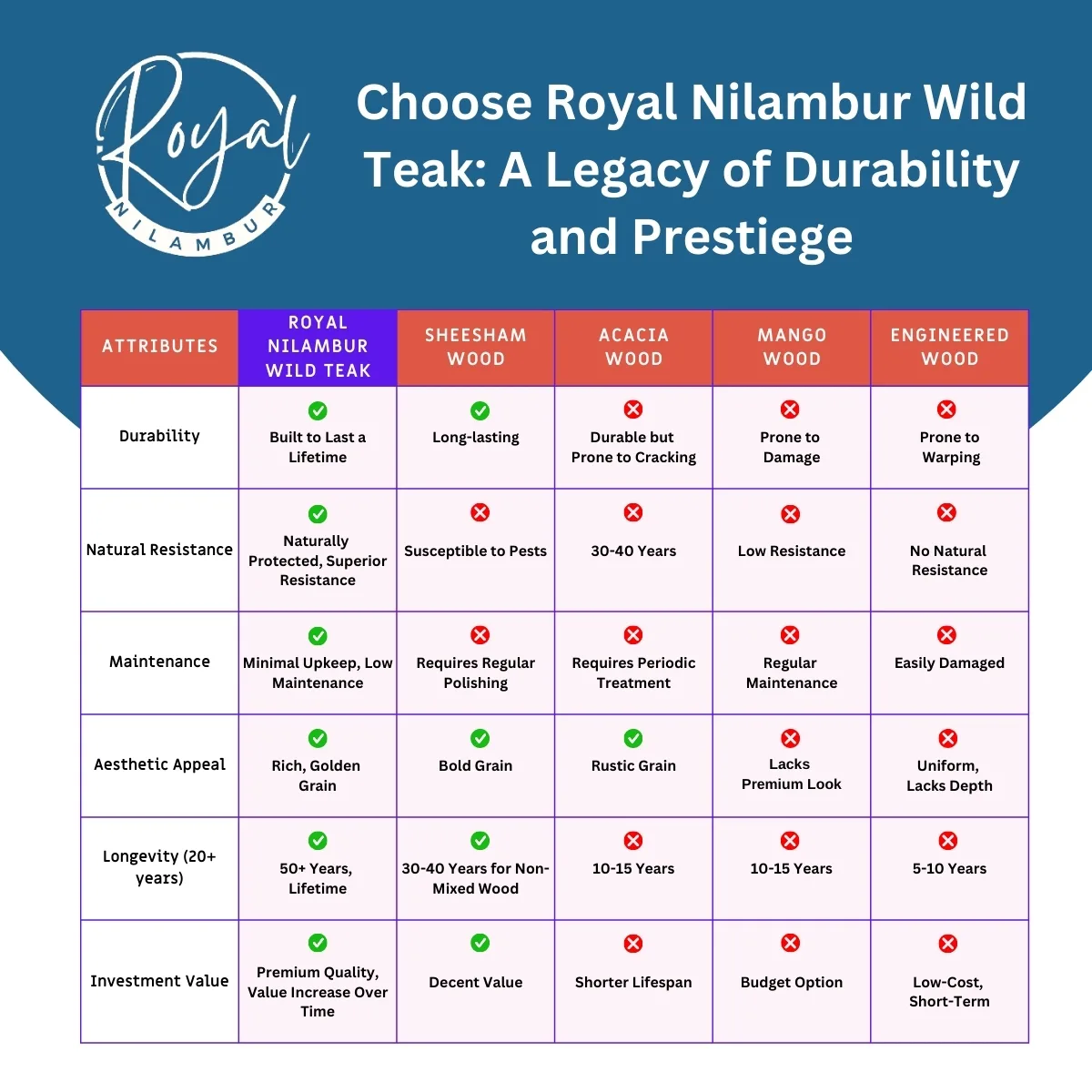
Royal Nilambur offers more than just furniture; we bring you timeless pieces crafted from the finest Nilambur wild teak, known for its exceptional strength and beauty. Each piece is handcrafted by skilled artisans who carry forward the rich tradition of Indian craftsmanship. When you choose us, you're investing in high-quality, durable furniture that reflects your refined taste and commitment to sustainability.
Is Nilambur teak really worth the investment?
Absolutely! Nilambur teak is one of the most prized woods in the world. It is known for its longevity, resistance to decay, and luxurious appearance. It's a premium material that only increases in value over time. With Royal Nilambur, you're not just buying furniture — you're investing in heirloom-quality pieces that will serve your family for generations.
Can I customize my furniture?
Of course! We understand that every home is unique, and we offer customization options to ensure that your furniture fits perfectly with your space and style. Whether you want to adjust the size, finish, or design, our team is here to bring your vision to life.
How do I know the quality of the furniture is authentic?
Royal Nilambur is dedicated to providing only the finest, ethically sourced Nilambur teak, which holds Geographical Indication (GI) certification. This certification ensures that our teak comes exclusively from the Nilambur region, which is recognized for producing the highest quality teak in the world. Our skilled artisans handcraft each piece using time-honored techniques that ensure strength, durability, and timeless aesthetic appeal. Additionally, we offer a warranty for every piece, giving you peace of mind that you've invested in a product that meets the highest standards of quality and authenticity.



Reviews
Clear filtersThere are no reviews yet.