




Royal Teakon Nilambur Teak Chair
- Authentic, Premium-Quality Nilambur Wild Teak
- Handcrafted by Skilled Artisans
- Sustainably Sourced and Eco-Friendly
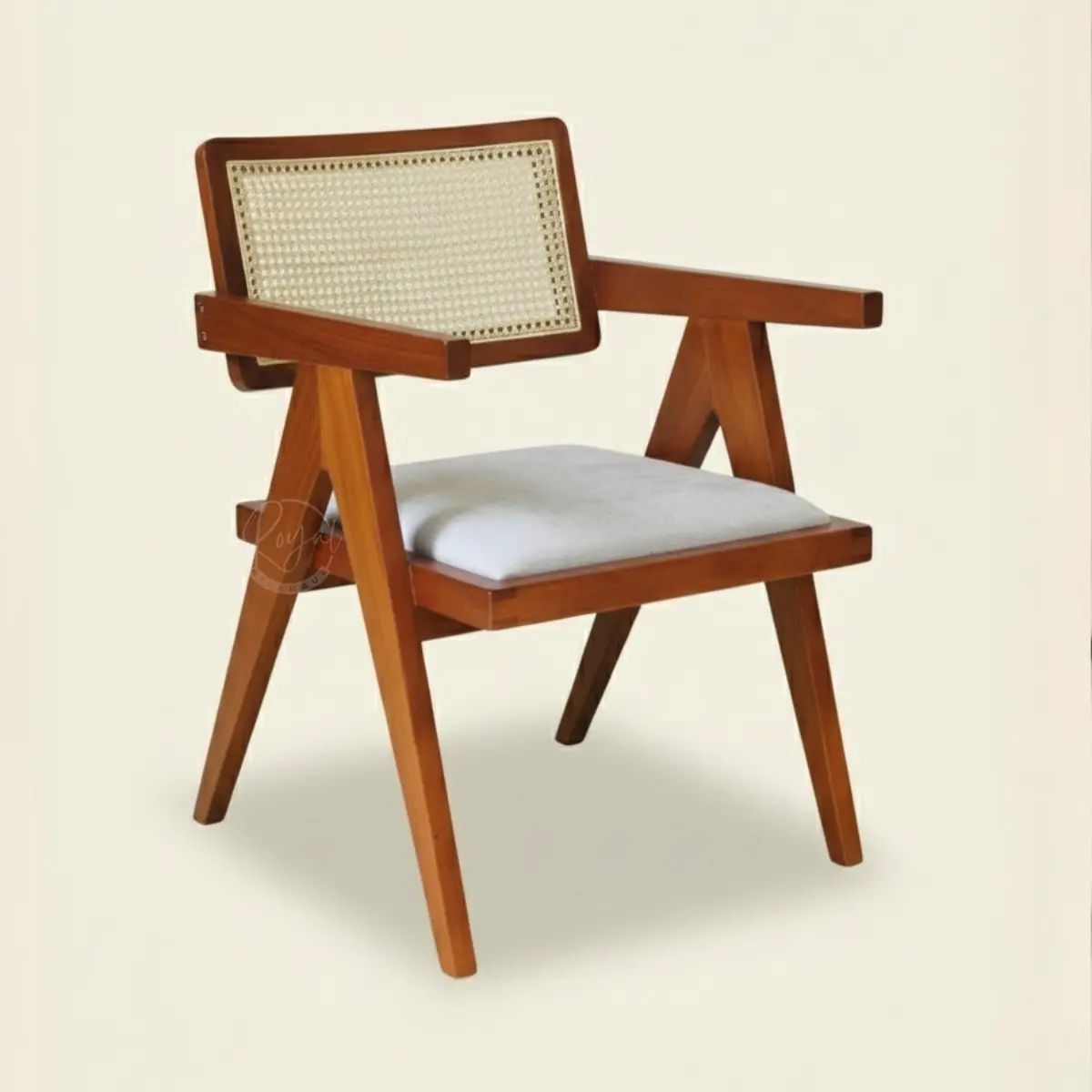
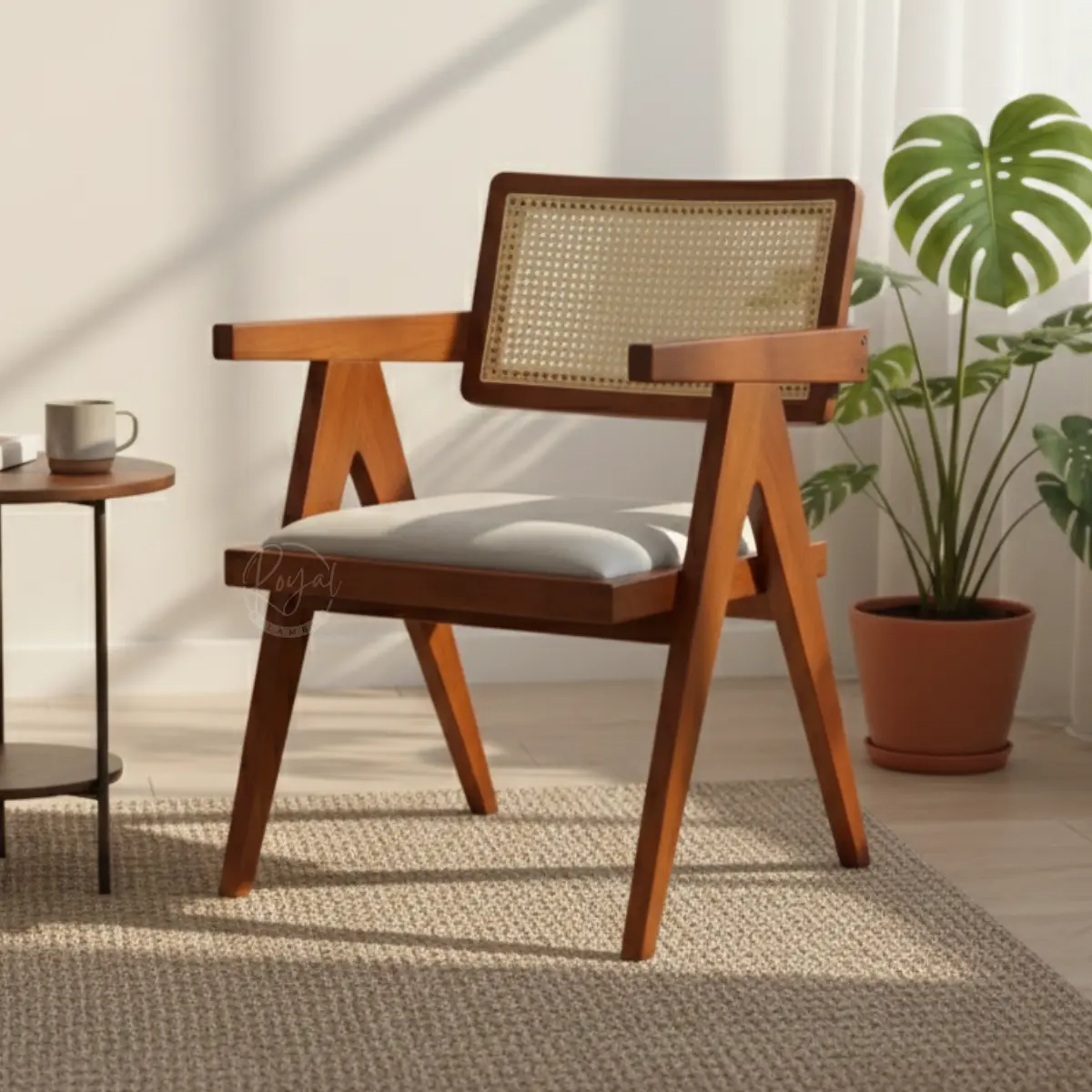
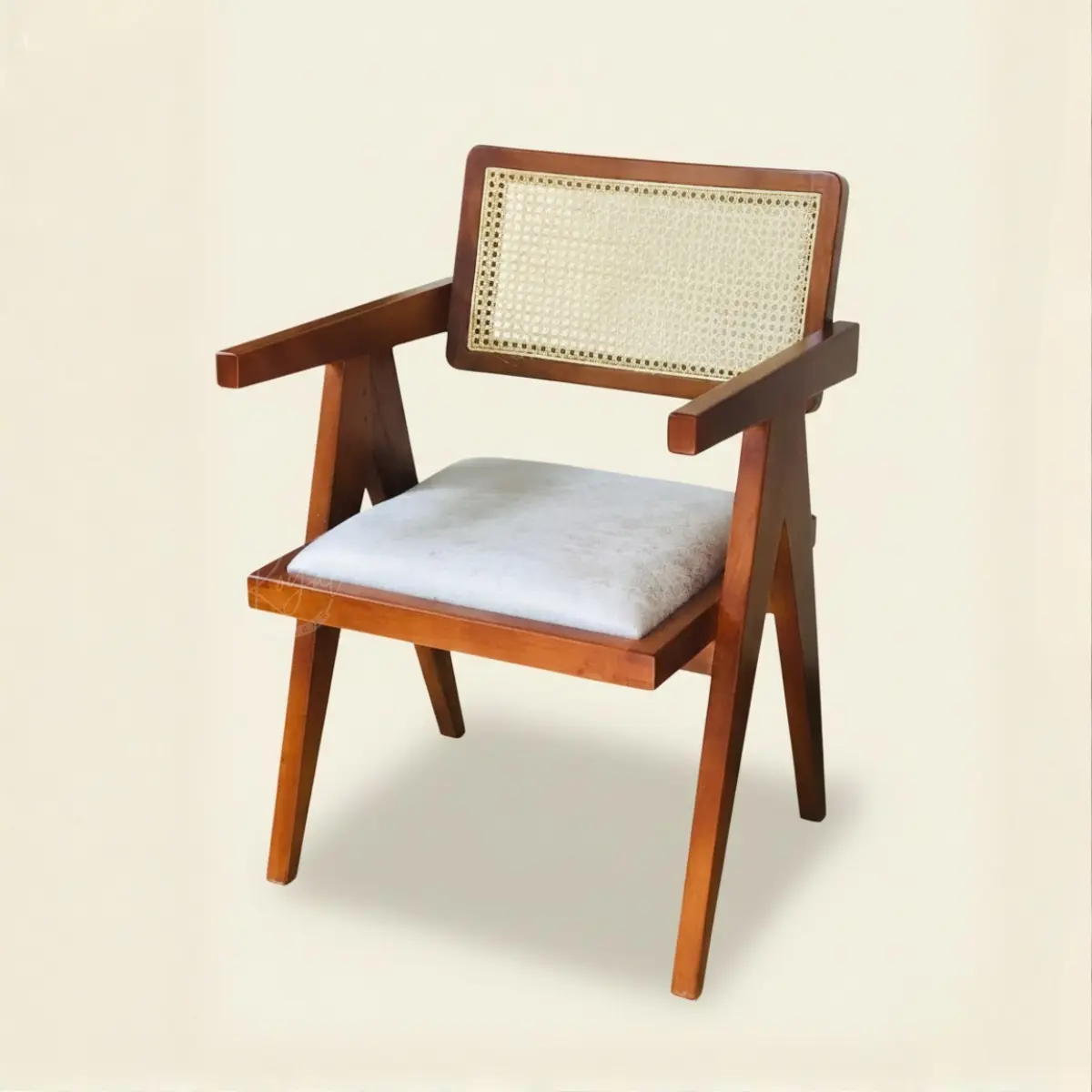
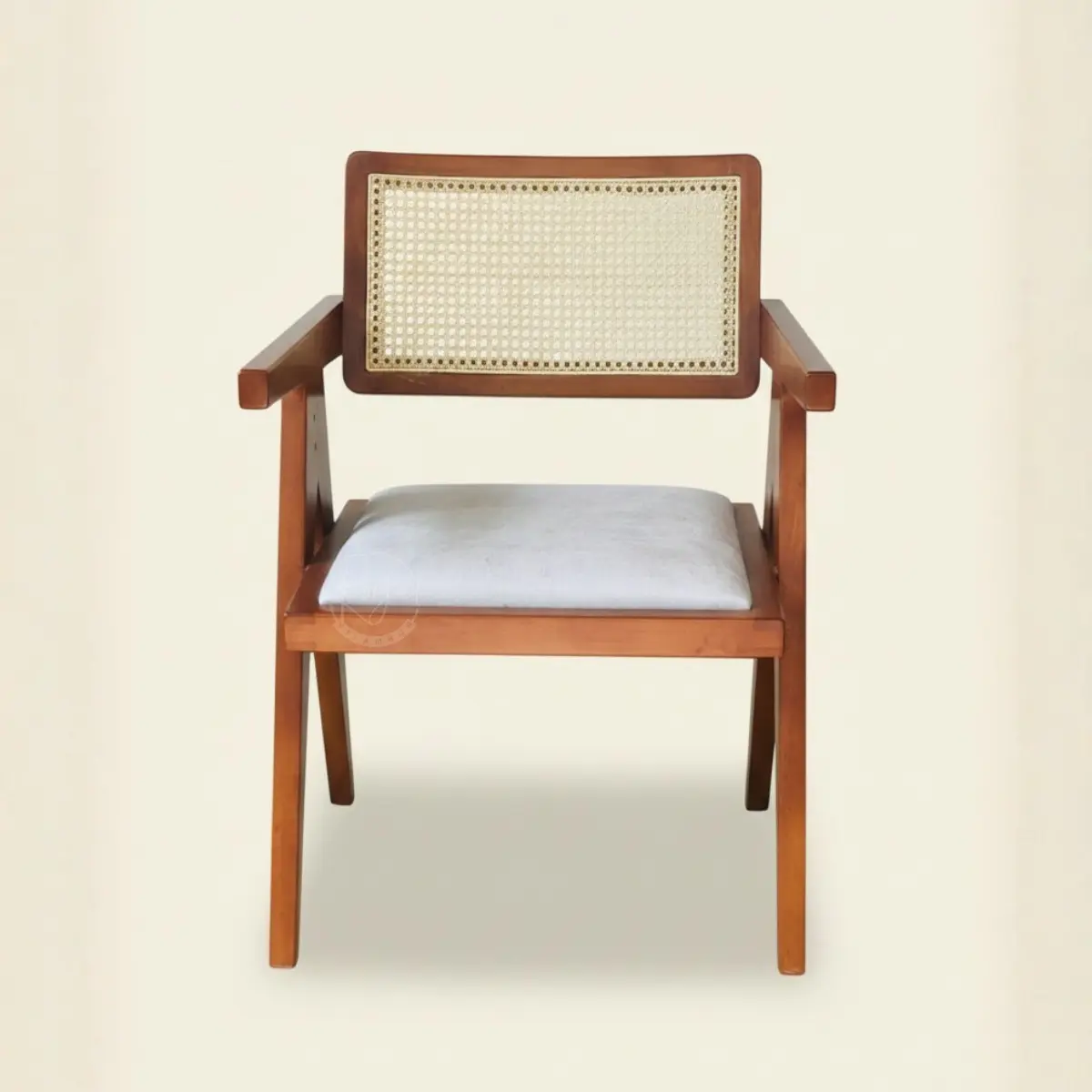
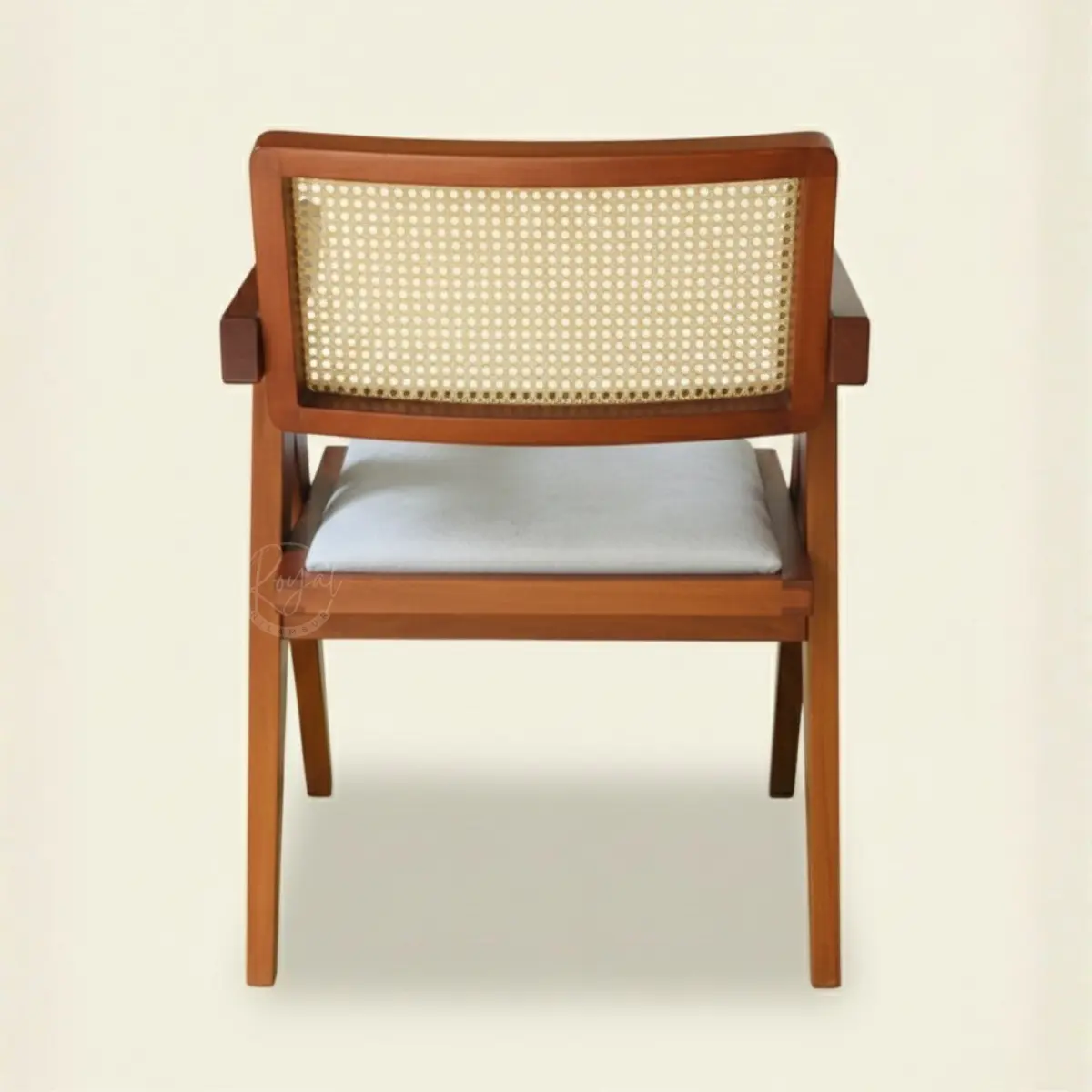
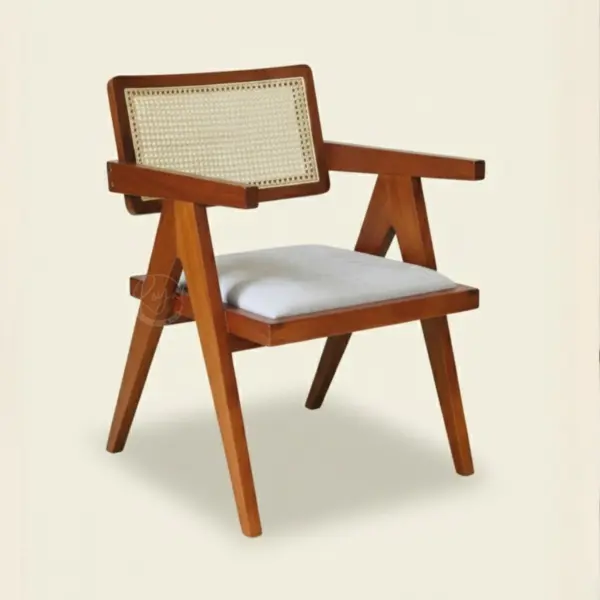
Wooden chair that embodies mid-century modern elegance—introducing the Royal Teakon. This contemporary wooden chair features a distinctive hand-woven natural cane back panel, angled A-frame legs, and comfortable upholstered seat cushion. Handcrafted from premium Nilambur teak with rich golden honey tones showcasing natural grain beauty. Perfect for living spaces seeking furniture that combines iconic mid-century design with lasting quality through expert craftsmanship and authentic materials. A timeless addition to any modern home.
₹19,500.00 Original price was: ₹19,500.00.₹17,899.00Current price is: ₹17,899.00.
Enjoy the convenience of free delivery to Kerala, Karnataka, Tamil Nadu, Andhra Pradesh and Telangana! If you're located somewhere else, please don't hesitate to reach out to us; we're here to help you!
- Delivery Areas: We deliver to Kerala, Karnataka, and Tamil Nadu. If you live outside these states, feel free to contact us for special arrangements.
- Crafting & Delivery Time: As we handcraft every piece with care, shipping usually takes about 3 weeks. We’ll keep you updated every step of the way.
- Quality Assurance: Rest assured, our products undergo strict quality checks before leaving our workshop.
- Defect Handling: If your product has a manufacturing defect, we’re here to help! We’ll either repair it or offer an exchange, depending on the issue. Repairs will be arranged for minor defects to ensure your product is as good as new.
- Complaint Period: We encourage you to inspect your order upon delivery and report any issues within 12 hours for a quick resolution.
- Order Cancellations: Changed your mind? No problem! You can cancel your order within 12 hours by contacting our customer care team. We’ll process the cancellation immediately.
- Refund Process: Once your order is canceled, we’ll initiate the refund. Your refund will reflect in your account as per your bank’s standard processing time.
To maintain the beauty of your Nilambur teak wood furniture for generations, follow this simple and effective care guide.:
- Regular Cleaning: Wipe your teak furniture with a soft cloth and a mix of mild soap and water to remove dirt and grime. For deeper cleaning, you can use a teak-specific cleaner. Be gentle to avoid damaging the wood’s surface.
- Avoid Harsh Chemicals: Stick to mild cleaning solutions. Avoid abrasive cleaners or steel wool, which can damage the wood's surface.
- Protect from Sunlight: Keep your teak wood away from direct sunlight to prevent fading or drying out. Use curtains or shades to reduce exposure if the furniture is near windows.
- Oil and Seal: Although teak naturally produces oils, you can occasionally apply a teak protector or sealer to maintain its golden color and protect it from UV rays and moisture. Avoid over-oiling, as teak wood doesn’t need it frequently.
Product details
| Color |
Golden – Natural Nilambur Teak Color |
|---|---|
| Material |
Authentic Nilambur Wild Teak Wood |
| Brand |
Royal Nilambur |
| Warranty |
Royal Nilambur Lifetime Assurance Warranty |
Description
The Royal Teakon wooden chair brings mid-century modern sophistication to contemporary homes. This beautifully proportioned chair features a distinctive hand-woven cane back, angled A-frame legs, sculpted armrests, and comfortable cushioned seat—creating seating that feels both iconic and inviting. Crafted from premium Nilambur teak in rich golden tones with natural cane weaving, this modern design serves as a statement piece that honors mid-century furniture design principles while providing exceptional comfort.
What makes this wooden chair special is its authentic mid-century modern design execution. The natural cane back panel provides breathable comfort while creating visual texture and organic warmth—the traditional weaving technique adds artisanal character that mass-produced furniture cannot replicate. The distinctive A-frame legs with their angular geometry create visual interest and structural stability. The sculpted armrests provide comfortable support while maintaining clean modern lines. Every element reflects mid-century furniture design philosophy where form follows function beautifully.
The proportions of this wooden chair create balanced elegance perfect for various settings. The seat height suits dining tables, desks, or standalone accent seating. The backrest angle provides comfortable support without excessive recline. The armrests offer support without making the chair too wide for compact spaces. The A-frame leg stance provides stability while maintaining visual lightness. The overall dimensions work beautifully in living rooms, dining areas, home offices, or reading nooks.
This wooden chair works beautifully in interiors embracing mid-century modern, contemporary, Scandinavian, or eclectic aesthetics. The iconic design suits spaces where furniture should make tasteful statements. The warm teak tones coordinate with diverse color palettes from neutral minimalism to bold contemporary schemes. The quality construction ensures this isn't temporary furniture—it's designed to serve families for generations.
The natural teak finish on this wooden chair displays rich golden honey tones with distinctive grain patterns. The hand-woven cane adds natural texture and organic beauty. The wood's inherent character needs no heavy staining—the protective finish enhances what nature created. Over time, the teak develops deeper luster while the cane ages gracefully, ensuring your chair grows more distinguished with use.
Experience modern comfort with the Royal Teakon wooden chair—where mid-century design meets lasting quality.
Discovering Mid-Century Modern Chair Design
Finding a wooden chair that achieves genuine mid-century modern elegance—not superficial imitation but authentic design execution—requires understanding the design principles and craftsmanship that defined this iconic era. The Royal Teakon wooden chair embodies both beautifully. Handcrafted by Royal Nilambur with attention to mid-century design vocabulary and quality construction, this chair delivers the timeless appeal and lasting durability that iconic furniture should provide.
This wooden chair succeeds through faithful adherence to mid-century modern design principles. The clean lines create visual simplicity without austerity. The natural materials—teak wood and woven cane—celebrate organic beauty rather than artificial finishes. The functional form prioritizes usability while maintaining aesthetic elegance. The honest construction displays joinery and materials openly rather than concealing structure. These principles defined mid-century furniture design, creating pieces that remain relevant decades after their original creation. This wooden chair continues that tradition.
The historical context of mid-century modern design influences this wooden chair's character. Post-World War II optimism, new manufacturing technologies, and changing social patterns created furniture design revolution during the 1940s-1960s. Designers rejected ornate traditional furniture favoring clean functional forms. Natural materials gained appreciation. Comfort and practicality became design priorities. Iconic designers like Hans Wegner, Pierre Jeanneret, and others created chairs that became design classics still celebrated today. This wooden chair draws inspiration from that golden age while serving contemporary needs perfectly.
The Royal Teakon wooden chair represents furniture designed for modern living while honoring timeless design principles. This isn't trendy furniture that will feel dated quickly—it's based on design language proven over decades. The mid-century aesthetic has experienced renewed appreciation in recent years as people rediscover the elegance of simple functional design. This wooden chair serves current tastes while promising to remain stylish through changing trends. It's furniture that transcends fashion becoming truly timeless.
Mid-century modern wooden chair design creates interiors that feel sophisticated yet approachable. The clean lines prevent visual clutter. The natural materials add warmth preventing cold minimalism. The comfortable proportions welcome use rather than intimidating with museum-piece formality. The design integrity creates spaces that feel considered and intentional. This is furniture that makes homes feel like curated environments reflecting taste and appreciation for design excellence rather than merely functional spaces.
The attention to detail throughout this wooden chair demonstrates craftsmanship philosophy where every element receives equal consideration. The cane weaving displays consistent pattern. The leg angles match precisely. The armrests curve gracefully. The joints fit tightly. The finish coats build evenly. This consistency reflects standards where quality matters throughout rather than merely on visible surfaces. Your wooden chair represents craftsmanship integrity where excellence extends to every component regardless of prominence.
The practical advantages of this wooden chair extend beyond aesthetic considerations. The cane back provides breathable comfort—particularly valuable in warm climates or seasons where solid backs trap heat. The armrests offer support making the chair suitable for extended sitting whether dining, working, or relaxing. The appropriate seat height serves multiple purposes from dining to desk work. The durable construction withstands daily family use. This wooden chair delivers real functional benefits alongside its undeniable visual appeal.
The cultural significance of mid-century modern furniture connects this wooden chair to broader design movements and social changes. Mid-century design represented democratic ideals—good design should be accessible rather than only available to elite. Natural materials and honest construction reflected authenticity values. Functional comfort prioritized user needs over status display. While this wooden chair represents premium craftsmanship using exceptional teak, it continues those democratic design principles creating beautiful functional furniture serving real human needs rather than merely impressing visitors.
Understanding Cane Weaving Artistry
The natural cane back panel in this wooden chair represents traditional craft requiring patience, skill, and understanding of natural materials. Understanding cane weaving reveals the artisanal quality distinguishing hand-woven furniture from cheap alternatives using synthetic webbing or printed patterns imitating genuine cane.
The cane material itself in this wooden chair comes from rattan palms—climbing plants growing in tropical regions. The outer bark strips away revealing the inner core which is processed into caning material. The cane arrives in various widths—finer strands for delicate work, wider strands for faster weaving and stronger construction. This wooden chair likely uses medium-width cane balancing visual refinement with durability. The natural material breathes, flexes comfortably, and ages beautifully developing rich patina over decades of use.
The weaving pattern in this wooden chair follows traditional techniques refined across centuries. The most common pattern—octagonal or "standard" cane—involves weaving horizontal strands, then vertical, then diagonal in both directions, creating strong geometric pattern. Some variations create different visual effects—closer weaving for finer appearance, wider spacing for more open look. This wooden chair's cane likely follows traditional patterns proving reliable through generations of use. The consistent regular pattern demonstrates skilled weaving where tension maintains uniformity throughout the panel.
The weaving process for this wooden chair requires considerable manual skill. The craftsperson begins by drilling precise holes around the frame opening perimeter—these holes receive the cane strands. The weaving proceeds systematically—first direction establishes the foundation, subsequent passes interweave creating the strong flexible panel. The craftsperson must maintain consistent tension—too loose creates saggy weak weaving, too tight risks breaking strands or warping frames. The cane is dampened during weaving making it pliable, then dries tight creating the final firm surface. This wooden chair's perfect cane panel proves master weaver skill.
The frame preparation for this wooden chair's cane panel requires precision carpentry. The holes must space evenly around the perimeter—irregular spacing creates visual disruption in the weaving pattern. The holes must angle slightly toward the panel back—straight holes risk cane pulling through under stress. The holes must be properly sized for the cane width—too large creates loose weaving, too small makes installation difficult. The frame must remain flat and stable—warping or movement would stress the cane causing premature failure. This wooden chair's frame demonstrates the carpentry expertise supporting successful cane installation.
The finishing process for this wooden chair's cane involves several steps after weaving completes. The cane is trimmed flush with the frame back—loose ends would snag and look untidy. Splines—thin strips of material—often press into grooves securing the cane firmly and creating finished appearance. Alternatively, individual strands might peg into holes individually. The cane may receive light finish coat protecting from soiling while maintaining natural appearance and breathability. The result is the beautiful durable cane panel visible in this wooden chair.
The functional benefits of this wooden chair's cane back extend beyond visual appeal. The cane breathes allowing air circulation—crucial for comfort during extended sitting particularly in warm weather. The slight flexibility provides ergonomic comfort conforming gently to backs rather than remaining rigidly flat. The organic texture feels pleasant against skin. The visual transparency created by the woven pattern adds lightness preventing the chair from feeling heavy or imposing in spaces. These functional advantages explain why cane remains popular centuries after its introduction in furniture.
The maintenance requirements for this wooden chair's cane remain modest with proper care. Regular dusting prevents dirt accumulation in the weave. Occasional vacuuming with brush attachment removes deeper debris. Wiping with slightly damp cloth addresses surface soiling. Avoid excessive moisture which could loosen or damage cane. Address snags or breaks promptly before they extend. With reasonable care, quality cane like this wooden chair's will serve decades maintaining both appearance and function. The durability belies the delicate appearance—properly installed cane proves remarkably resilient.
The replacement potential for this wooden chair's cane provides long-term serviceability. Should the cane eventually fail through extreme age or damage, skilled craftspeople can remove old cane and install fresh weaving. The frame's drilled holes facilitate this renewal process. While quality cane lasts decades, knowing replacement remains possible provides confidence in the wooden chair's indefinite serviceability. This repairability distinguishes quality furniture where components can refresh rather than requiring complete replacement.
A-Frame Leg Design and Engineering
The distinctive A-frame legs of this wooden chair represent more than aesthetic choice—they're engineered solution providing stability while creating the angular visual character defining mid-century modern furniture. Understanding this leg design reveals the thoughtful engineering underlying seemingly simple furniture.
The angled leg design in this wooden chair creates several functional advantages. The outward splay increases the base footprint improving stability—physics demands wider bases for secure standing. The angles distribute weight efficiently—forces travel along leg lengths into floor contact rather than creating shear stresses at joints. The design resists racking—side-to-side movements that would loosen rectangular frames feel more stable with angled legs. This wooden chair's legs aren't merely styled—they're engineered for reliable performance through decades of use.
The leg joinery in this wooden chair requires advanced carpentry skills. Angled legs mean compound angle joints—cuts that are neither square nor simple miters but complex three-dimensional angles. The seat frame must receive leg tenons at precise angles ensuring legs splay correctly while maintaining equal lengths. Any errors in these complex joints would manifest as uneven leg lengths or incorrect splay angles. This wooden chair's perfect stance proves the joinery expertise applied during construction. The compound angles challenge even experienced craftsmen making this furniture that separates masters from novices.
The visual character created by this wooden chair's A-frame legs defines its mid-century modern aesthetic. The angular forms create dynamic visual interest—these legs have personality rather than the anonymity of simple straight legs. The geometry catches light creating shadows and highlights emphasizing the three-dimensional sculptural quality. The splayed stance creates visual stability—viewers subconsciously register the wide base creating perception of security. The design feels intentional and considered rather than arbitrary. These visual qualities explain why angular leg designs became iconic elements of mid-century furniture.
The proportional relationships in this wooden chair's leg design follow aesthetic principles creating visual harmony. The leg thickness relates to their length—too thin appears fragile, too thick looks clunky. The splay angle creates appropriate stance—too narrow gains insufficient stability, too wide becomes ungainly. The height creates proper seat elevation for comfortable sitting. Traditional craftsmen internalized these proportional principles through apprenticeship learning to see and create proper relationships intuitively. This wooden chair's pleasing proportions reflect either that traditional knowledge or deliberate design analysis achieving similar results.
The material selection for this wooden chair's legs requires strong stable wood. The angled forces create different stresses than vertical legs experience. The joints endure significant leverage that could split weaker woods. Teak's exceptional strength and stability make it ideal for these demanding applications. The straight grain runs along leg lengths providing maximum strength. The natural dimensional stability prevents warping that would disrupt the precise angles. This wooden chair's Nilambur teak legs provide the strength and stability ensuring reliable long-term performance.
The floor contact design on this wooden chair's legs protects both chair and floors. The leg ends might feature protective feet—felt pads, rubber caps, or integrated floor protectors preventing scratches on hardwood or tile. Without protection, wood-to-floor contact would mar floor surfaces while potentially roughing the wood ends. Quality furniture includes these details protecting both itself and surroundings. This wooden chair likely incorporates appropriate floor protection—invisible perhaps but practically valuable.
The maintenance of this wooden chair's legs remains simple requiring only basic care. Regular inspection ensures joints remain tight—occasional tightening if looseness develops maintains stability. Checking floor protectors and replacing when worn preserves floor protection. Cleaning spills quickly prevents moisture penetration that could affect wood or joints. These simple practices ensure the legs maintain their function and appearance through decades of service. The robust construction rewards basic care with reliable performance.
The historical precedents for this wooden chair's angled leg design connect to broader mid-century furniture traditions. Iconic designers experimented with angled forms creating distinctive profiles that became design classics. Pierre Jeanneret's furniture for Chandigarh prominently featured angular forms including splayed legs. Hans Wegner explored angled elements in numerous chairs. This wooden chair continues those experimental traditions applying proven design principles creating contemporary furniture honoring mid-century heritage while serving modern needs.
Nilambur Teak Quality and Character
The foundation of this wooden chair's excellence lies in Nilambur teak—wood representing India's forestry heritage offering natural superiority unmatched by alternatives. The consistent warm golden color and beautiful grain patterns visible throughout the chair showcase teak's exceptional characteristics making it ideal for fine furniture requiring both beauty and durability.
The Nilambur teak heritage begins with plantations established in 1842 in Kerala's Malappuram district. These historic forests have produced premium timber for over 180 years under scientific forestry management. The Royal Teakon wooden chair benefits from this prestigious heritage—wood shaped by optimal tropical growing conditions and sustainable practices refined across generations. This isn't generic teak from unknown sources but premium timber from legendary forests recognized globally among woodworkers and furniture makers.
The color characteristics of Nilambur teak showcase throughout this wooden chair in rich golden honey tones. The natural color variation creates visual interest—subtle shifts from lighter sapwood to darker heartwood add organic beauty. Rather than heavy staining creating artificial uniformity, quality finishing enhances these natural variations. The wooden chair displays authentic teak character celebrating the wood's inherent beauty. Over time, exposure to light and air develops the color into even richer golden brown—this wooden chair will grow more beautiful through years of service.
The grain patterns visible throughout this wooden chair demonstrate teak's distinctive beauty. The straight grain provides visual flow along chair components—legs, arms, frame members—creating coherent appearance. The subtle figure—natural patterns from growth characteristics—adds interest without dominating. Occasional darker streaks from mineral deposits or growth variations contribute unique character. Examining different parts of this wooden chair reveals how grain orientation and figure create varied but harmonious appearance throughout the piece.
The natural oils in Nilambur teak protect this wooden chair inherently. Teak contains extractives that repel water preventing moisture damage—even without finish, teak resists water better than most woods with heavy protective coatings. These compounds resist termites and other wood-boring insects naturally. Fungal growth struggles on teak surfaces. This biological resistance means the wooden chair doesn't require chemical treatments for protection. The wood defends itself naturally while creating healthier indoor environments free from treatment chemicals.
The dimensional stability of teak ensures this wooden chair maintains its geometry through environmental changes. All wood expands and contracts with humidity fluctuations—this movement causes problems in furniture as joints loosen and components warp. Teak's movement coefficient ranks among hardwoods' lowest. The joints in this wooden chair remain tight through seasonal humidity changes. The components stay straight and true. The chair doesn't develop wobbles or squeaks. This stability explains why teak remains the premier choice for fine furniture—it simply performs better than alternatives.
The density of Nilambur teak provides this wooden chair exceptional durability. The wood resists denting, scratching, and wear from daily use. The substantial weight you feel when moving the chair reflects genuine density—this is solid hardwood, not lightweight softwood or engineered materials. This density translates to longevity. The wooden chair will serve generations without showing significant wear. The edges stay crisp, the surfaces remain smooth, the structural integrity persists. This durability justifies the investment through decades of service.
The workability characteristics of teak challenged the craftsmen creating this wooden chair while ensuring exceptional results. Teak's density dulls cutting tools requiring frequent sharpening. The natural oils can affect glue adhesion requiring proper preparation. However, these challenges reward skilled craftsmen with superior outcomes. The wood holds crisp details without tearout. The joints fit precisely. The surfaces polish beautifully. The difficulties working teak ensure only skilled craftsmen attempt it—the wooden chair reflects genuine expertise rather than entry-level woodworking.
The sustainability story behind this wooden chair's teak provides ethical confidence. Nilambur's plantations follow scientific forestry management balancing harvest with forest ecosystem health. Selective cutting removes mature trees while preserving forest structure and biodiversity. Replanting programs ensure continuous supply for future generations. Forest certification verifies responsible practices meeting international environmental standards. Purchasing this wooden chair supports sustainable forestry rather than destructive logging. Your furniture choice promotes environmental stewardship alongside enjoying exceptional natural materials and expert craftsmanship. Learn more about <a href="https://royalnilambur.com/chairs/" target="_blank" rel="dofollow">premium teak chairs and sustainable furniture craftsmanship</a>.
Ergonomic Comfort and Functionality
The comfort provided by this wooden chair results from careful attention to ergonomic principles and functional design considerations. Understanding how design choices affect user comfort reveals why this chair succeeds as practical seating rather than merely decorative furniture.
The seat height of this wooden chair follows ergonomic standards for comfortable sitting. The distance from floor to seat surface typically measures 17-18 inches for dining and general seating—this height allows most adults' feet to rest flat on floor while thighs remain roughly parallel to ground. Too low seats strain getting up and create uncomfortable pressure. Too high seats leave feet dangling creating discomfort behind knees and thighs. This wooden chair's proper height serves various purposes from dining to desk work to relaxed seating comfortably.
The seat depth on this wooden chair provides comfortable thigh support without uncomfortable edge pressure. The distance from front edge to backrest typically measures 16-18 inches for dining chairs—sufficient support for most adults without extending so far that seat front digs behind knees uncomfortably. Proper depth becomes critical for extended sitting comfort. This wooden chair balances adequate support with appropriate depth ensuring comfortable use whether dining, working, or relaxing for extended periods.
The backrest angle and height on this wooden chair support comfortable posture. The cane back tilts slightly backward from vertical—perhaps 5-10 degrees—providing comfortable support without forcing ramrod-straight posture that becomes uncomfortable quickly. The height extends high enough for back support without creating excessive bulk or interfering with arm movement. The slightly flexible cane conforms gently to backs rather than remaining rigidly flat. These design choices create comfortable support appropriate for various activities from eating to working to conversing.
The armrest design on this wooden chair provides comfortable arm support without constraining users. The arms rise to comfortable height—typically 7-9 inches above seat surface—allowing relaxed arm positioning without shoulder hunching. The sculpted profiles fit naturally under forearms. The width between arms accommodates most users comfortably without excessive spread. The arms enhance comfort without making the chair awkwardly wide for compact spaces. These thoughtful proportions demonstrate human-centered design prioritizing user comfort.
The cushion addition to this wooden chair enhances seating comfort significantly. While teak seats are beautiful, they would feel hard during extended sitting. The upholstered cushion provides comfortable padding while maintaining visual elegance. The cushion thickness balances comfort with maintaining proper seat height proportions. The upholstery fabric or leather selection affects both comfort and appearance—breathable materials work better than non-porous synthetics particularly for extended sitting. The cushion attachment should secure it reliably while allowing removal for cleaning or eventual replacement.
The weight capacity of this wooden chair ensures safe use by adults of various sizes. Quality construction with proper joinery and substantial teak components provides excellent strength. The robust joinery particularly in leg-to-seat connections ensures stability under normal use. The conservative design with proven construction techniques creates furniture that will serve reliably without concerns about structural adequacy. This wooden chair represents furniture built properly rather than minimized to reduce materials and cost potentially compromising safety or durability.
The mobility of this wooden chair balances stability with reasonable portability. The chair weighs enough that it doesn't feel flimsy or easily tipped but not so heavy that moving it becomes difficult. The design allows grasping securely for lifting and moving—important for cleaning, room rearrangement, or relocating the chair to different spaces. Floor protectors on leg ends prevent floor damage while facilitating sliding when needed. The wooden chair achieves practical balance between stability and movability serving real household needs.
Check our minimalist furniture care for tips. Explore our Nilambur teak minimalist collection.
Check our traditional furniture care guide for specific tips. Explore our Nilambur teak traditional collection for coordinating pieces.
The multi-functional capability of this wooden chair allows serving various purposes throughout homes. It works as dining chair, desk chair for home office, accent chair in living room, reading chair in bedroom, or stylish seating in entry halls. This versatility creates excellent value—one well-designed chair serves multiple purposes as needs change. The timeless design ensures the chair looks appropriate in various settings. This wooden chair represents furniture that adapts rather than limiting users to single predetermined function.
About Us

Royal Nilambur
Handcrafted premium Nilambur teak wood furniture.

Have questions?
We're here to help! Please feel free to contact us.
Error: Contact form not found.
At Royal Nilambur, we are driven by a deep respect for nature and tradition. We believe that furniture should be more than just functional—it should be a lasting legacy that tells a story, honors craftsmanship, and reflects values of sustainability and heritage. Through our creations, we inspire people to cherish the beauty of nature in their homes and to invest in pieces that hold meaning beyond their material value.

Handcrafted Excellence

Premium Nilambur Teak Wood

Customizable Designs

Life Time Warranty
Customer Reviews
Only logged in customers who have purchased this product may leave a review.
Related Products
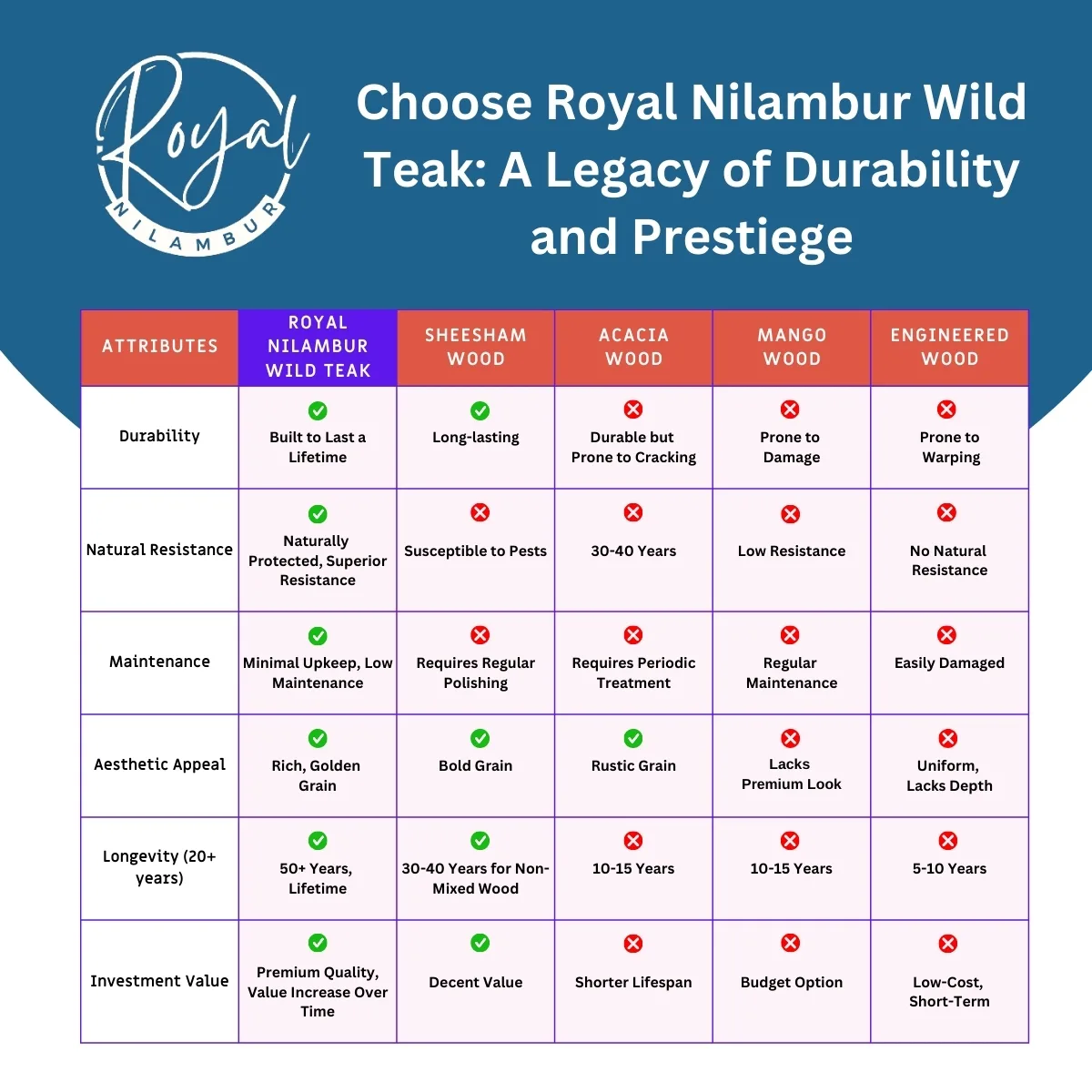
Why should I choose Royal Nilambur Wild Teak Furniture?
Royal Nilambur offers more than just furniture; we bring you timeless pieces crafted from the finest Nilambur wild teak, known for its exceptional strength and beauty. Each piece is handcrafted by skilled artisans who carry forward the rich tradition of Indian craftsmanship. When you choose us, you're investing in high-quality, durable furniture that reflects your refined taste and commitment to sustainability.
Is Nilambur teak really worth the investment?
Absolutely! Nilambur teak is one of the most prized woods in the world. It is known for its longevity, resistance to decay, and luxurious appearance. It's a premium material that only increases in value over time. With Royal Nilambur, you're not just buying furniture — you're investing in heirloom-quality pieces that will serve your family for generations.
Can I customize my furniture?
Of course! We understand that every home is unique, and we offer customization options to ensure that your furniture fits perfectly with your space and style. Whether you want to adjust the size, finish, or design, our team is here to bring your vision to life.
How do I know the quality of the furniture is authentic?
Royal Nilambur is dedicated to providing only the finest, ethically sourced Nilambur teak, which holds Geographical Indication (GI) certification. This certification ensures that our teak comes exclusively from the Nilambur region, which is recognized for producing the highest quality teak in the world. Our skilled artisans handcraft each piece using time-honored techniques that ensure strength, durability, and timeless aesthetic appeal. Additionally, we offer a warranty for every piece, giving you peace of mind that you've invested in a product that meets the highest standards of quality and authenticity.



Reviews
Clear filtersThere are no reviews yet.