
Trending Now
Built to last
“Every Royal Nilambur piece comes with a 10-year structural warranty. The wood will last considerably longer than that.”
Royal Nilambur
Collection
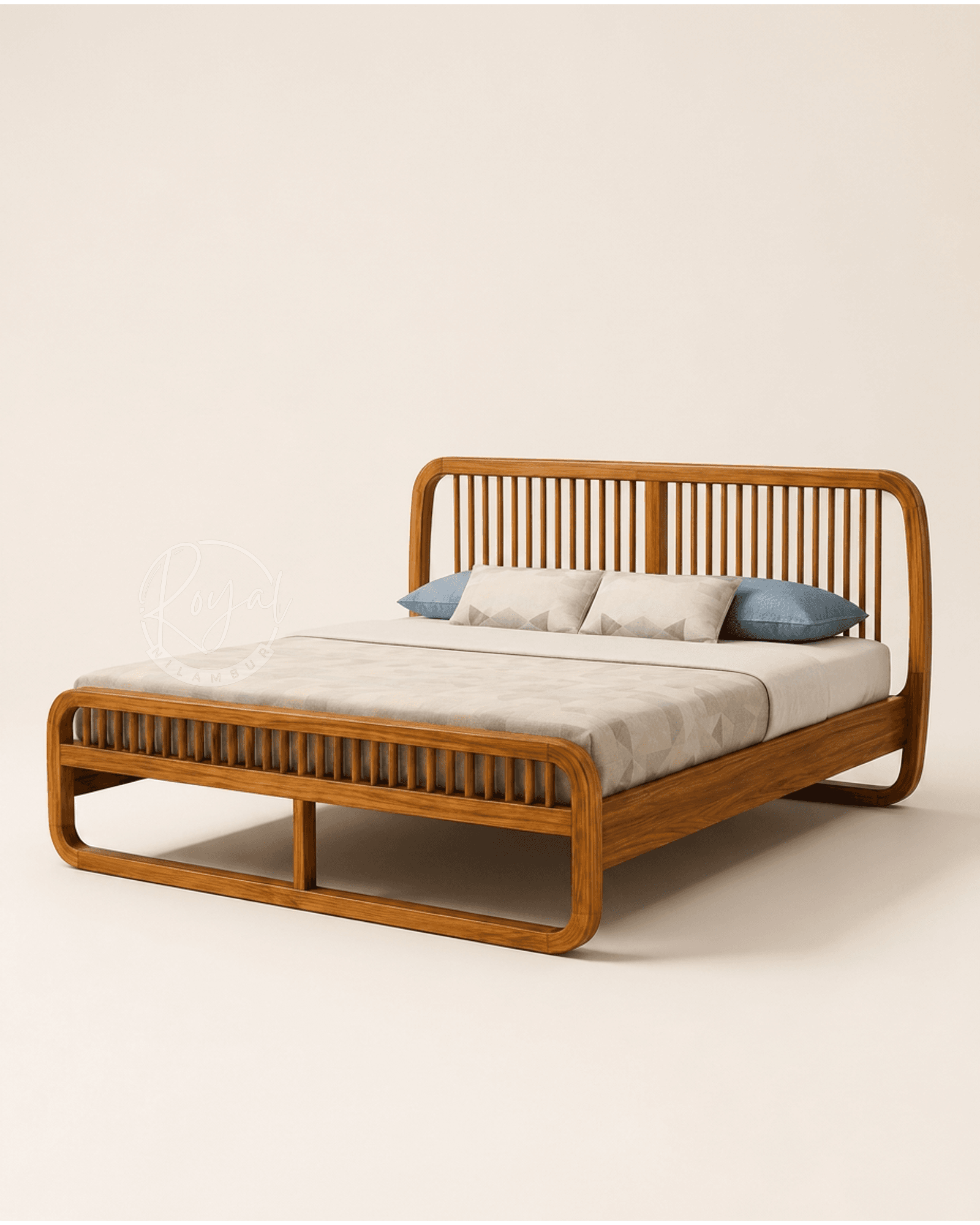
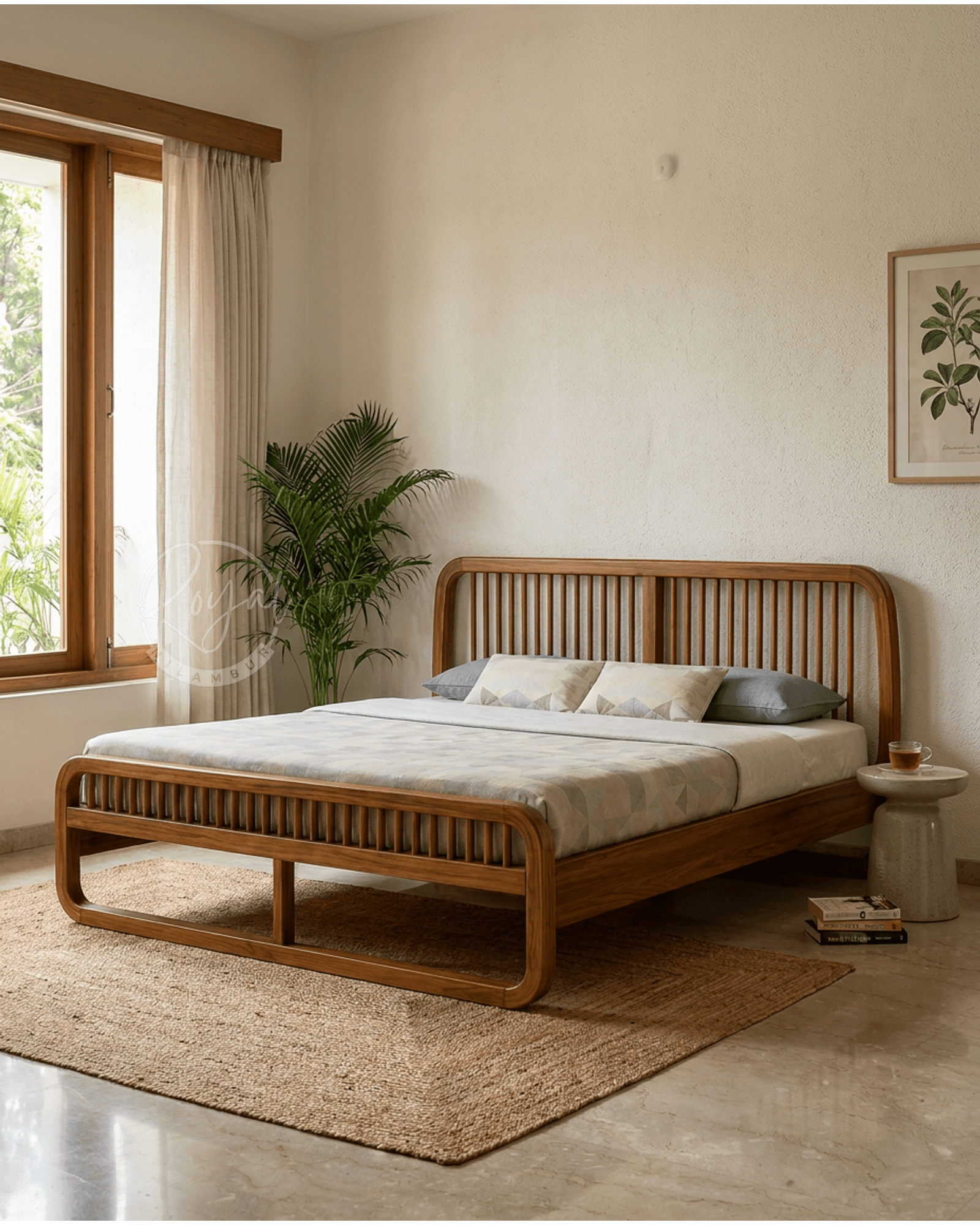
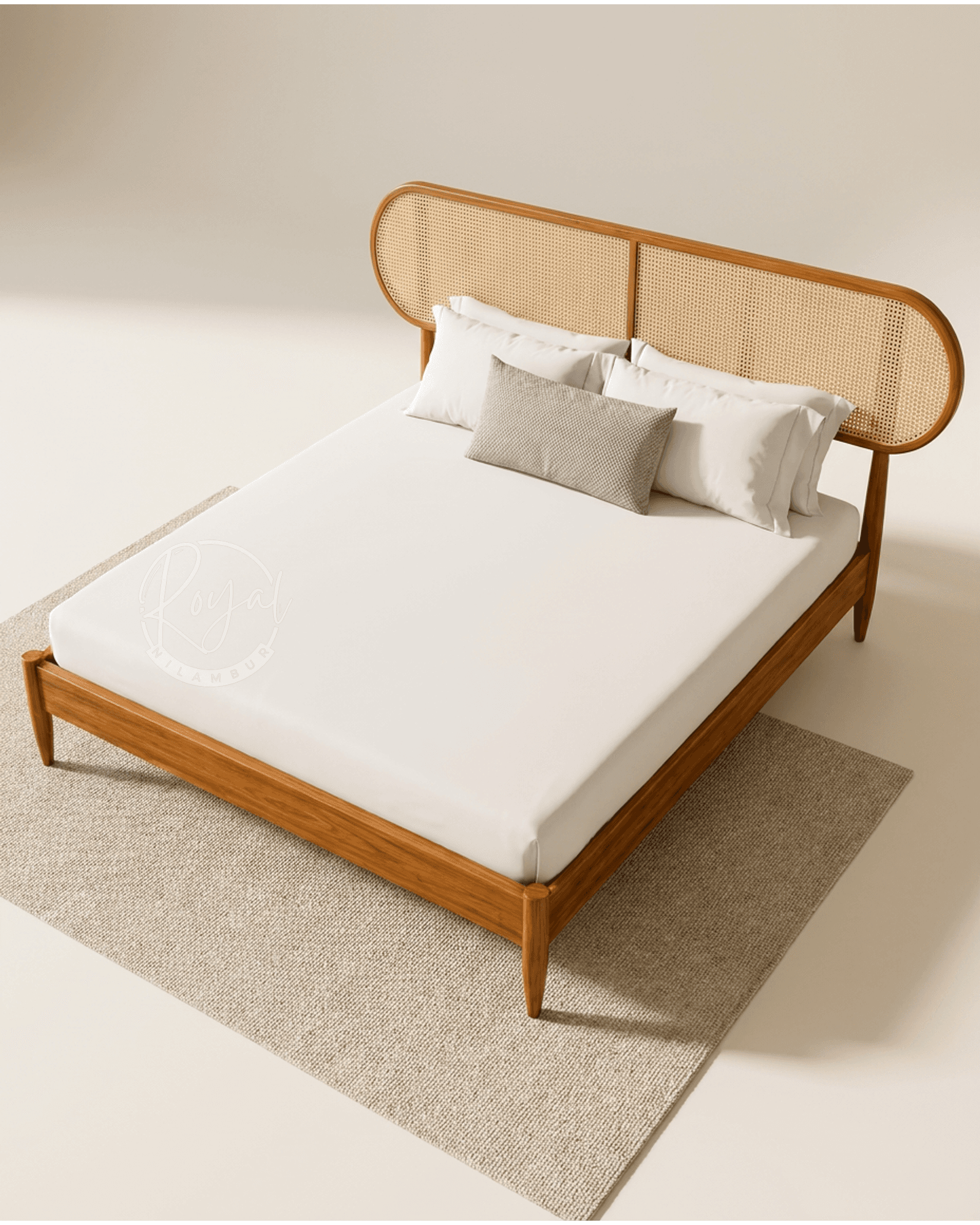
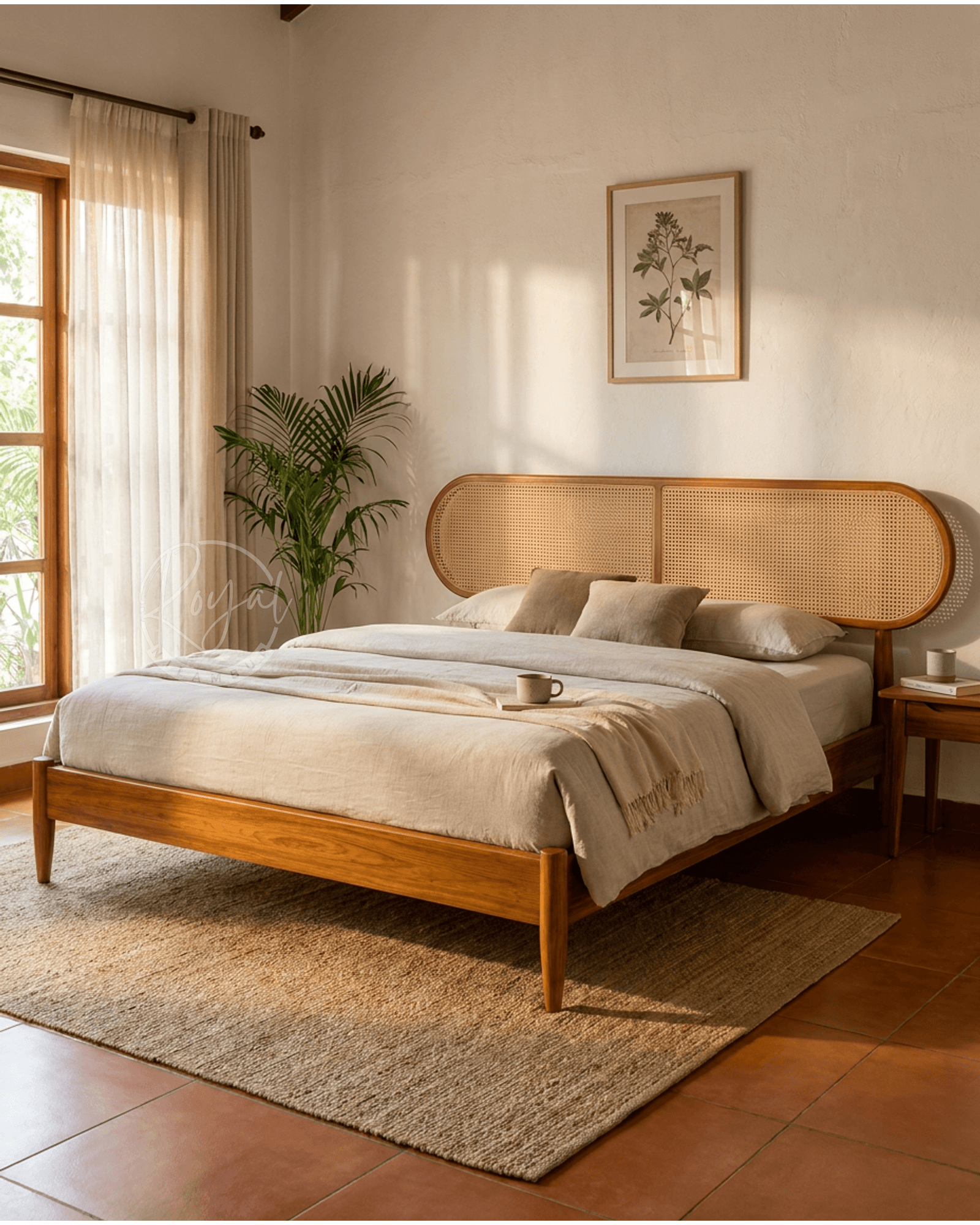
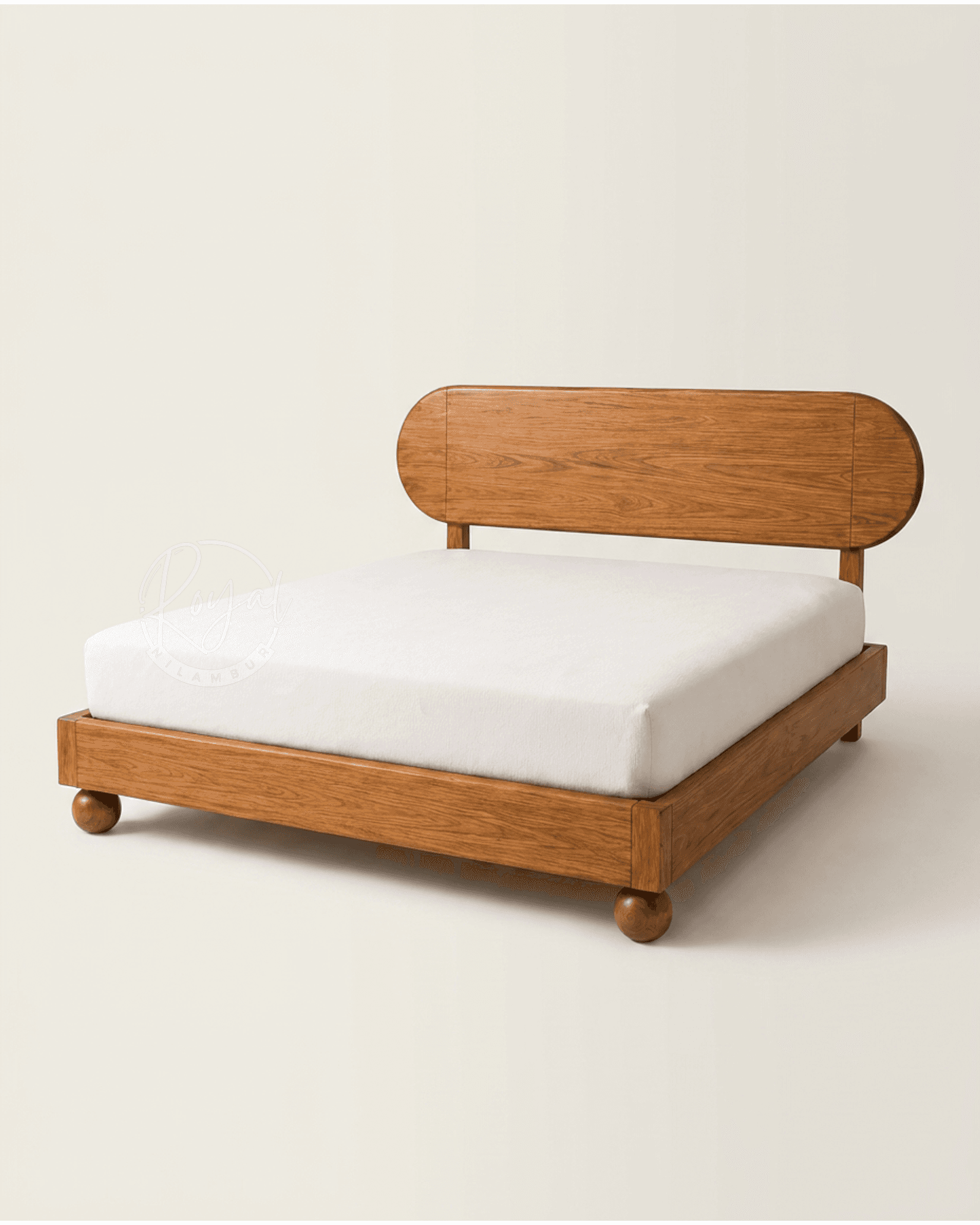
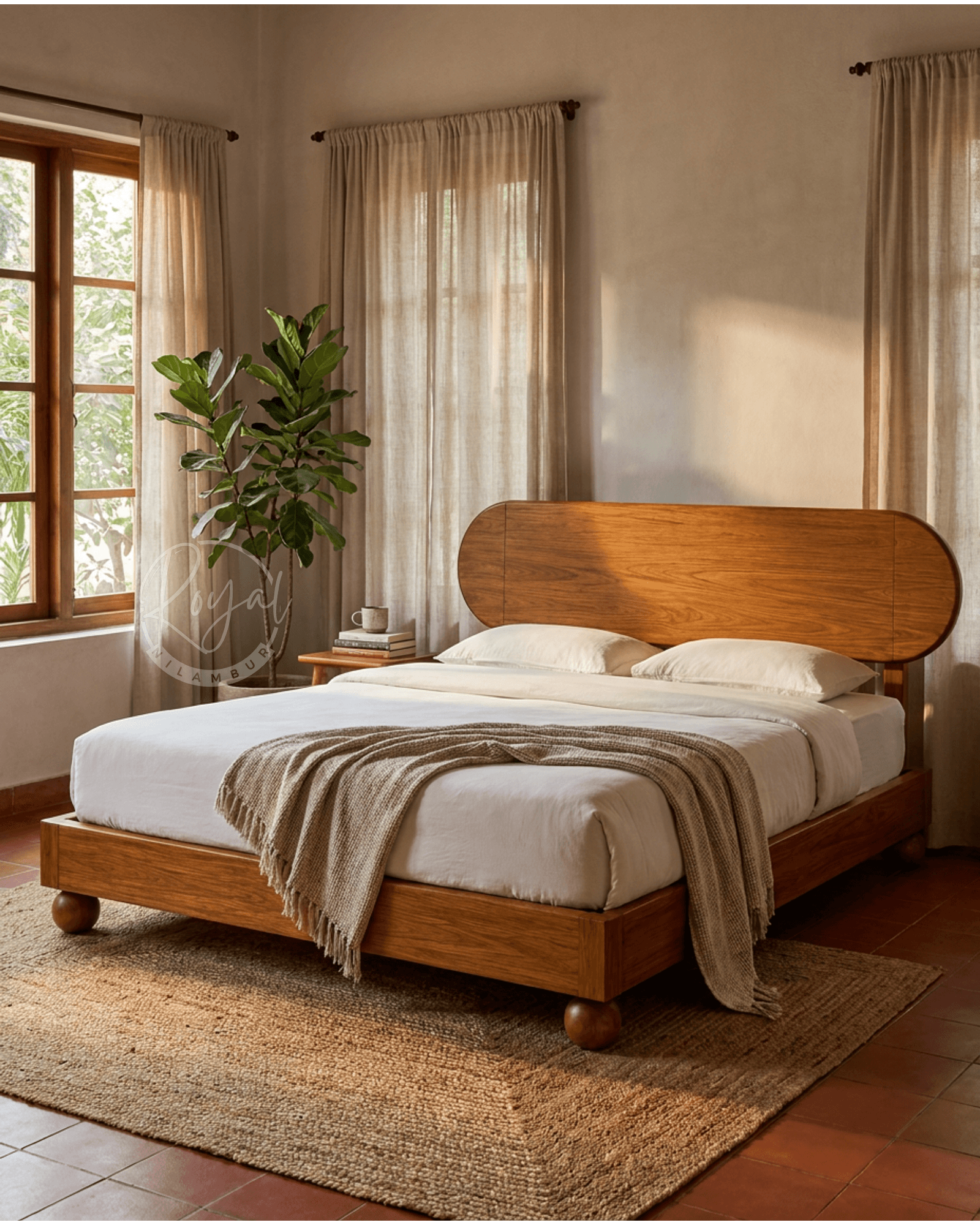
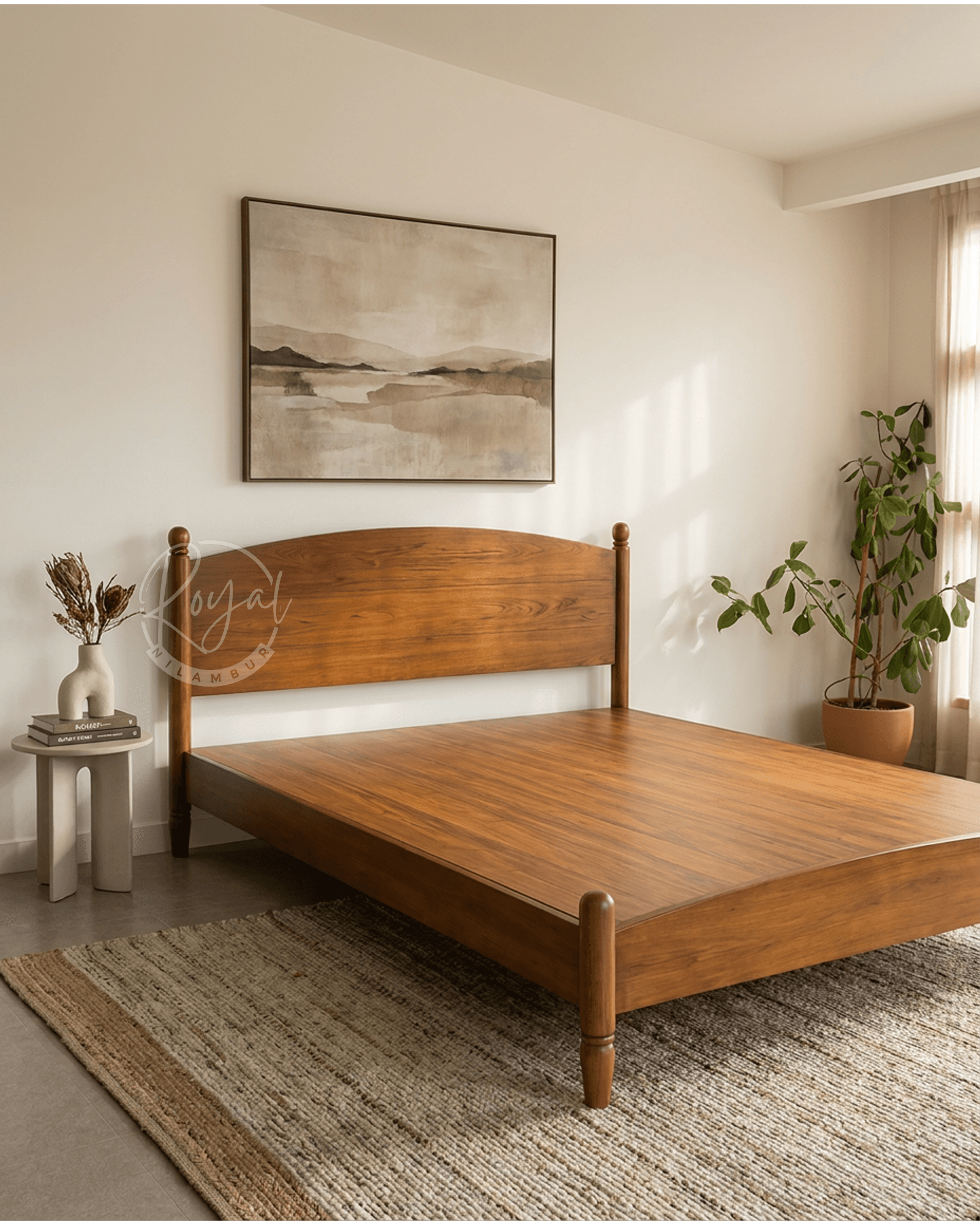
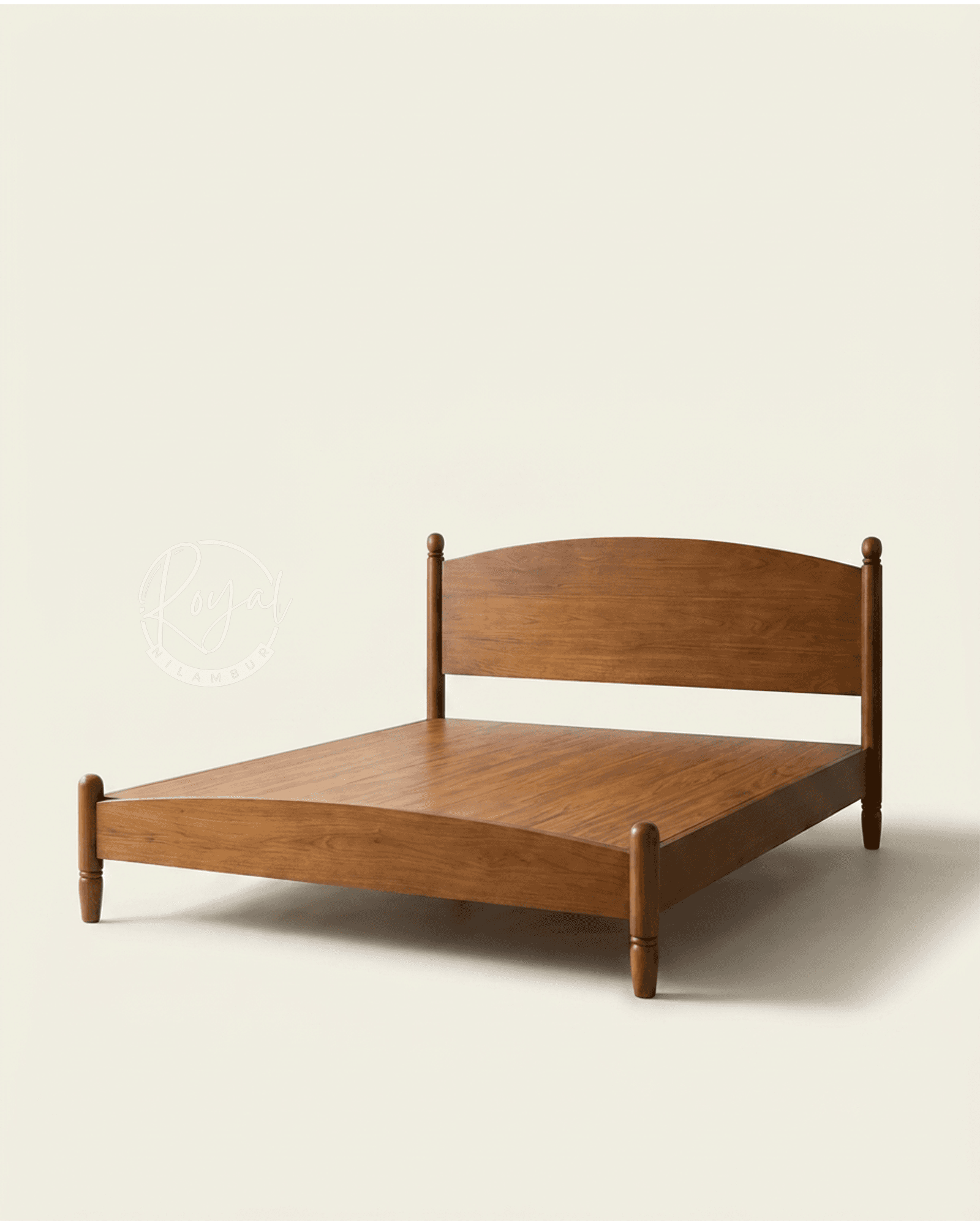
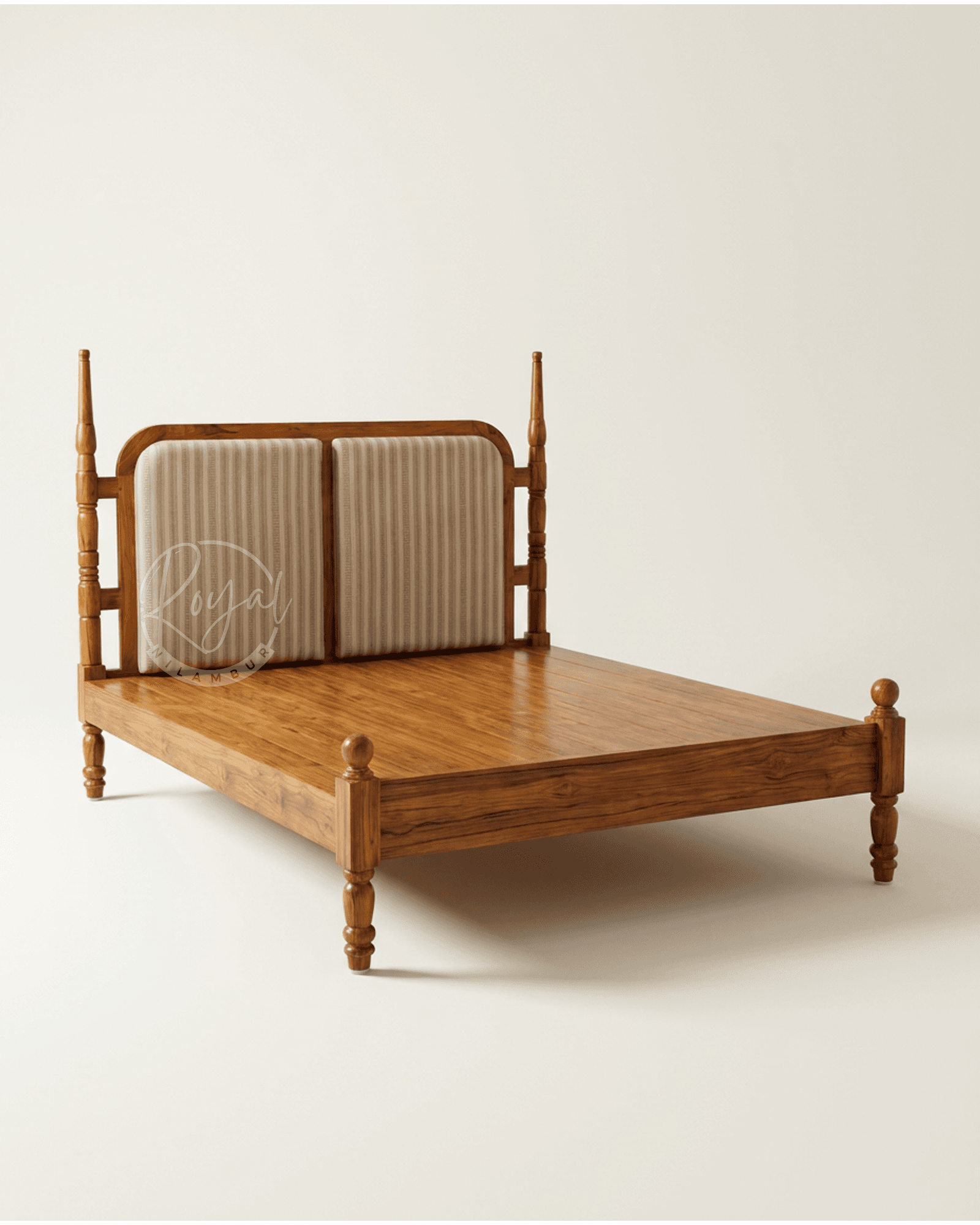
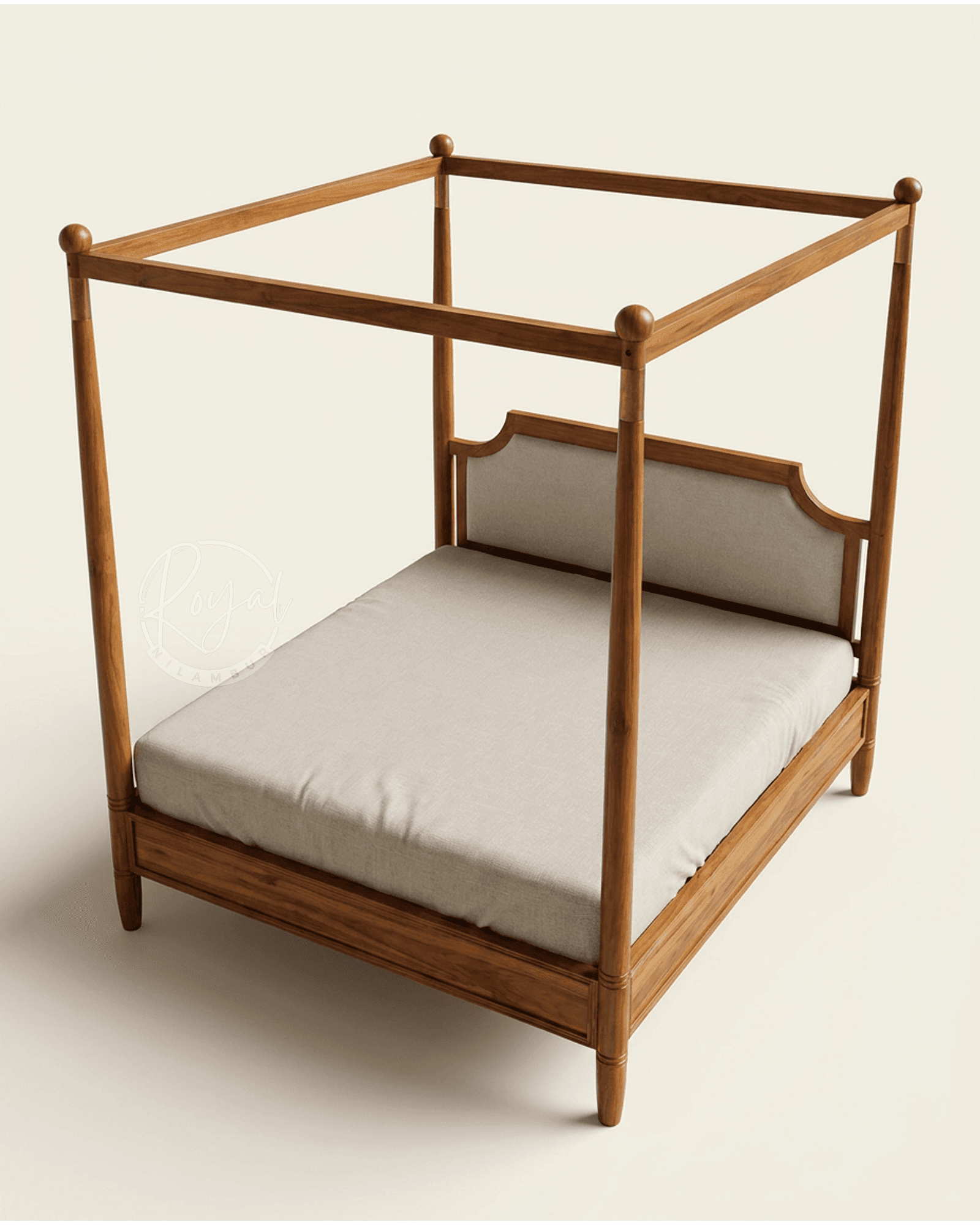
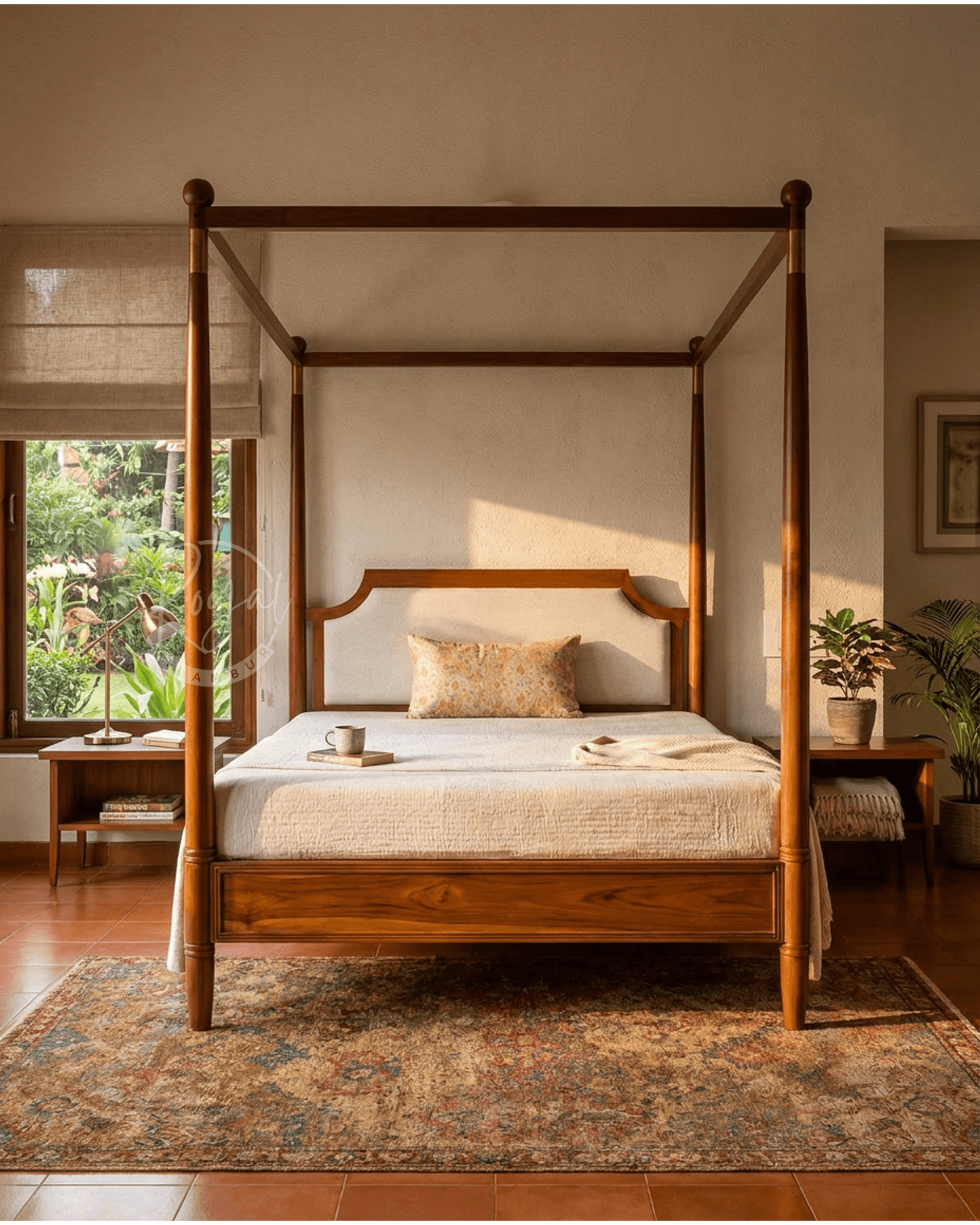
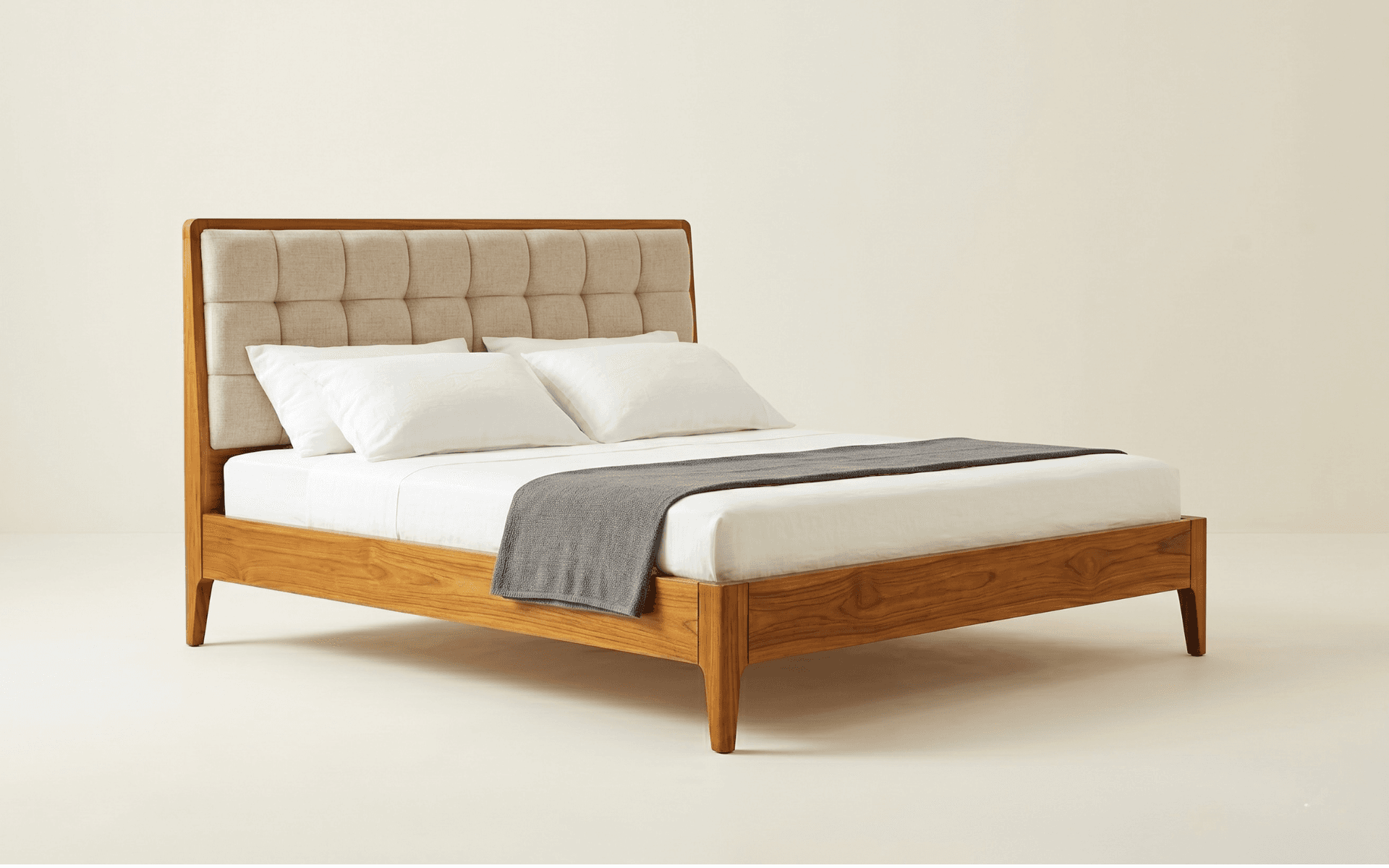
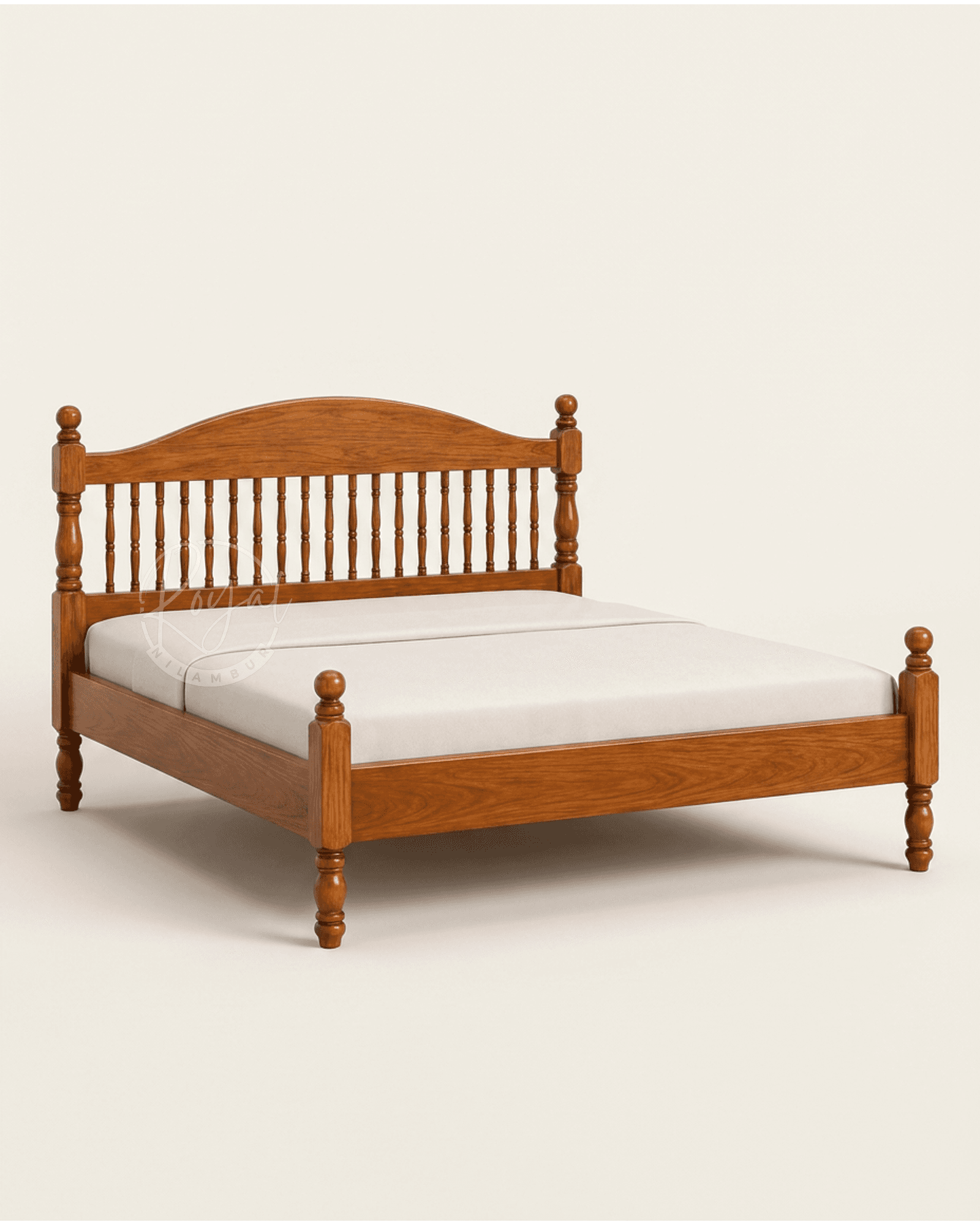
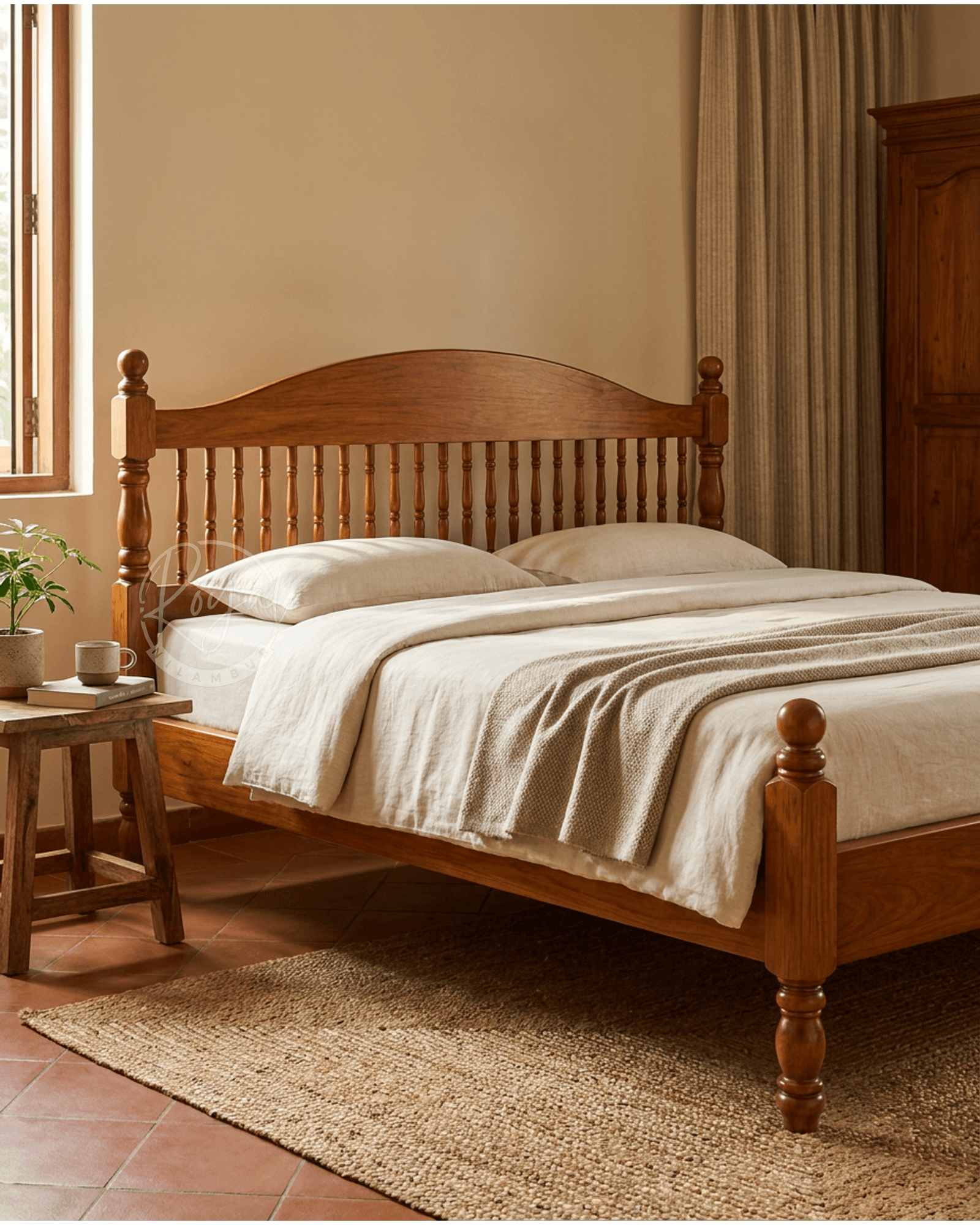
Teak wood furniture for the bedroom, made from genuine Nilambur wild teak sourced legally from Kerala Forest Department depots. Royal Nilambur beds are built to order in our Nilambur workshop — in king, queen, and double sizes — with mortise and tenon joinery at every structural joint and a 10-year warranty. The same piece that anchors your bedroom today will still be sound and beautiful thirty years from now.
Every piece is made to order
Handcrafted in Nilambur · 10-year structural warranty · Free delivery across South India
A bed is the most used piece of furniture in your home. It carries the full weight of daily life — literally — and yet most beds in the Indian market are engineered wood frames dressed in veneer, sold with warranties that quietly expire before the joints do. Teak wood furniture of the kind Royal Nilambur makes is a different category entirely: frames built from slow-grown Nilambur wild teak, jointed with mortise and tenon at every rail connection, and warranted for a decade of actual use. This is furniture you buy once.
The bed frame is the piece of furniture under the most sustained structural load in your home. Every night, through every season, it absorbs movement, humidity, and the cumulative stress of weight distributed unevenly across its joints. Plantation teak and engineered wood frames handle this reasonably well for five or six years. Wild teak from Nilambur handles it for decades. The difference is not marketing — it is measurable in the density of the wood and the depth of the joinery. A Royal Nilambur bed frame is an investment that pays its cost back across three decades of use, not a purchase that needs replacing when your children are still in school.
Every bed frame Royal Nilambur makes shares a set of construction principles that distinguish it from what you will find in most wooden furniture showrooms.
Royal Nilambur is not a brand that sources timber from a commodity market and assembles in a factory on the outskirts of a metro. Every piece we make is built in the Nilambur valley, in Malappuram district — the same region whose teak forests have been managed under government supervision for over 150 years. When you buy a Royal Nilambur bed, you are buying kerala wooden furniture in the precise meaning of the phrase: made here, from timber procured here, by craftsmen whose knowledge of this wood is generational. That provenance is traceable. It is not a claim we make loosely.
Nilambur wild teak grows slowly in heavy-monsoon forest conditions. Slow growth produces tighter annual rings — and tighter rings mean measurably higher density and hardness than plantation teak grown in open, irrigated plots. For a bed frame, this translates directly: the mortise walls do not compress over time, the tenons do not loosen, and the rails do not flex under load. In a city like Chennai, where humidity swings dramatically between summer and the northeast monsoon, an improperly seasoned frame will develop audible joint movement within three years. Nilambur wild teak, kiln-dried before cutting and naturally high in resinous oils, resists that movement at the grain level — not through chemical treatment, but through the properties the tree developed over decades of growth.
The standard Indian bedroom ranges from 10×10 feet to 14×12 feet. A king-size bed (72×78 inches) needs at least 12 feet of room width to allow comfortable movement on both sides — a clearance of roughly 24 inches per side is the minimum worth living with. Queen size (60×78 inches) fits more comfortably in a 10×12 foot room and leaves enough space for side tables and wardrobe access. If you are sizing a bed for a guest room that doubles as a workspace, a double (54×75 inches) gives you floor space without sacrificing sleeping area.
Beyond dimensions: consider headboard height in relation to your ceiling height. A tall carved headboard in a room with a standard 9-foot ceiling reads well; in a room with a lower false ceiling it can feel oppressive. Royal Nilambur's team can advise on headboard proportions during the order process. Weight is also honest to mention — solid teak bed frames are heavy. For upper-floor apartments, we can partially disassemble frames for staircase access and reassemble on site.
One practical concern worth addressing directly: what base should a teak bed frame sit on? Our frames are designed for use with a box spring, a solid slat base, or a flat platform — not a coir mattress directly on the floor. The slat or platform base allows the mattress to breathe, which matters in the warmer months. We can advise on the right base for your chosen mattress size during the consultation.
Plantation teak is grown quickly in open plots, often in Southeast Asia. The faster growth produces wider, softer annual rings — which means a lower-density wood that is more prone to compression at joinery points over time. Nilambur wild teak grows slowly in forest conditions, producing tighter rings, higher density, and significantly more natural oil. In a bed frame that absorbs nightly load year after year, that density difference is what determines whether the joints remain tight at year ten or have developed movement by year four.
The calculation depends on your time horizon. A veneer-over-engineered-wood bed frame at a lower price point typically has a reliable lifespan of five to eight years before joint failure or surface degradation. A Royal Nilambur wild teak frame, maintained with minimal care, will serve the same room for twenty-five to thirty years. Spread across that period, the per-year cost of a teak bed is often lower than the cycle of replacing cheaper furniture. The price is not for the object — it is for the end of the replacement cycle.
Nilambur wild teak requires very little. A light wipe with a slightly damp cloth for dust, and an application of teak oil or Danish oil once every twelve to eighteen months to replenish the surface. Do not use silicone-based polishes — they coat the surface and prevent the wood from breathing. Avoid placing the bed directly under an air-conditioning vent; localised cold-dry air on one section of the frame can cause uneven moisture movement over time. That is genuinely the full extent of maintenance required.
Yes. Solid teak bed frames are heavy — a king-size frame typically weighs between 90 and 120 kilograms — but our frames are designed to be partially disassembled for delivery. The headboard, footboard, side rails, and slat base are separate components that can be carried through standard stairwells or in a service lift and assembled in the room. Our delivery team will confirm the building access requirements before dispatch.
Every Royal Nilambur bed is made to order — your piece is not taken off a shelf but built specifically for your order in our Nilambur workshop. The lead time is 4–6 weeks from order confirmation and deposit. This includes the final timber selection, machining, joinery, sanding, and finishing. Delivery is coordinated after completion and includes in-room assembly where access permits.
Royal Nilambur makes beds the way beds should be made: from the right wood, jointed correctly, finished with care, and backed by a warranty that means something. If you are at the stage of choosing teak wood furniture for your bedroom, we would rather you ask hard questions than buy on impulse. Speak to our team, share your room dimensions, and we will help you arrive at the right piece — made specifically for you, in Nilambur, ready in four to six weeks.