

−25%

Trending Now
Built to last
“Teak furniture built in Kerala in the 1880s still stands in homes today. Not preserved — in daily use.”
Royal Nilambur
Collection
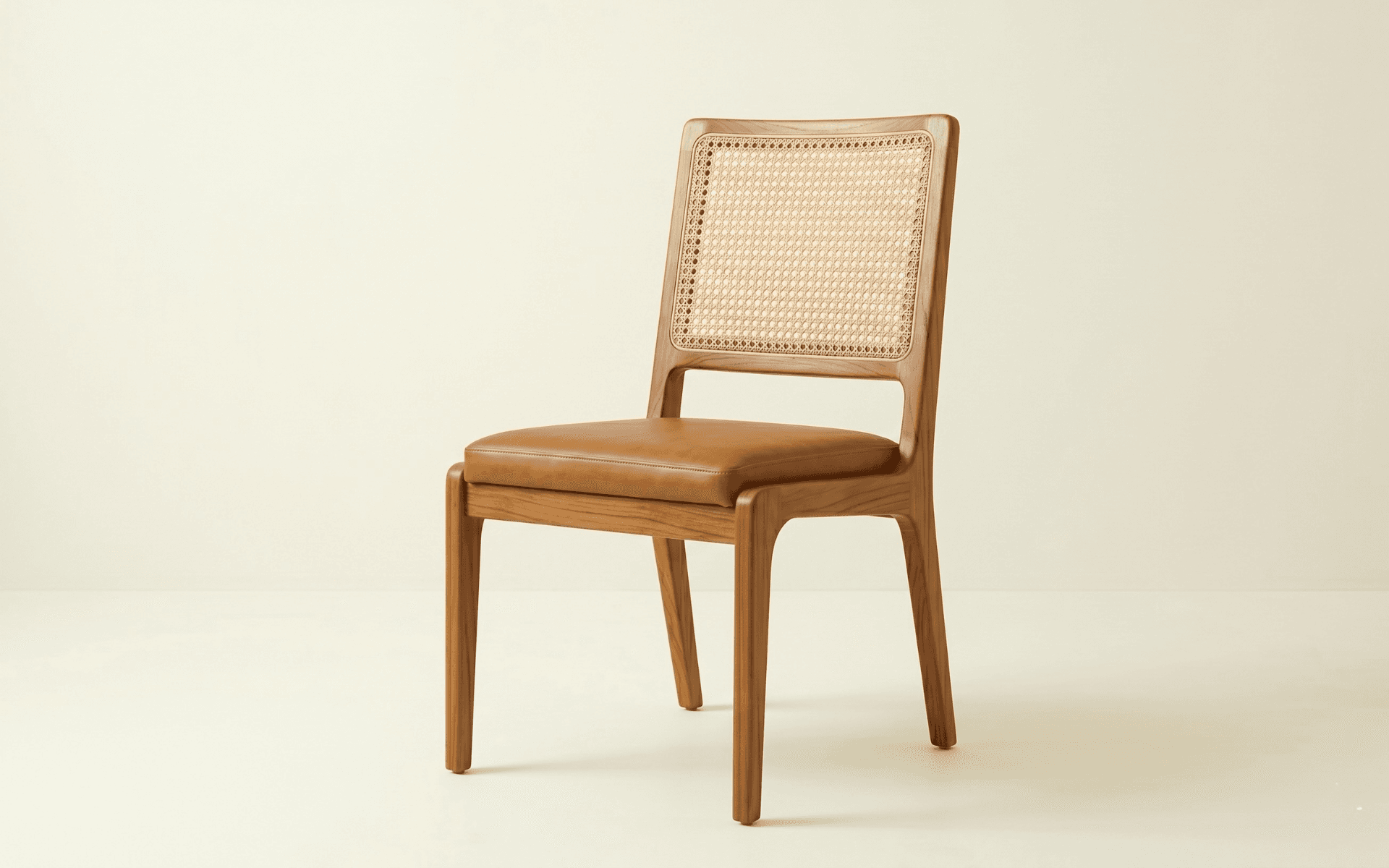
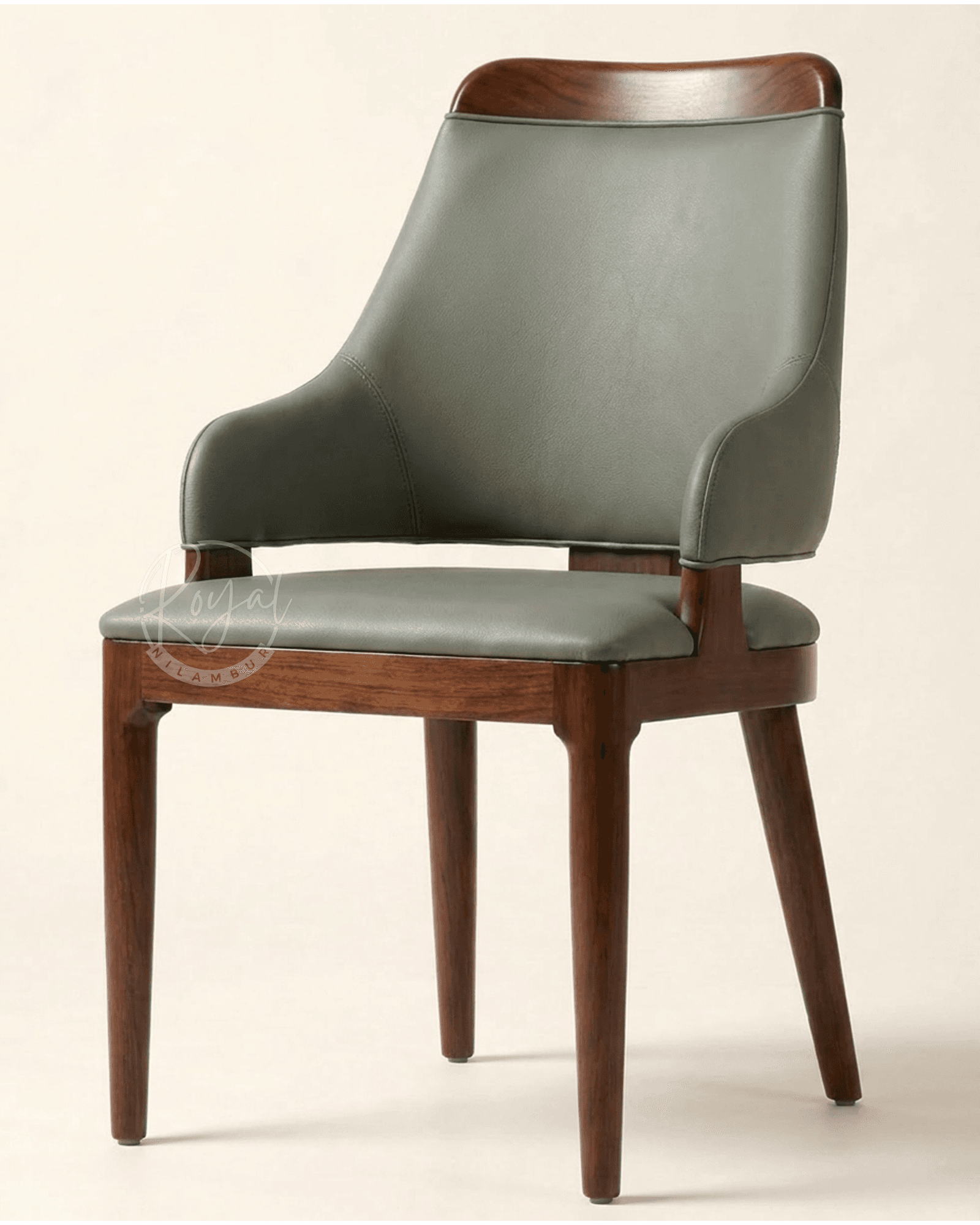
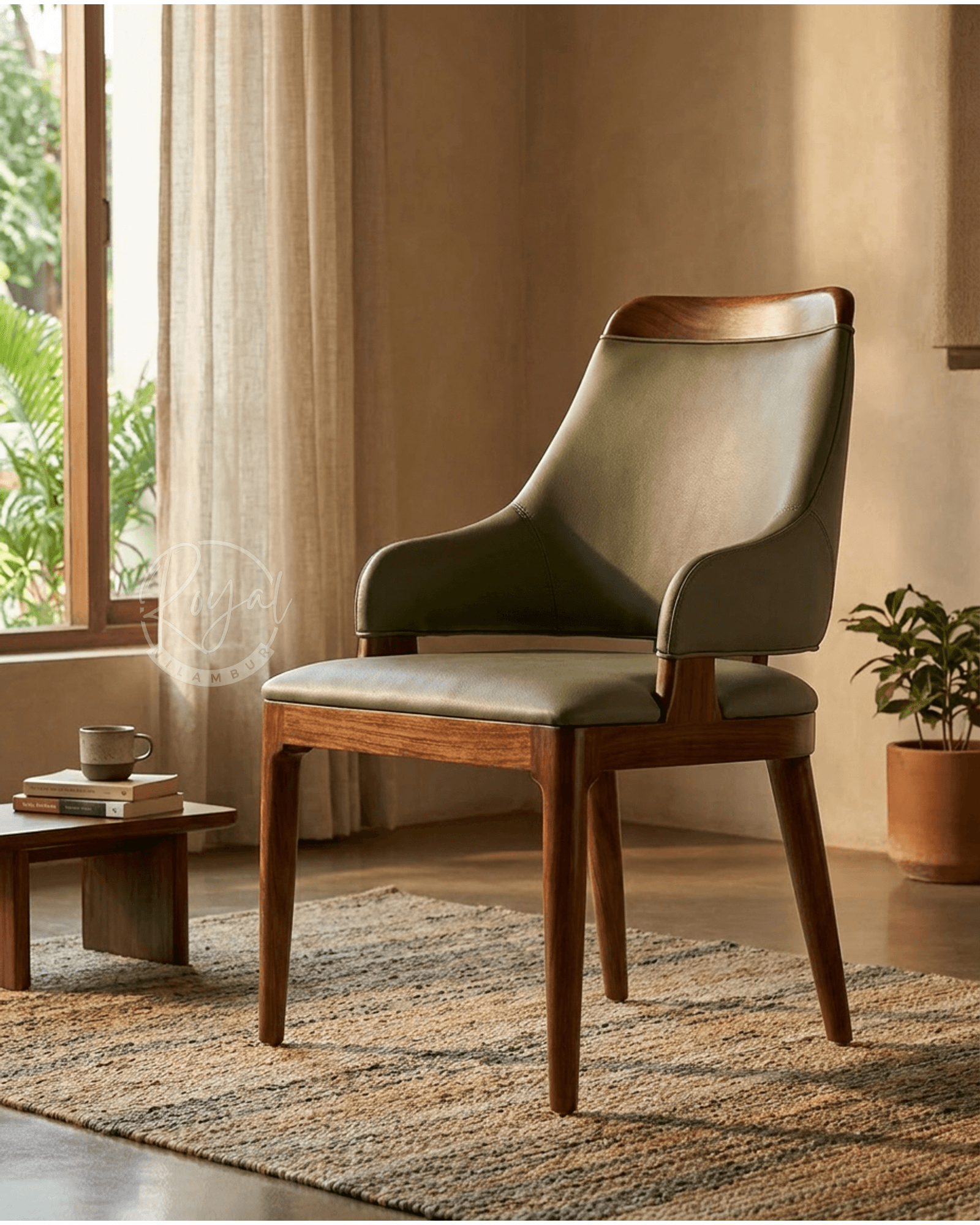
Wooden dining chairs from Royal Nilambur are made entirely from slow-grown Nilambur wild teak — the same forest timber that has furnished Kerala homes for generations. Each chair is built to order at our Nilambur workshop, with mortise and tenon joinery at every stress point, kiln-seasoned timber, and a 10-year warranty. Available in sets of 2, 4, or 6, with cushion and finish options. The surface hardness of wild teak means these chairs resist daily wear in ways plantation-grown wood simply cannot.
Every piece is made to order
Handcrafted in Nilambur · 10-year structural warranty · Free delivery across South India
A wooden dining chair takes more structural punishment than almost any other piece of furniture in an Indian home — pulled out and pushed back dozens of times a day, leaned on, stacked, moved. Most dining chairs fail quietly: the back rail loosens after two monsoons, the seat sags, the joints creak. The four teak wood dining chairs in this collection are built from a completely different premise. Every piece starts with Nilambur wild teak sourced directly from Kerala Forest Department depots in Malappuram district — slow-grown, high-density timber that most furniture manufacturers in India cannot access or afford to use.
The dining chair is a joinery test more than a design one. The back legs carry lateral forces every time someone shifts their weight. The seat rails take compression under load, day after day. In chairs made from plantation-grown timber or engineered wood cores, these joints are typically glued and pinned — adequate for the first few years, unreliable after that. In a solid wild teak chair built with full mortise and tenon joinery at the back leg and seat rail intersections, the wood itself resists the force. There is no adhesive doing the work that wood should do. This is why a well-made teak dining chair still holds its geometry after a decade of daily use, while furniture built to a price point does not.
Each chair in this collection is made to order at our Nilambur workshop. The key construction and material specifications:
Most wooden furniture in India labelled "teak" is made from plantation teak grown in open plots in Andhra Pradesh, Odisha, or Southeast Asia. Fast-grown plantation timber has wider annual rings, lower density, and significantly less natural oil than forest teak — it requires chemical treatment to resist termites and moisture, and the treatment does not last indefinitely. Nilambur wood comes from Kerala's natural forest reserve, where teak grows under monsoon forest conditions at a fraction of the speed. The result is measurably denser timber with one of the highest natural oil contents of any teak globally. Royal Nilambur purchases this timber legally from Kerala Forest Department depots — government-regulated, traceable procurement. No middlemen, no ambiguity about origin.
We do not manufacture in volume. Every chair is made for a specific order, by craftsmen in Nilambur whose families have worked teak for generations. The lead time is 4–6 weeks. That is not a constraint — it is the reason the furniture is what it is.
If your home is in Chennai or Visakhapatnam, you will have noticed that wood furniture behaves differently near the coast — it swells in the northeast monsoon, tightens in the dry summer months, and the joints in cheaper furniture work loose within a few years of this cycling. The reason Nilambur wild teak performs reliably in these conditions is specific: the timber's high natural oil content slows the rate at which the wood absorbs and releases atmospheric moisture. Combined with kiln-seasoning to a stable 10–12% equilibrium moisture content before the chair is machined, the result is a piece that moves very little with seasonal humidity shifts. The joints remain tight. The grain does not open. The chair you receive in year one is structurally the same chair in year ten.
The dining chair decision is rarely just about the chair — it is about the table, the room, and how the family actually uses the space.
Indian standard dining tables run from 4-seater (typically 120 × 75 cm) to 8-seater (210 × 90 cm). A practical rule: allow at least 60 cm of table width per seated person, and never place a chair where a table leg prevents a natural sitting position. For a family of four that occasionally hosts six, consider a 6-chair set from the start — chairs stored against a wall or in another room cost far less than mismatched additions bought later.
Allow a minimum of 90 cm between the edge of the table and any wall or obstruction — this gives enough space to pull out a chair fully and stand. In smaller Indian dining rooms, 75 cm is workable if the chairs are pushed in while someone is seated. A common mistake is selecting a table for its footprint without accounting for the chair sweep arc: typically 30–40 cm pulled out from the table edge.
On weight and delivery: solid wild teak chairs are genuinely heavy — a typical dining chair runs 8–12 kg. For apartments above the ground floor, our workshop team packs each chair individually for safe stair or lift transit. Assembly on delivery is minimal — chairs arrive fully constructed.
Nilambur teak is slow-grown forest timber from Kerala's natural reserves, producing tighter annual rings, higher density, and significantly greater natural oil content than plantation teak grown in open cultivated plots. For dining chairs specifically, higher density means the mortise and tenon joints hold under lateral stress for decades rather than years. Plantation teak is a usable timber; Nilambur wild teak is a substantially different raw material.
The honest answer depends on how you account for the cost. A sheesham or mango wood chair set at a lower price point will typically need replacement or significant repair within 8–12 years of daily use in an Indian home. A wild teak dining chair, properly jointed and kiln-seasoned, remains structurally sound for 25–30 years with minimal maintenance. The wooden dining table cost and chair cost of a Royal Nilambur set is higher upfront — the per-year cost over its actual lifespan is lower than most alternatives.
Wild teak's high natural oil content means the chairs require no regular oiling or chemical treatment to stay in good condition. Wipe down with a slightly damp cloth for daily cleaning. Once every 12–18 months, a light application of teak oil or tung oil will deepen the colour and replenish surface moisture — this is optional, not mandatory. Avoid placing chairs in prolonged direct sunlight, which will bleach the surface to silver-grey (reversible, but not to everyone's preference).
Royal Nilambur chairs are built after your order is confirmed — the 4–6 week lead time reflects actual workshop production, not warehouse clearance delays. Once completed, chairs are packed individually and shipped to your door across India. We can stagger delivery with a dining table order so both pieces arrive together and are ready to use from day one.
Yes. Since every piece is made to order, we can match finish, leg profile, and seat height to an existing table — including tables not purchased from Royal Nilambur, provided you share the dimensions. If you are ordering a complete wooden dining set, table and chairs are designed together in our Nilambur workshop so the proportions work as a single composition rather than individual pieces assembled after the fact.
Every teak wood dining chair in this collection carries a 10-year structural warranty and is made to your order at our Nilambur workshop using wild teak sourced from Kerala Forest Department timber depots. There are four chairs available here currently — each one a considered design, not a catalogue volume piece. If you have a specific configuration, finish preference, or matching requirement, speak with us before placing your order. What you commission will still be in daily use long after the furniture around it has been replaced.




_ai.png&w=1920&q=75)
_ai.png&w=1920&q=75)