
Trending Now
On buying well
“The things in your home that you use every day deserve to be the best things in it.”
Royal Nilambur
Collection
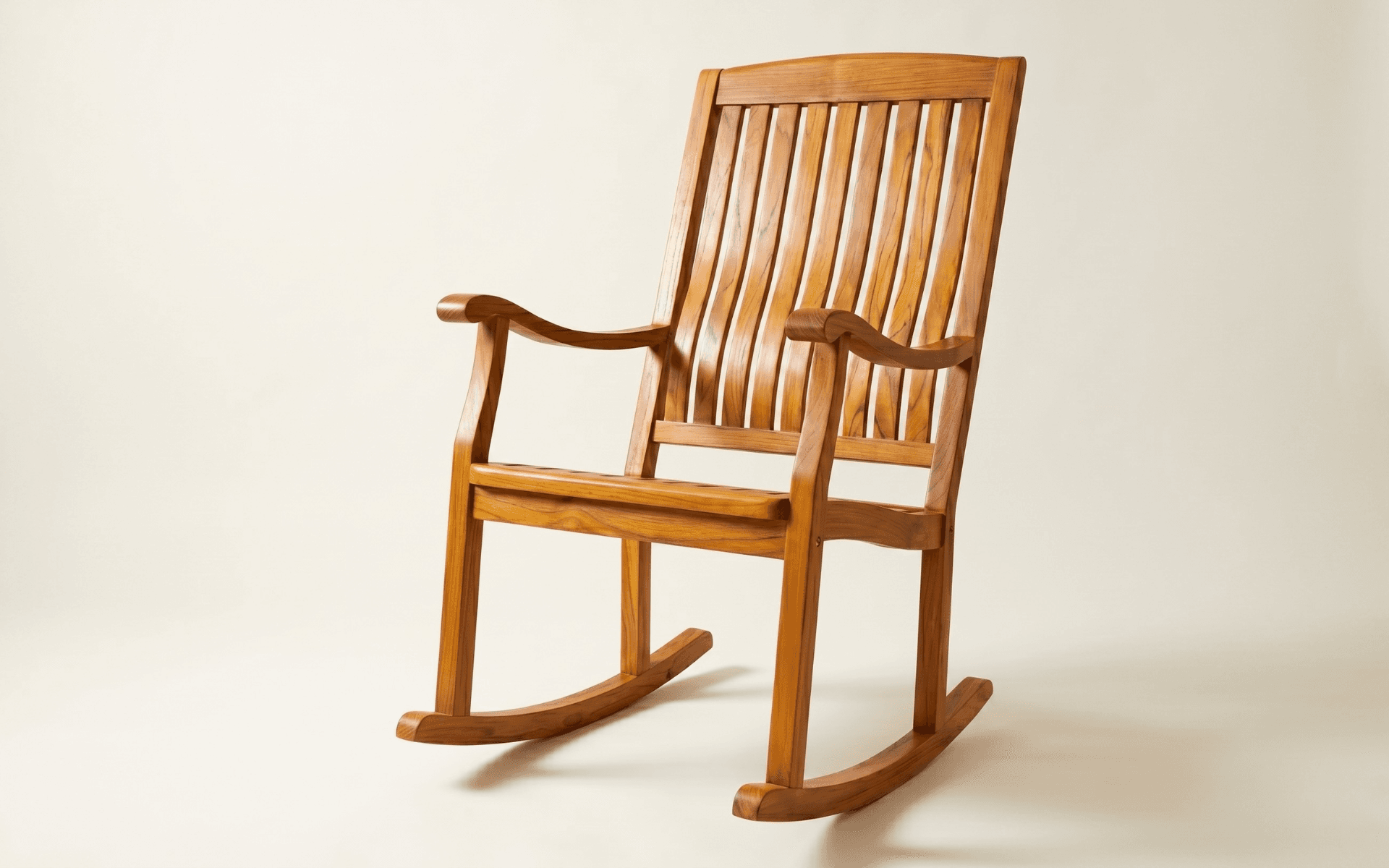
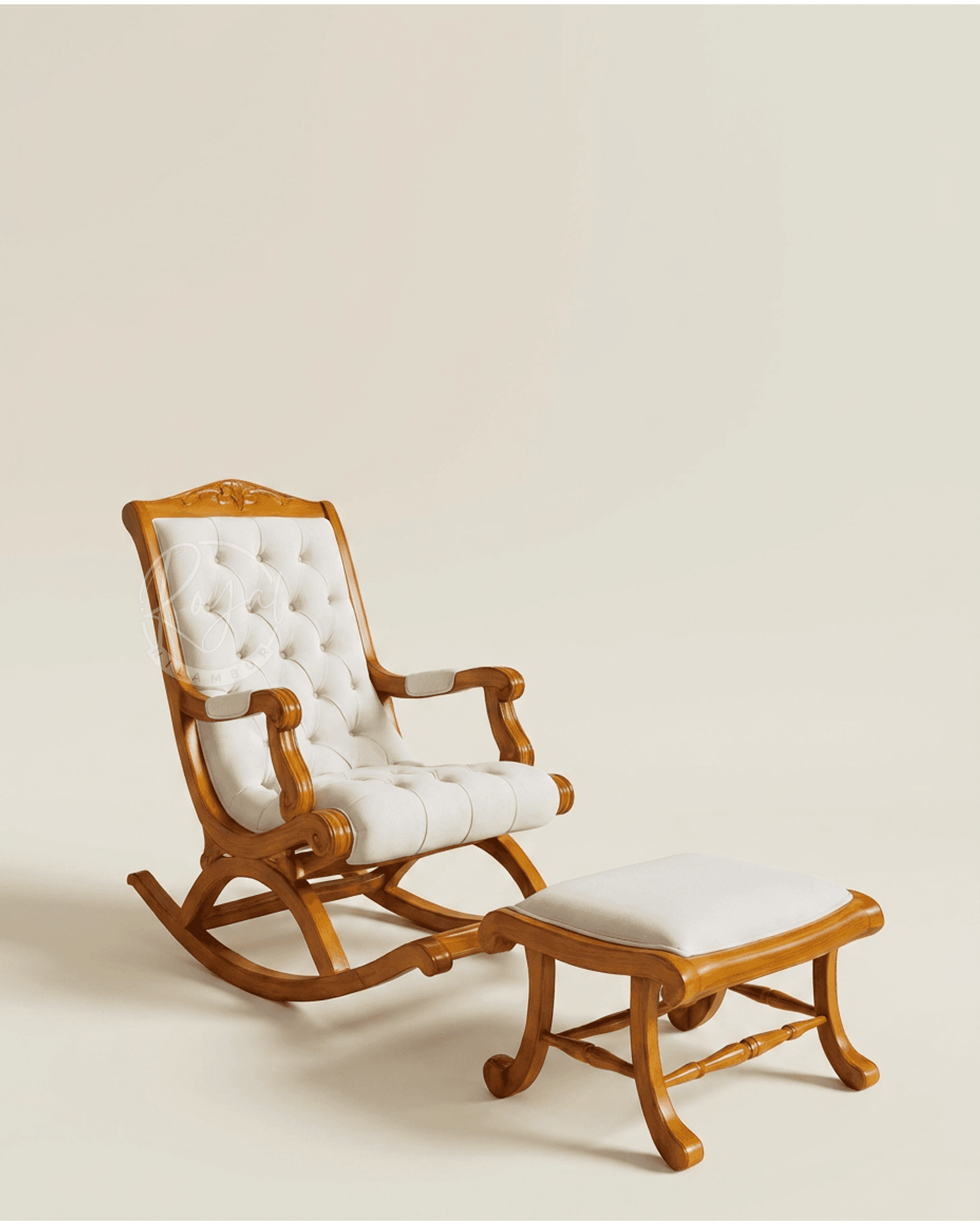
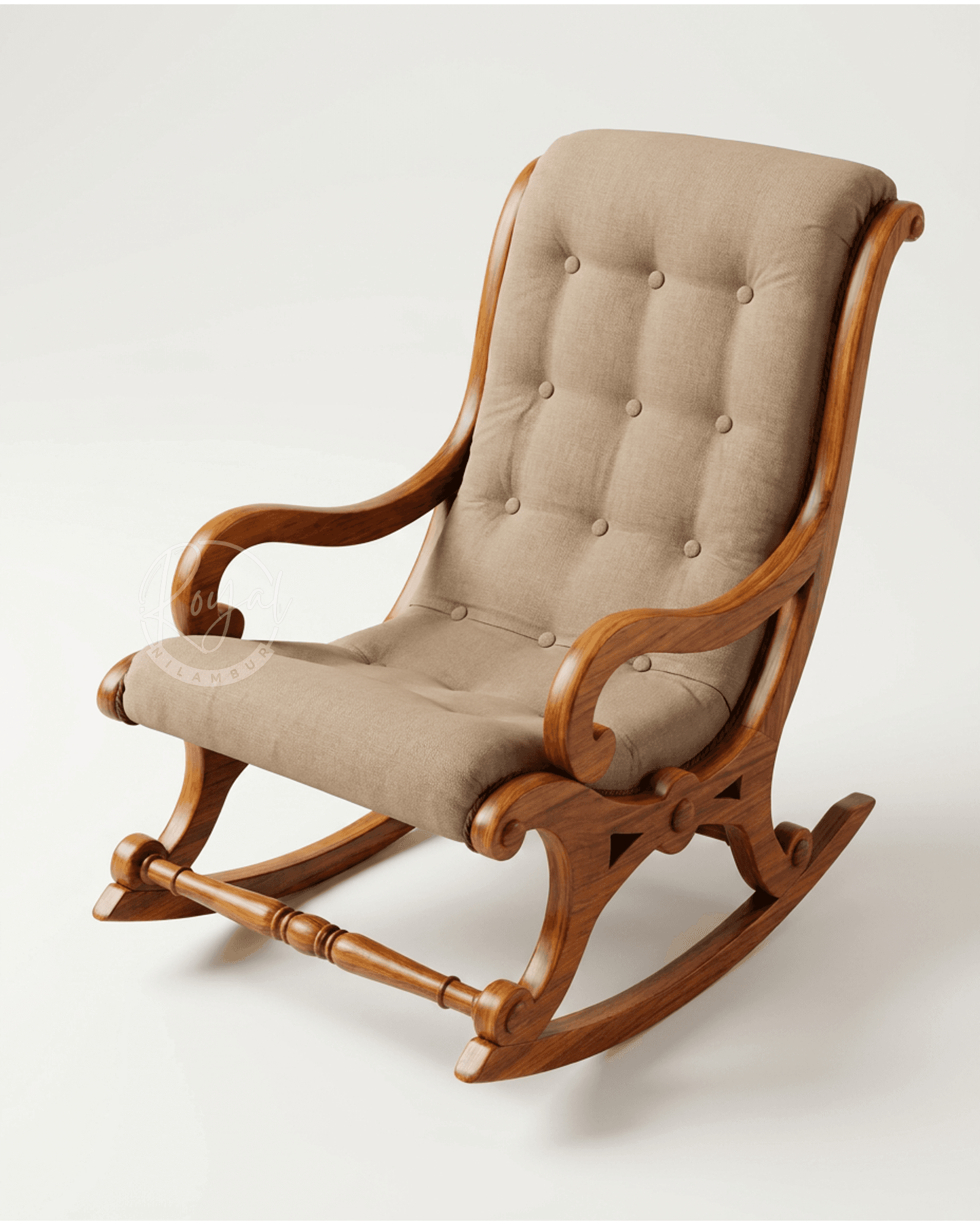
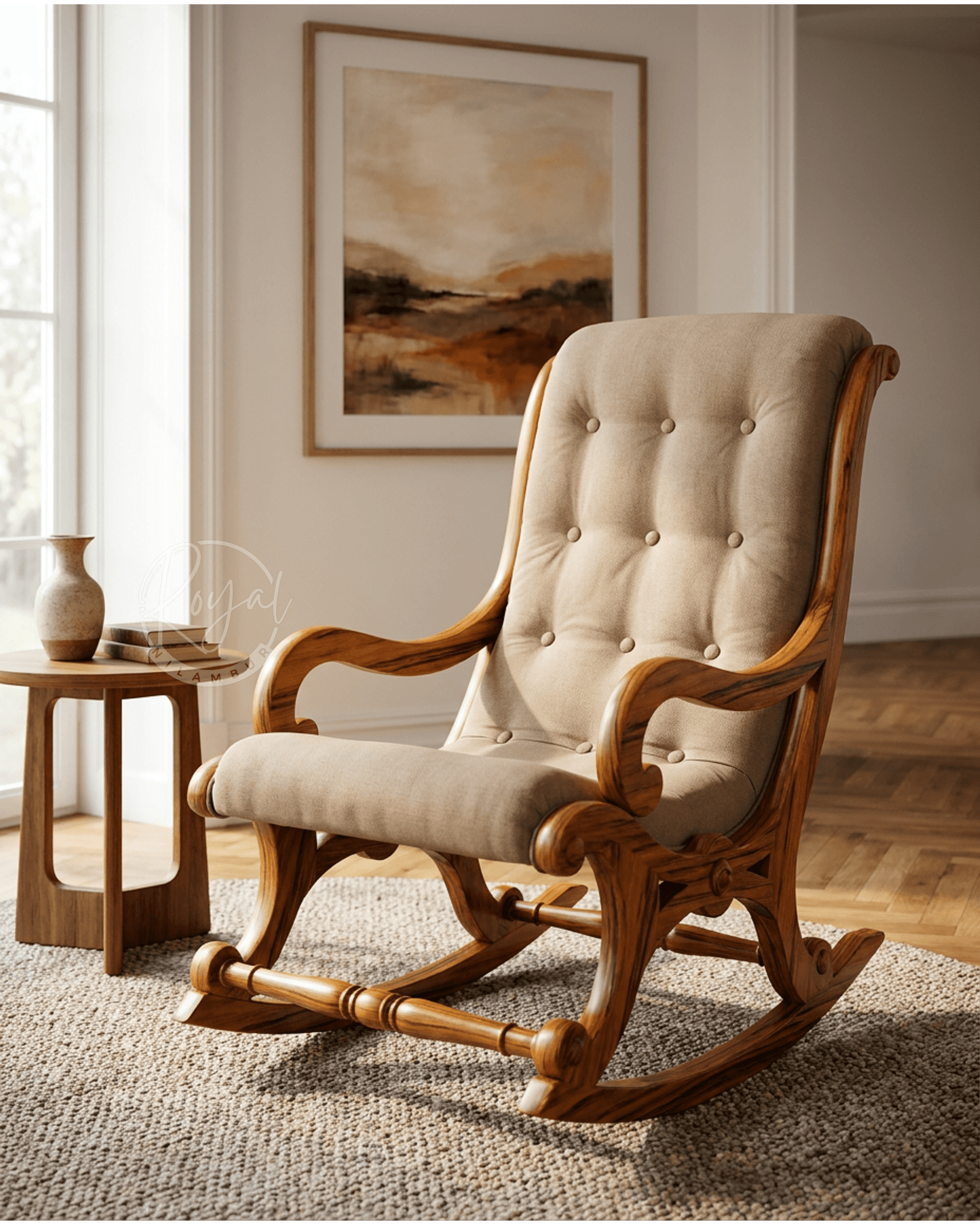
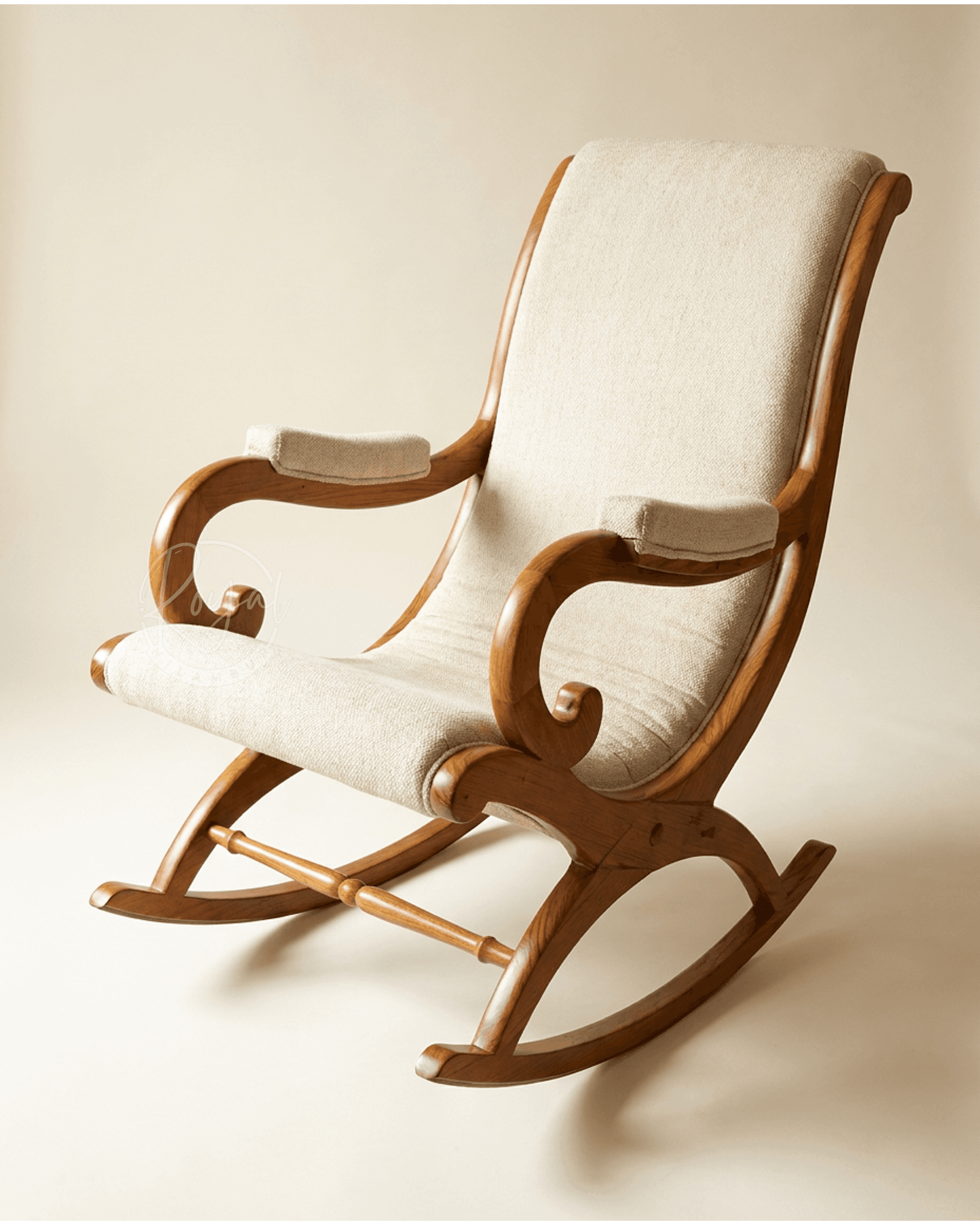
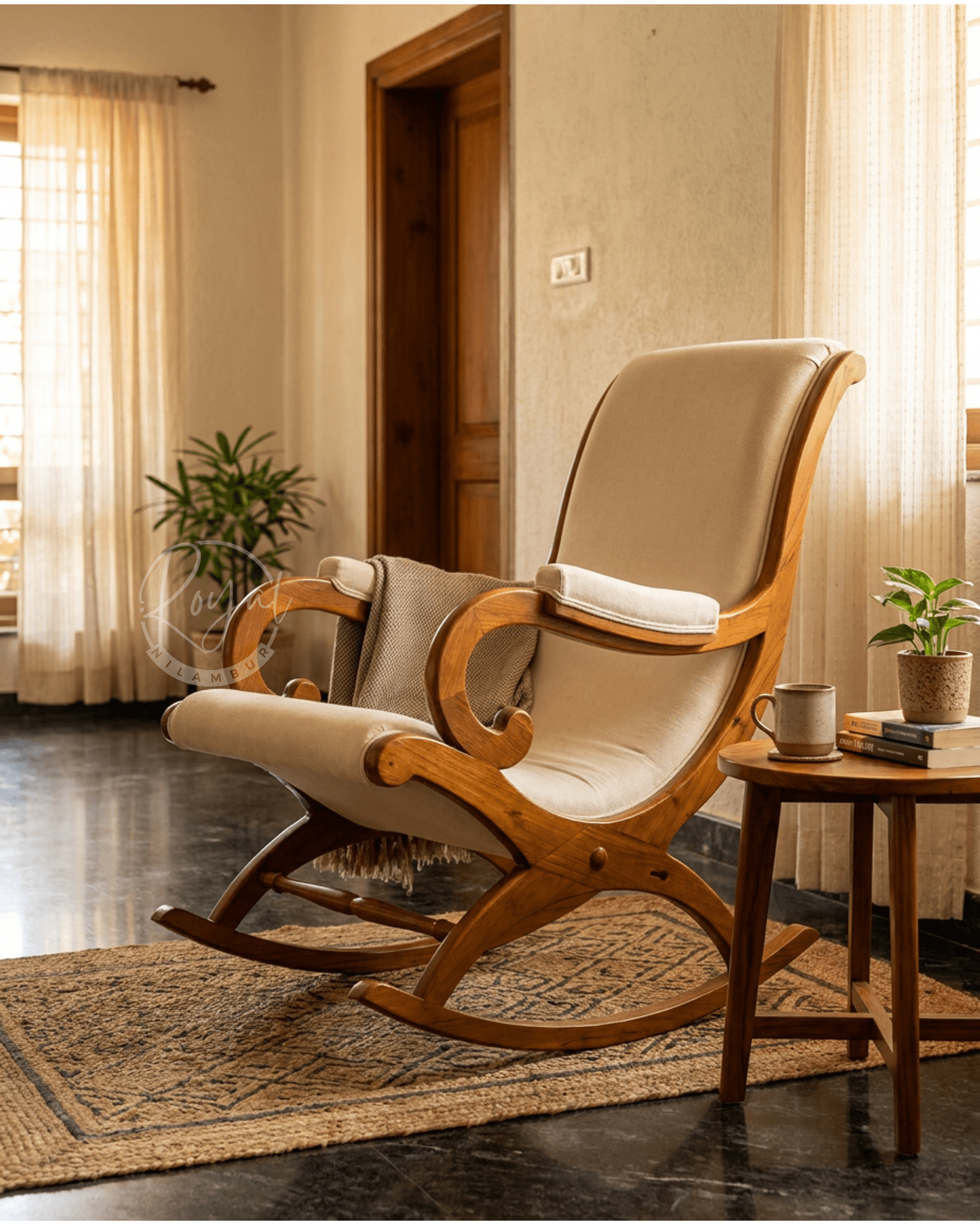
Teak wood rocking chairs from Royal Nilambur are made from slow-grown Nilambur wild teak — the same forest timber that Kerala's master craftsmen have shaped for generations. Each chair is built to order at our Nilambur workshop using mortise and tenon joinery at every rocker joint, producing a chair that stays structurally sound through daily use over decades. If you are buying a rocking chair once, this is the material and construction it should be made from.


Every piece is made to order
Handcrafted in Nilambur · 10-year structural warranty · Free delivery across South India
A teak wood rocking chair is one of those purchases that reveals its quality slowly — in the way the rockers meet the floor evenly after years of use, in the way the seat frame stays tight without re-gluing, in the grain that deepens rather than fades. Royal Nilambur's rocking chairs are made from Nilambur wild teak, sourced legally from Kerala Forest Department depots in Malappuram district. There is one product in this category because we make one thing extremely well — not a catalogue to scroll through, but a chair built specifically for you.
The rocking chair is one of the most structurally demanding pieces of residential furniture. Every time you push back, the full force of your weight transfers through the rear legs into the rocker joints — a cycle that repeats thousands of times a year. Cheaper furniture made from engineered wood or plantation teak fails at exactly these joints: the glue gives, the tenon loosens, the chair develops a lateral wobble that no amount of tightening corrects. Wild teak's density — a direct product of the slow growth rates in Nilambur's forest conditions — means the wood itself holds the joint, not just the adhesive. That distinction matters for a chair you intend to use every day for twenty years.
Most wooden furniture sold in India today uses plantation teak grown in open plots across Southeast Asia, where fast growth produces wide annual rings, lower wood density, and significantly reduced natural oil content. Nilambur wild teak grows under the Kerala forest canopy in heavy-monsoon conditions. Restricted light and intense competition for soil nutrients slow the tree's growth considerably — producing tighter annual rings that are measurably harder and more resistant to surface compression. For a rocking chair, this translates directly: the armrests and seat face daily abrasion, and plantation teak shows it within a few years. Wild teak does not. Homes in Chennai, where ambient humidity fluctuates considerably between the monsoon and dry season, often see plantation teak furniture swell and contract enough to crack joints — our kiln-seasoning process stabilises the wood before it reaches your home.
Royal Nilambur's chairs are made to order in Nilambur, Kerala — a town whose relationship with teak goes back to British-era forest management in the 1860s. The craftsmen in our workshop learned the trade directly from the generation before them; there is no factory line, no numerical-control router producing identical chair frames in batches. Each piece is made after your order is confirmed, dimensioned to your specification, and takes four to six weeks from order to delivery. Kerala wooden furniture made this way is not interchangeable with mass-market alternatives — it is a different category of object, and the difference is evident the first time you sit in it. This is natural wooden furniture in the fullest sense: no veneers, no particleboard core, no finish masking inferior material beneath.
For most adults, a seat height of 42–45 cm provides comfortable thigh support without forcing the knees above the hips. The rocker length — measured front to back on the floor — determines how far the chair travels in its arc. A longer rocker (around 90 cm or more) gives a smoother, more gradual motion; a shorter one gives a livelier rock. Our standard specification works for most adults up to 90 kg, and we can adjust dimensions at the time of order for taller users or specific room constraints.
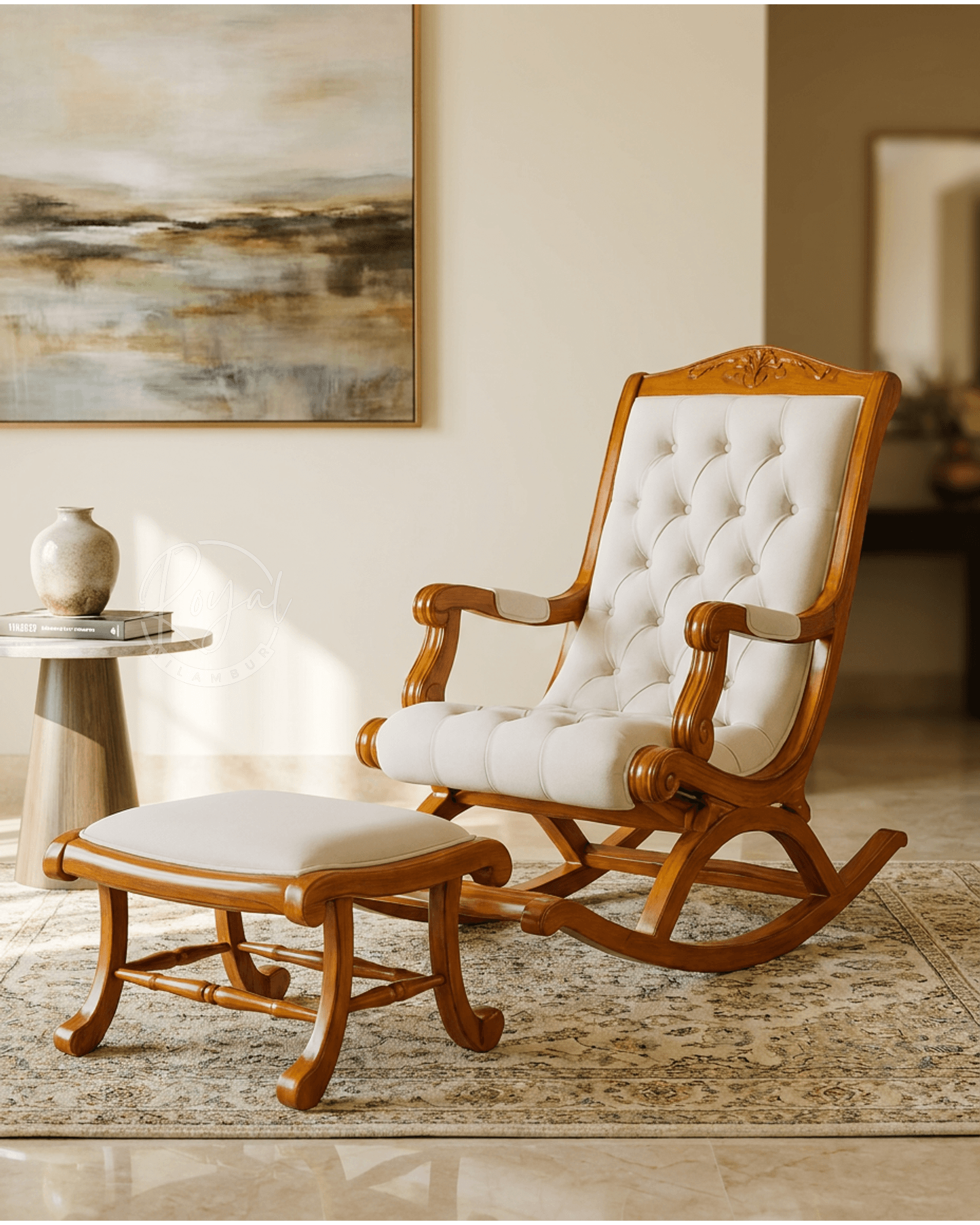
Consider placement carefully. Rocking chairs need 50–60 cm of clear floor behind the rear rocker tip — more than most buyers expect. On polished marble or tiles, the rocker ends should have felt or rubber pads fitted (we include these) to prevent floor marking. On a veranda or a jute rug, the chair moves freely without any surface risk. Weight is approximately 12–15 kg for a solid wild teak frame — substantial enough to feel grounded, light enough to move between rooms.
One practical question worth addressing: can this be delivered to a flat? Yes. Solid teak rocking chairs are heavy but not oversized — they pass through standard Indian doorways (typically 76–80 cm clear) without dismantling.
Plantation teak is grown in open conditions for fast harvest — typically 20–25 years — producing wood with wide growth rings, lower density, and considerably less natural oil. Nilambur wild teak grows slowly in a closed-canopy forest, producing tight annual rings that translate into harder, denser wood with significantly higher oil content. In a rocking chair, the practical difference is most visible at the joints: wild teak holds a mortise and tenon connection more firmly over time because the wood itself does not compress around the joint under repeated load.
A well-jointed rocking chair in properly seasoned Nilambur wild teak should remain structurally sound for 30 years or more with ordinary care. The 10-year structural warranty Royal Nilambur provides covers joint failure and structural defects — but in practice, the wild teak construction far outlasts that period. The surface will develop a richer, honey-brown patina over the years; this is the wood's natural oil responding to light and use, not a finish degrading.
The honest answer depends on how you count the cost. A mass-market rocking chair in engineered wood or plantation teak may need replacing within 7–10 years as joints loosen and surfaces degrade. A Royal Nilambur chair in wild teak, purchased once, serves for three decades. Spread across 30 years of daily use, the cost per year is considerably lower — and the chair holds its structural integrity throughout. The material and labour that go into genuine wild teak construction cannot be reproduced at a lower price point; any rocking chair priced significantly lower is made from a different material, regardless of what the listing says.
Nilambur wild teak's high natural oil content means the wood is largely self-maintaining under indoor conditions. Wipe down with a dry or lightly damp cloth; avoid silicone-based polishes, which film over the surface and prevent the wood from breathing. Once a year — or whenever the surface begins to look dry — apply a thin coat of teak oil or raw linseed oil with a soft cloth and allow it to penetrate overnight before wiping away the excess. For chairs kept on a covered veranda or balcony, the same care applies; only fully exposed outdoor placement requires more frequent treatment.
Yes — made-to-order furniture is the only way Royal Nilambur works. Seat height, armrest profile, rocker length, and surface finish (natural oil, matte lacquer, or tinted wax) can all be specified at the time of order. Cushion fabric and dimensions are also chosen at order stage. Since each chair is built after your order is confirmed, there is no stock to draw from — lead time is four to six weeks, which reflects the time genuinely needed for careful construction, not warehouse processing.
Royal Nilambur makes rocking chairs for people who are done replacing furniture. If the piece you order today is still in your home — solid, sound, and still comfortable — thirty years from now, we have done our job. Browse our rocking chair, reach out with any questions about dimensions or customisation, and we will build it to your specification in Nilambur wild teak. Every teak wood furniture piece we make carries a 10-year warranty and the material integrity of one of the world's most respected cabinet woods, sourced legally and made honestly.