
Trending Now
On buying well
“The things in your home that you use every day deserve to be the best things in it.”
Royal Nilambur
Collection
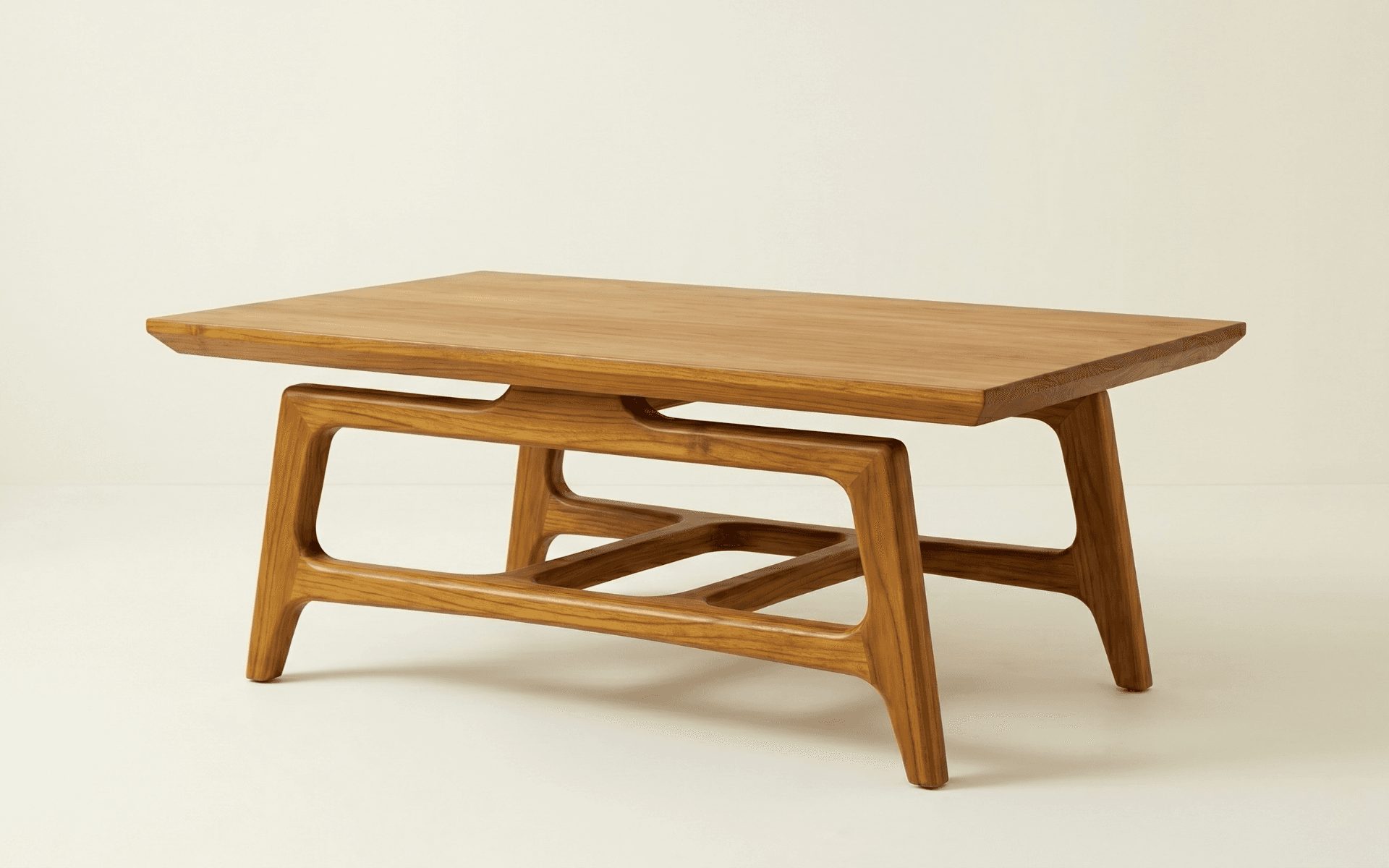
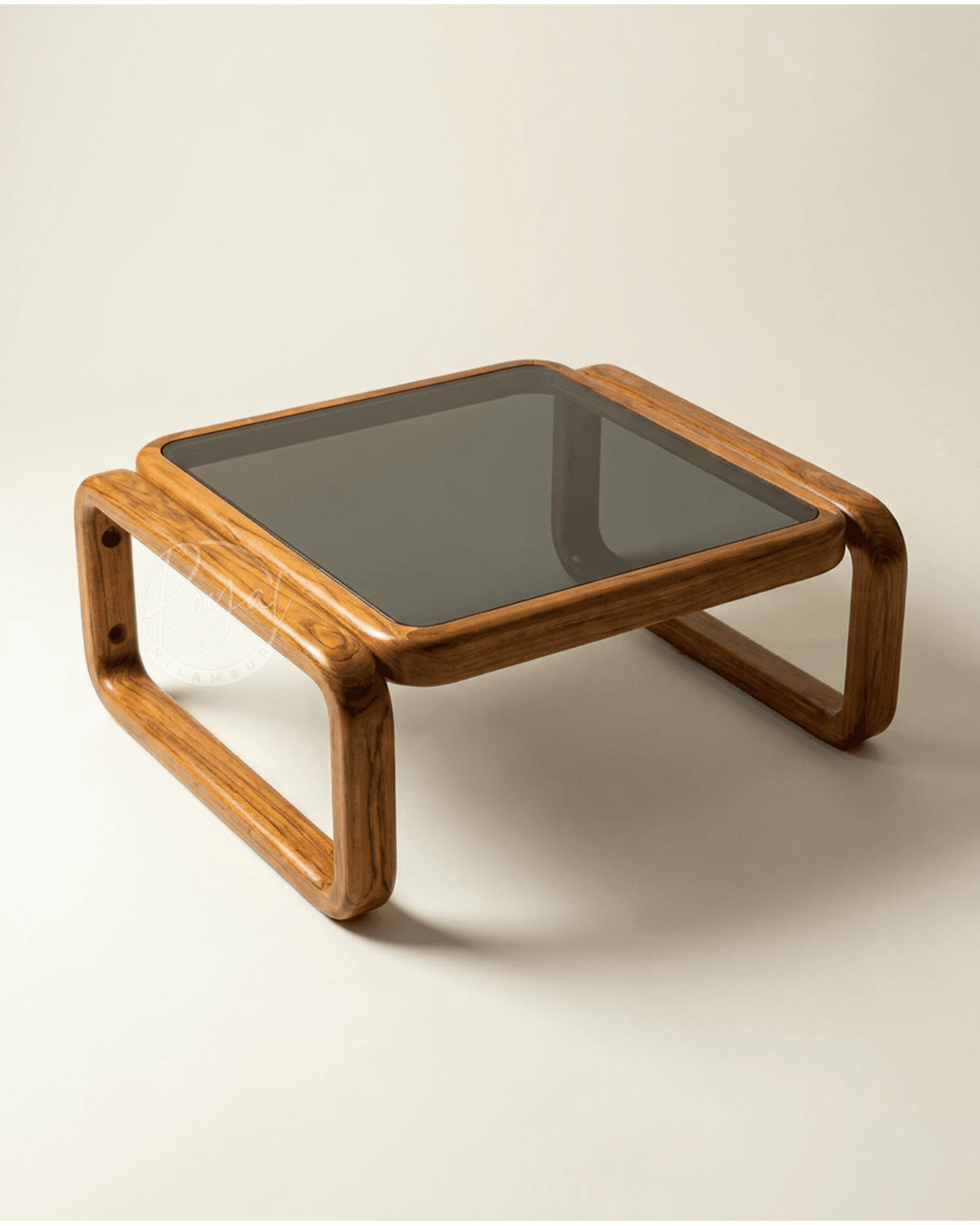
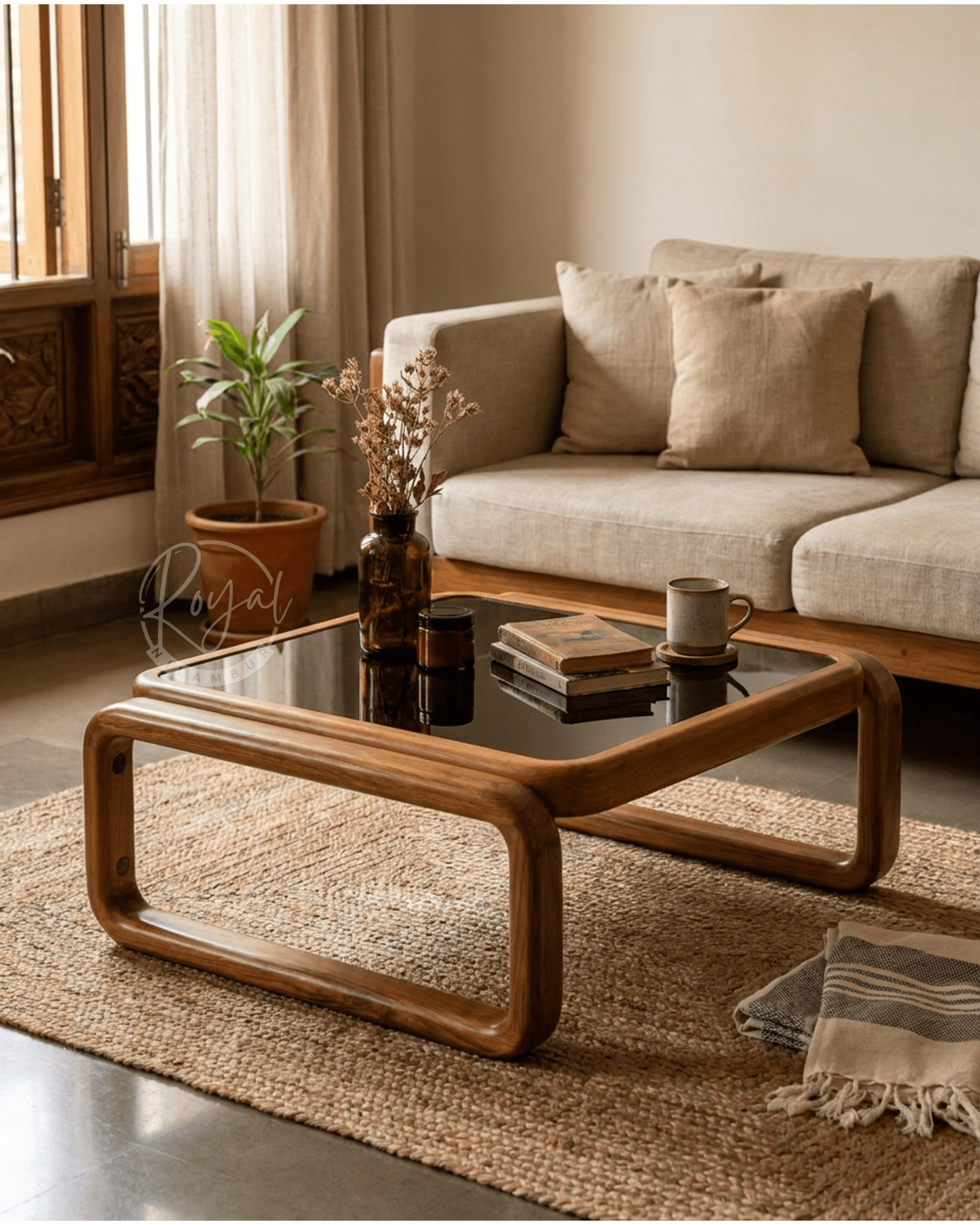
A center table in solid Nilambur wild teak does something no veneered or engineered-wood piece can: it deepens in character with every year of use. Royal Nilambur's coffee tables are made to order in our Nilambur workshop from legally sourced Kerala forest teak — kiln-seasoned, hand-finished, and built with mortise and tenon joinery that holds firm through decades of daily living room use. Three designs currently available; each carries a 10-year warranty.
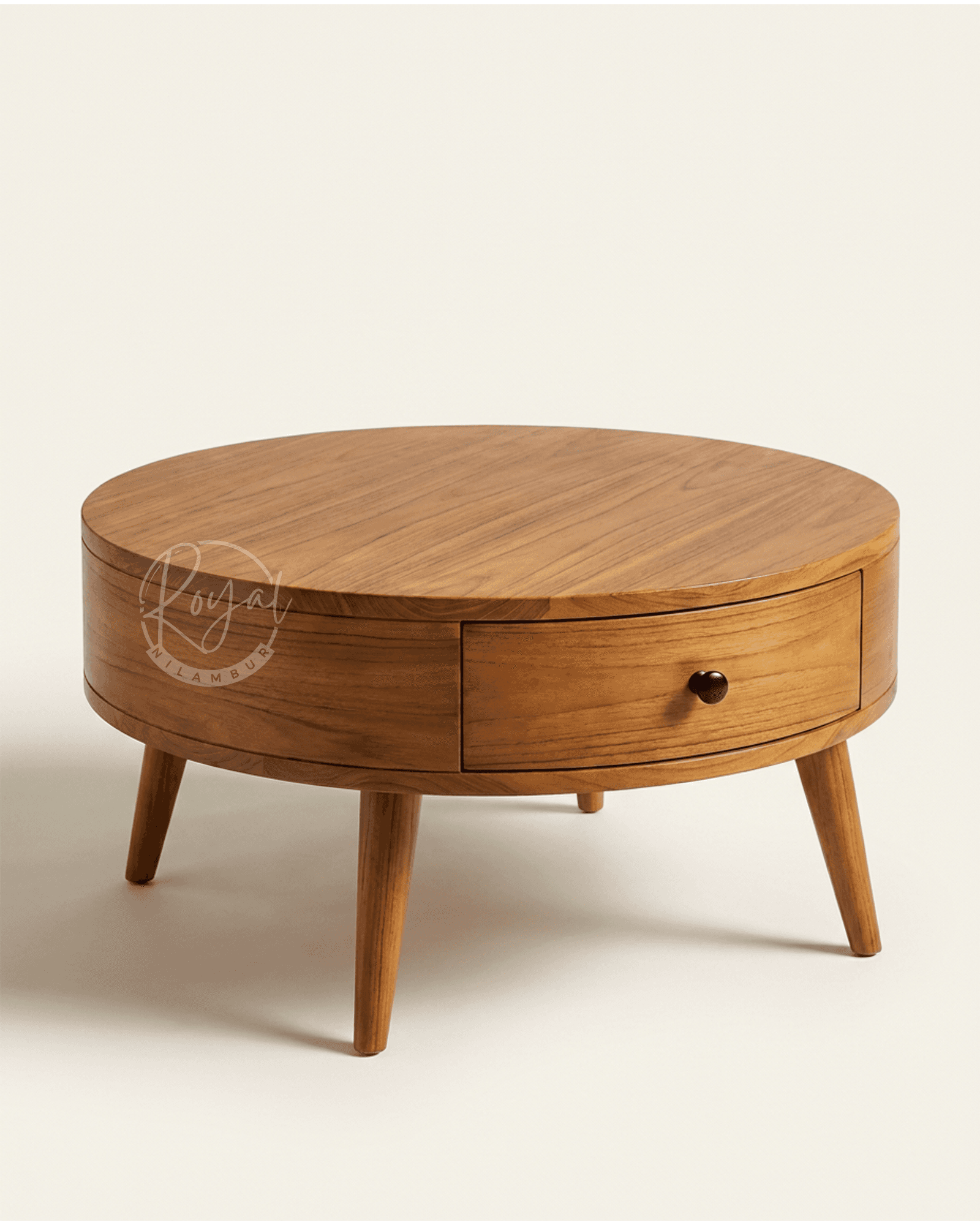
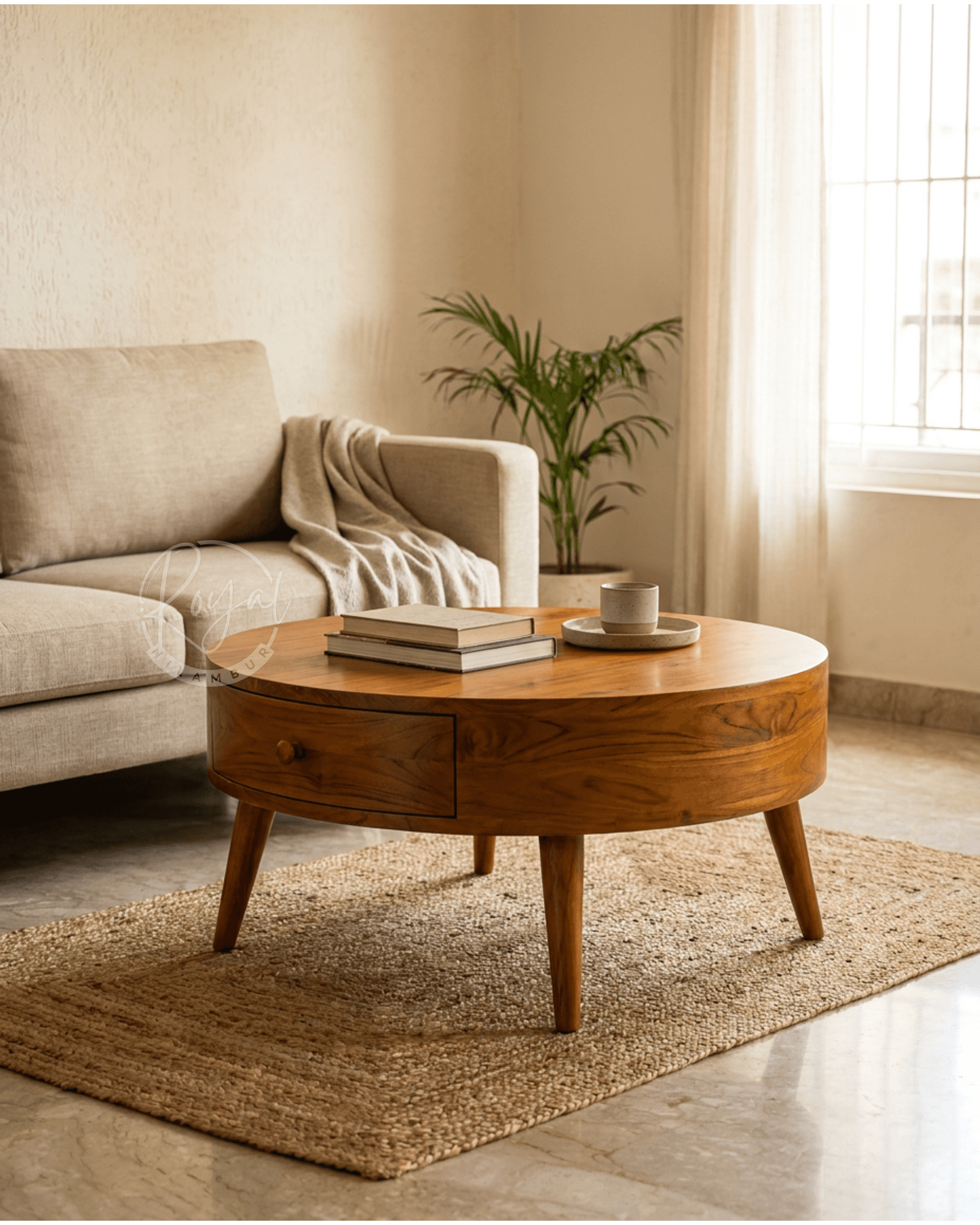

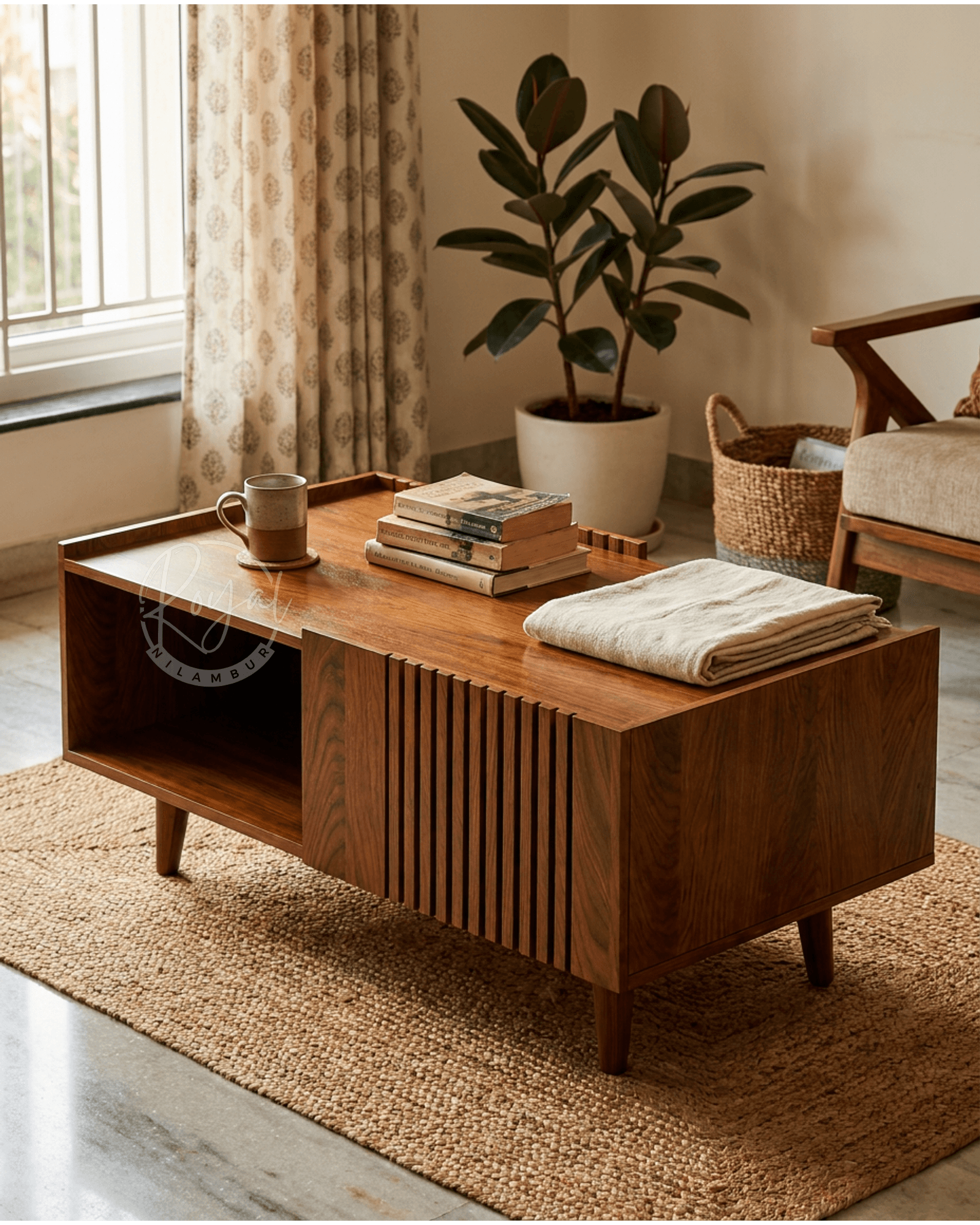
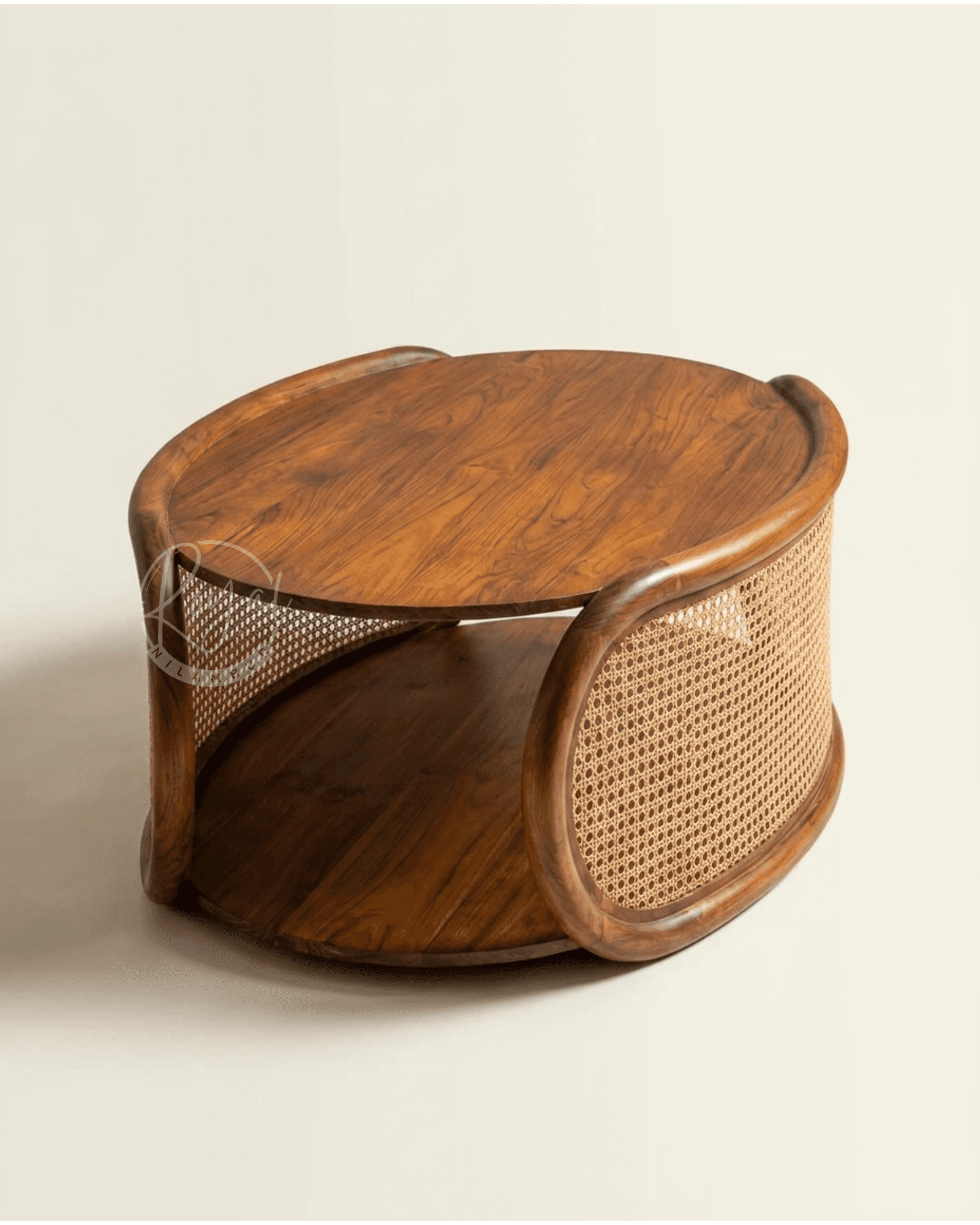
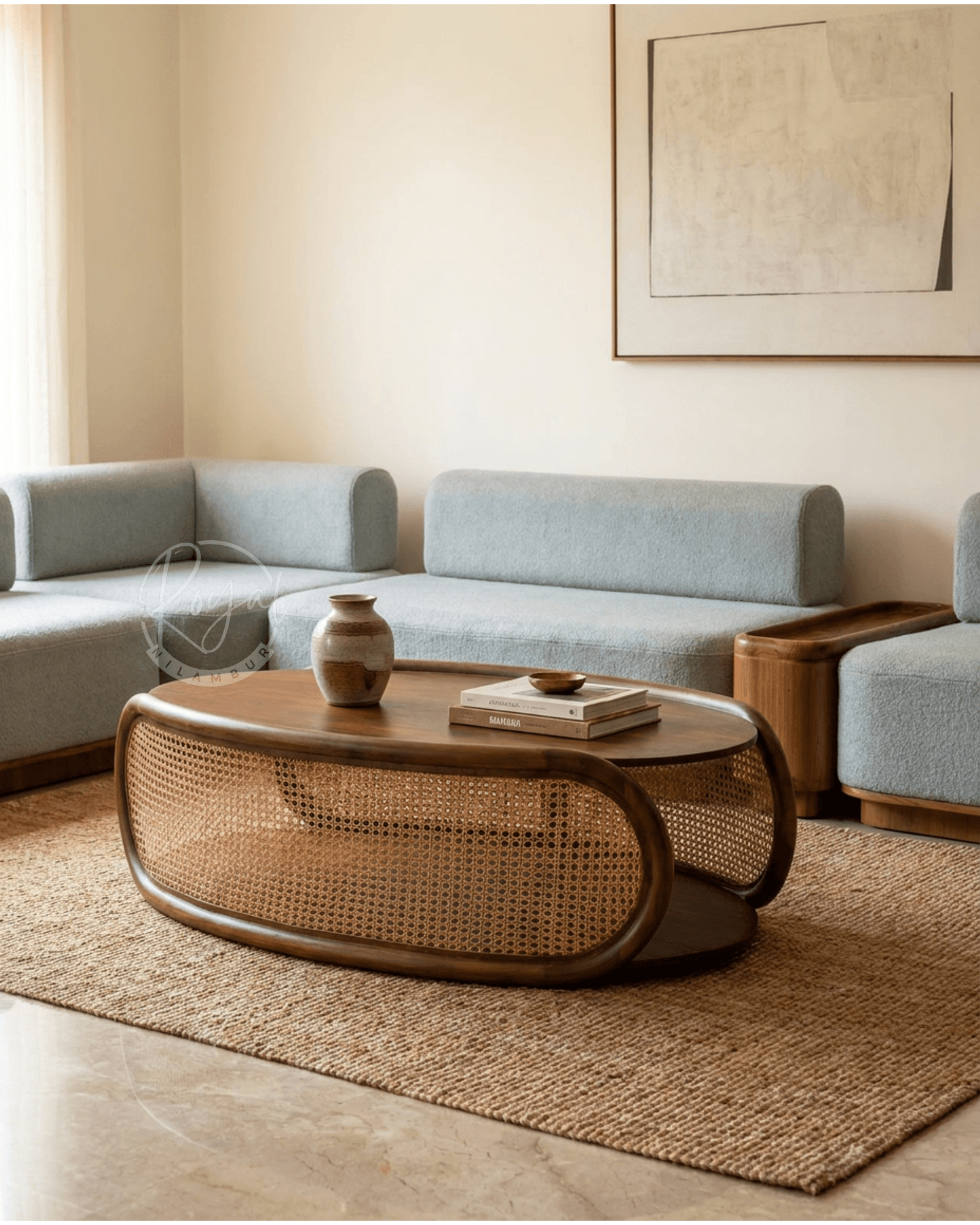
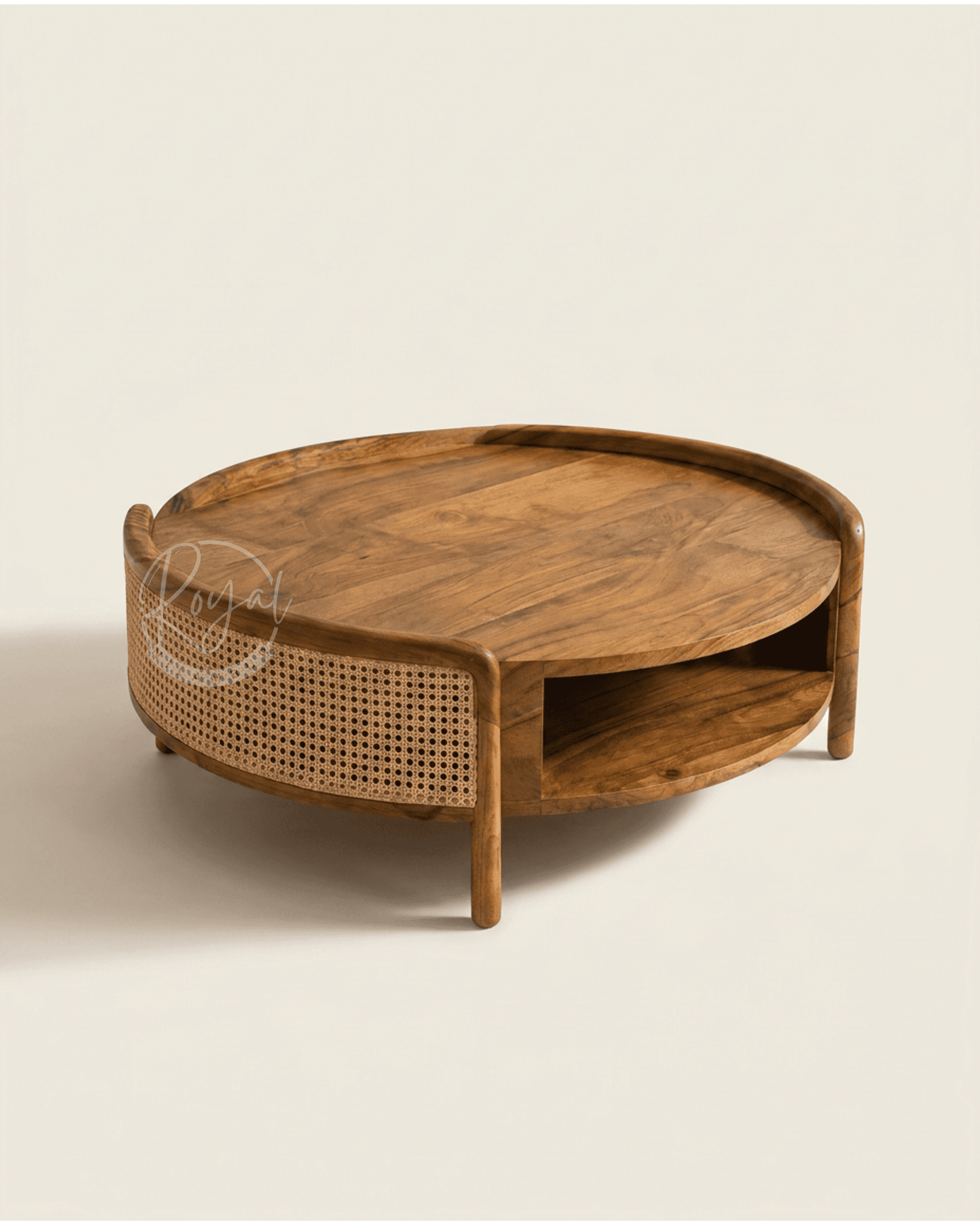
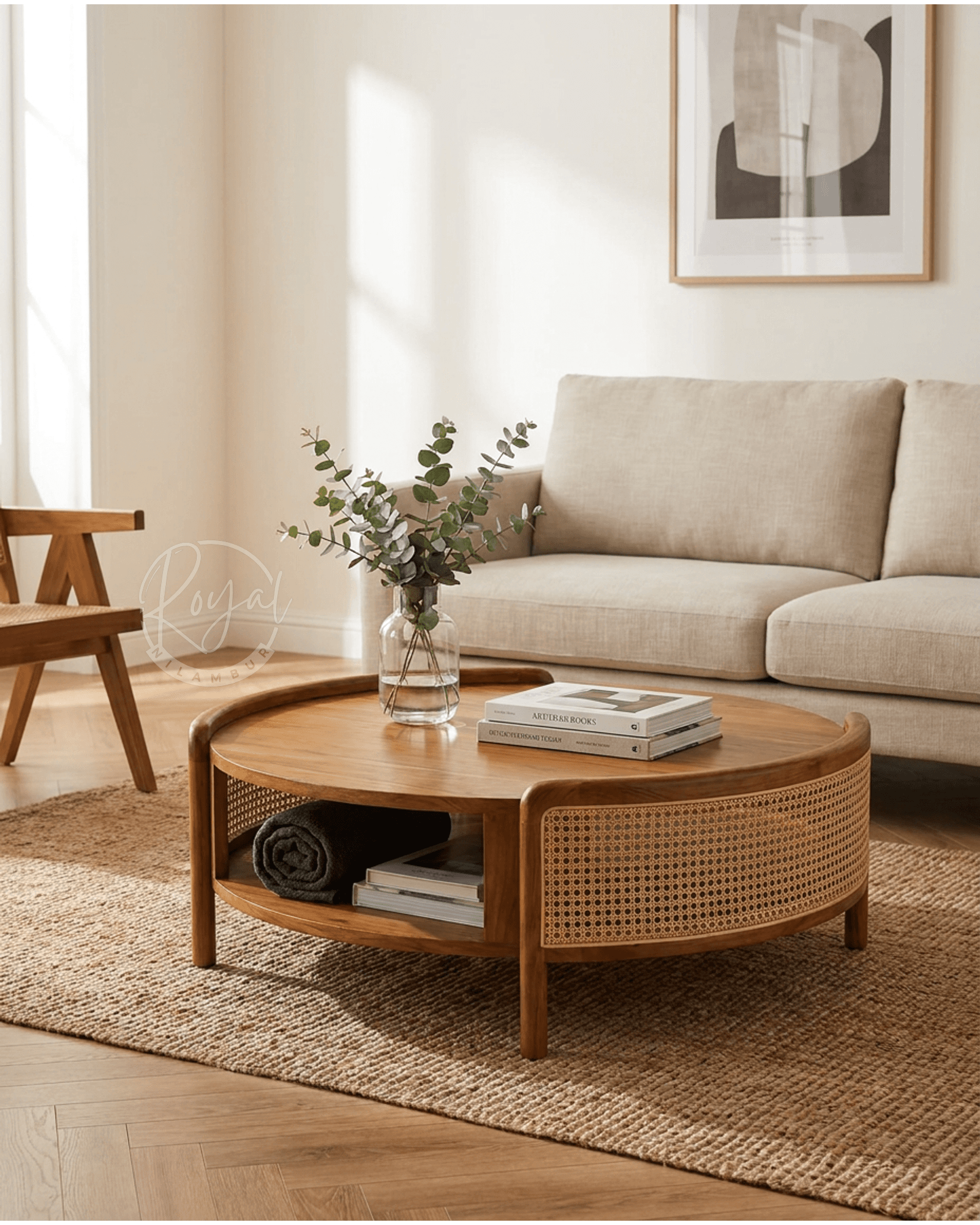
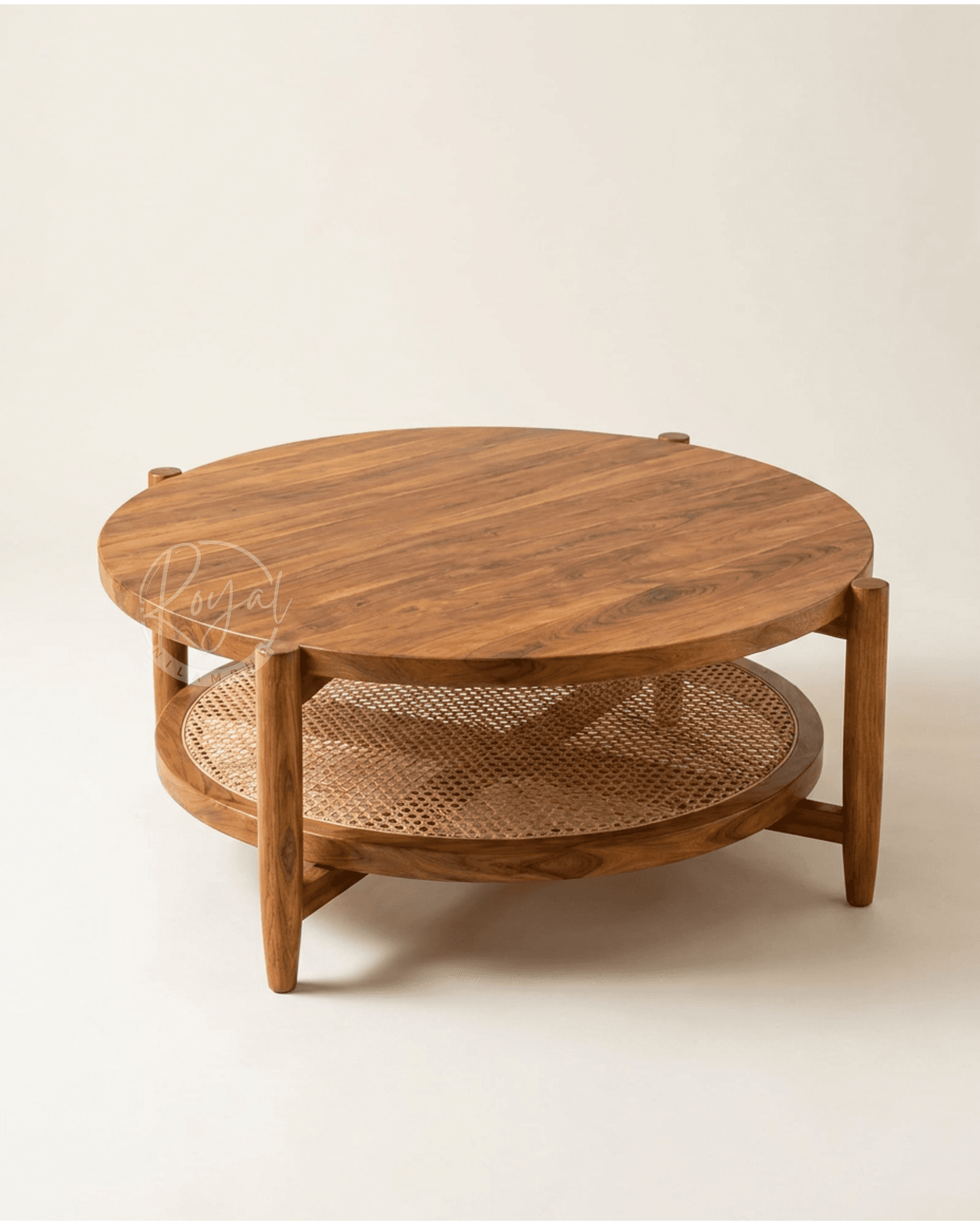
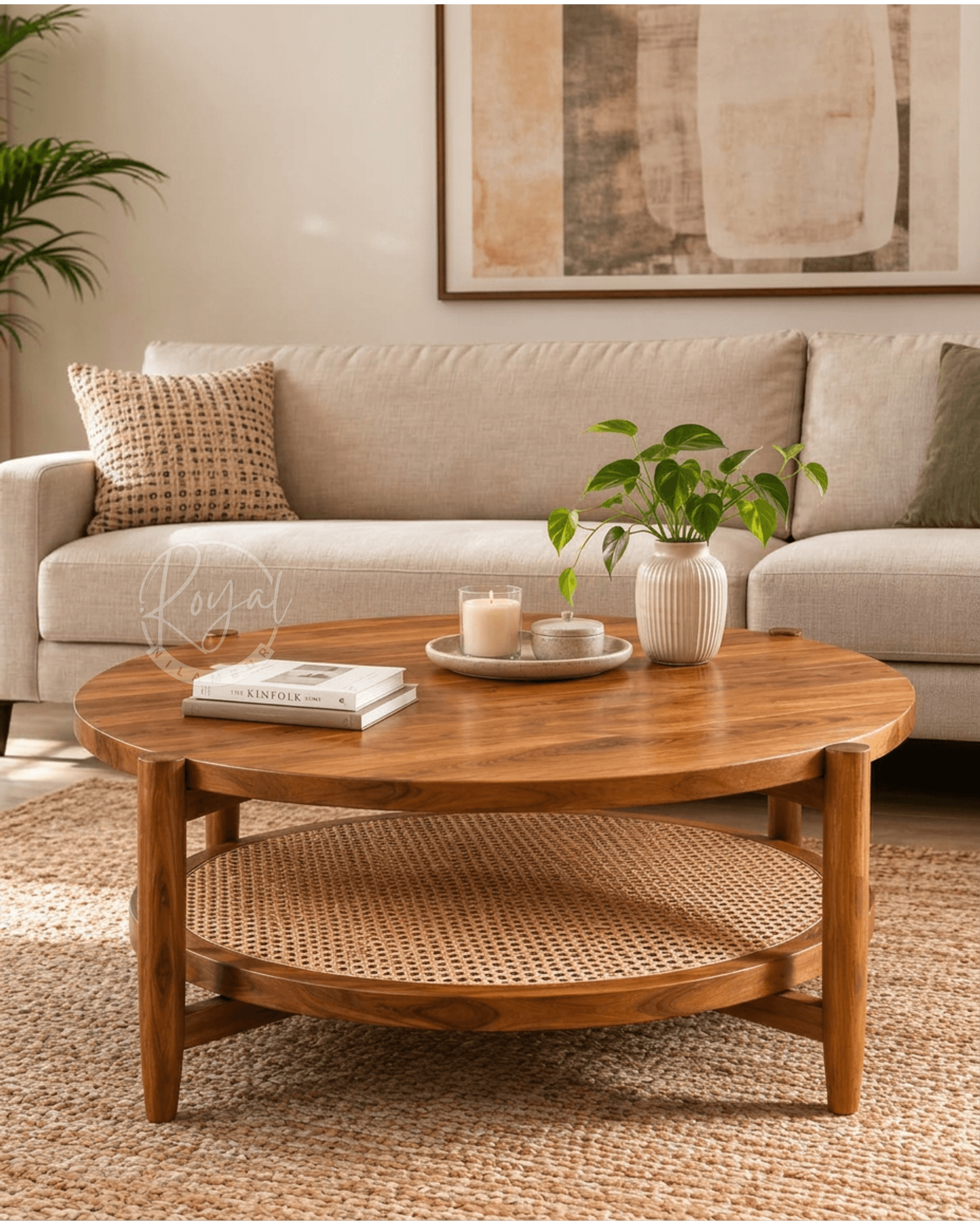
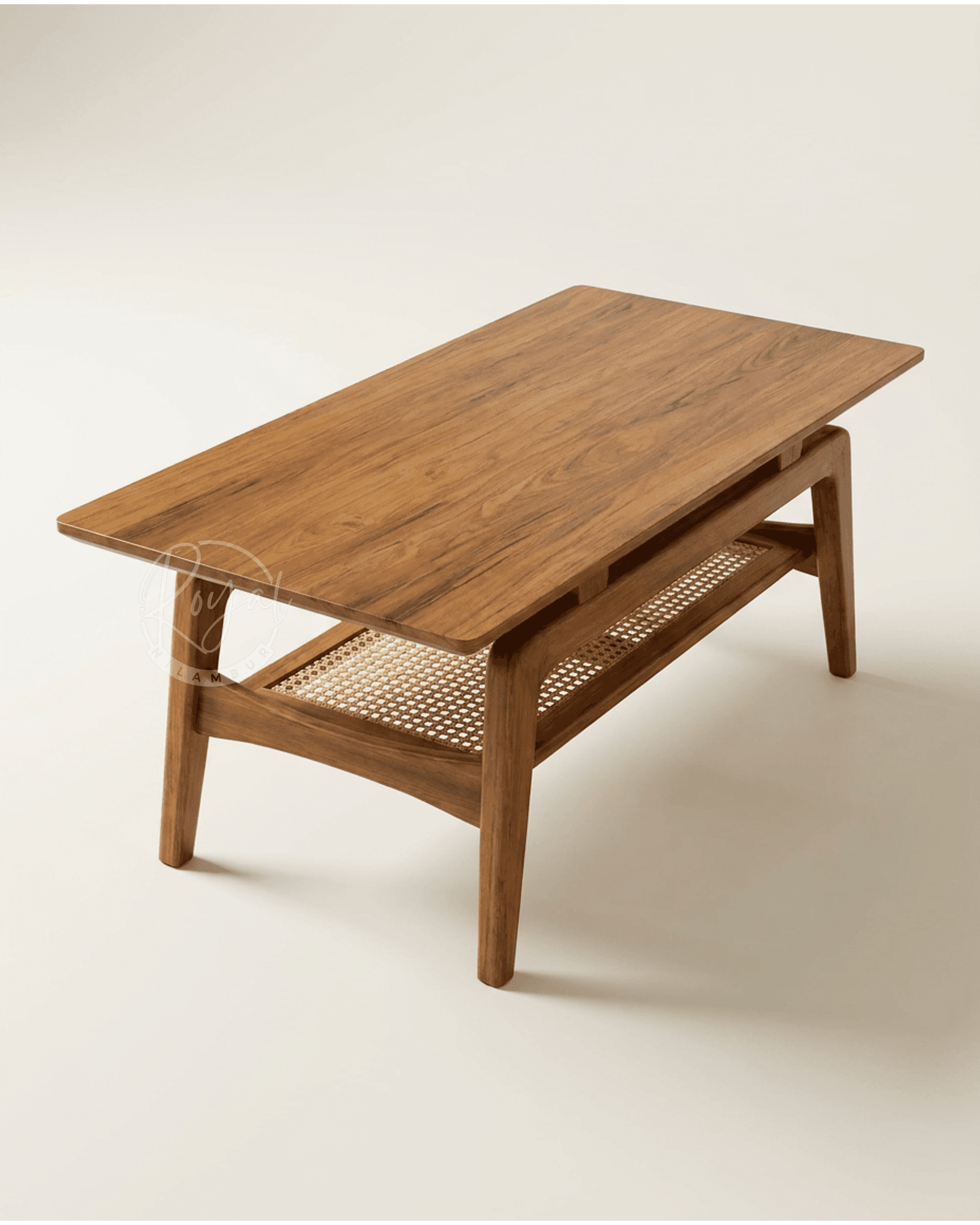
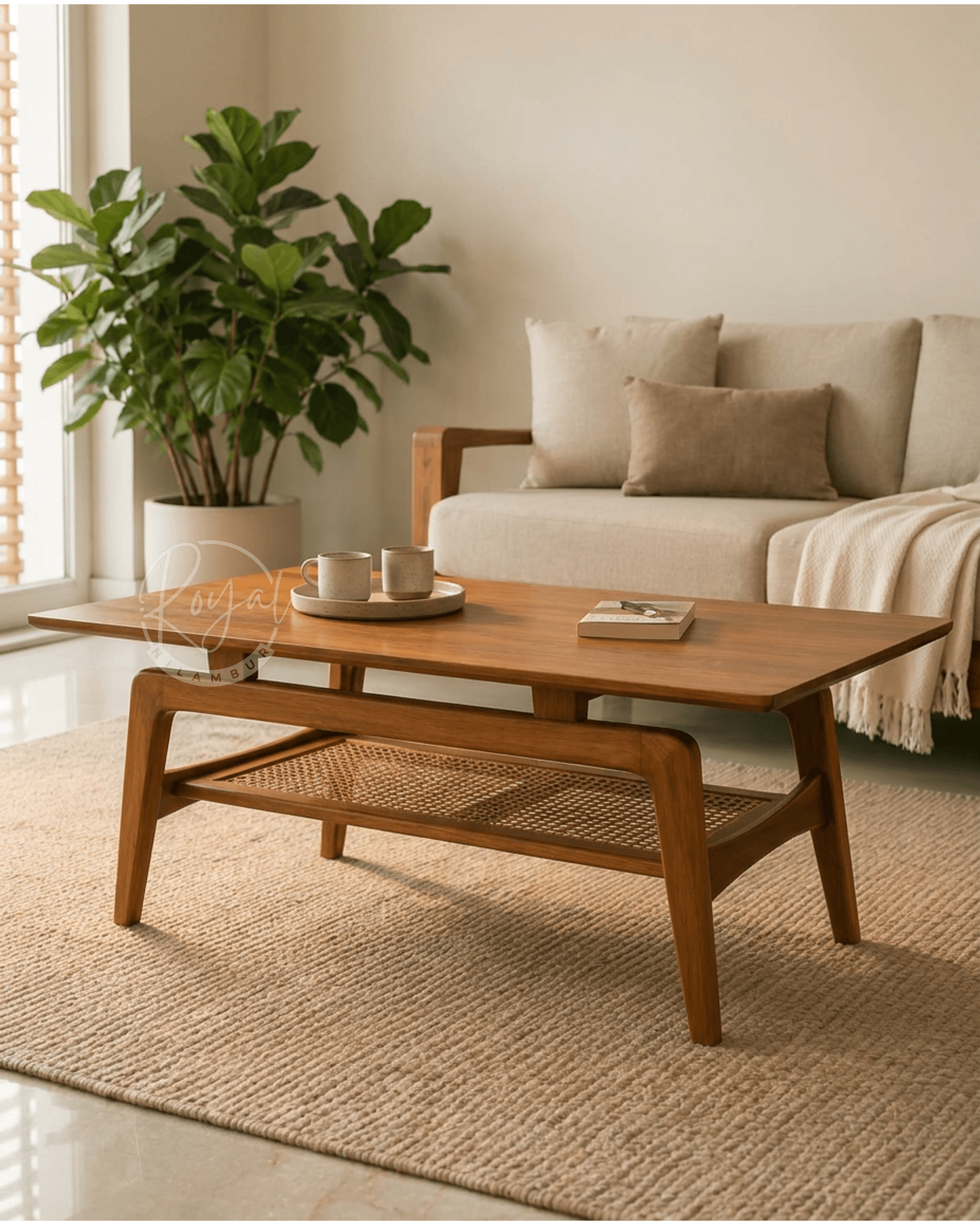
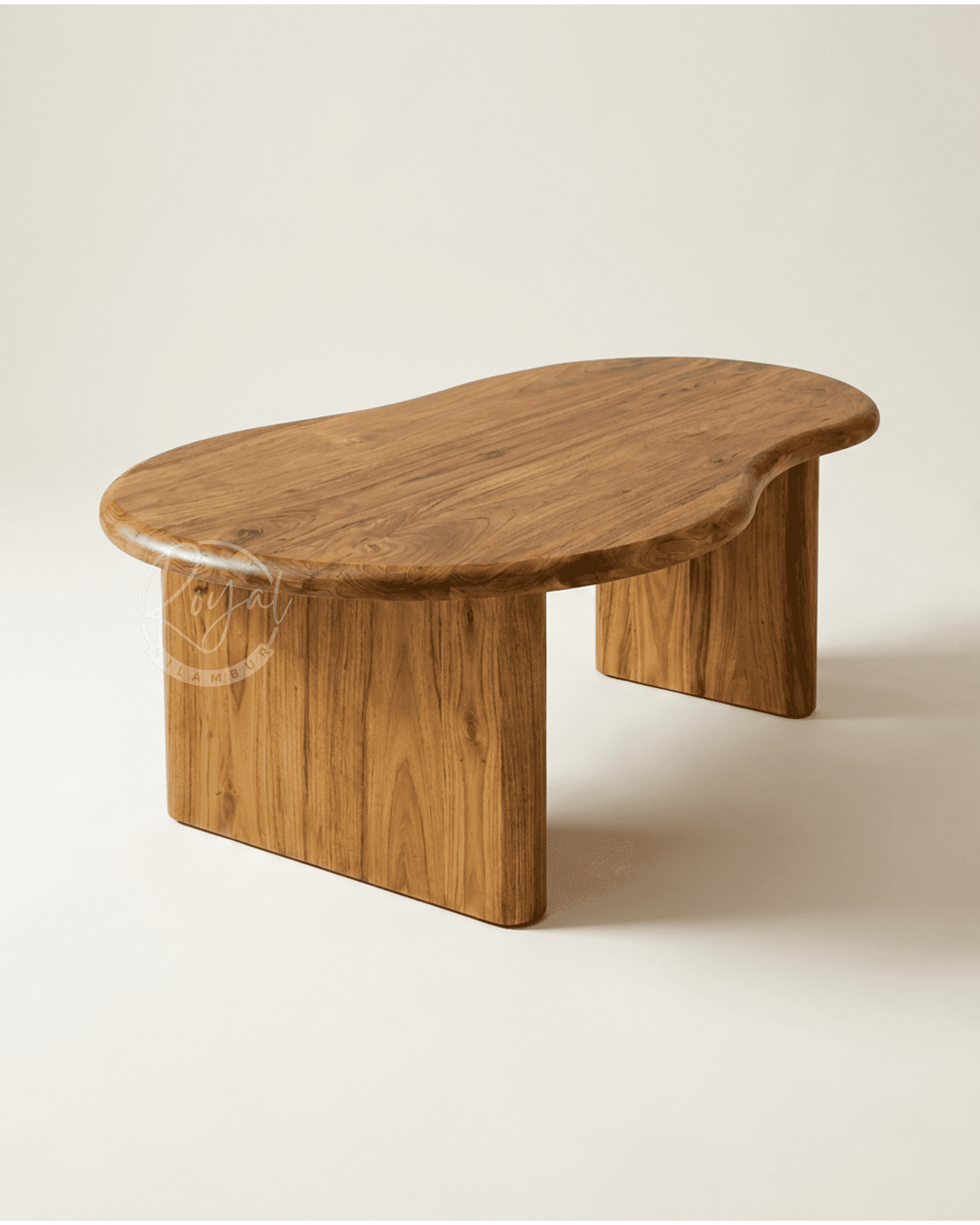
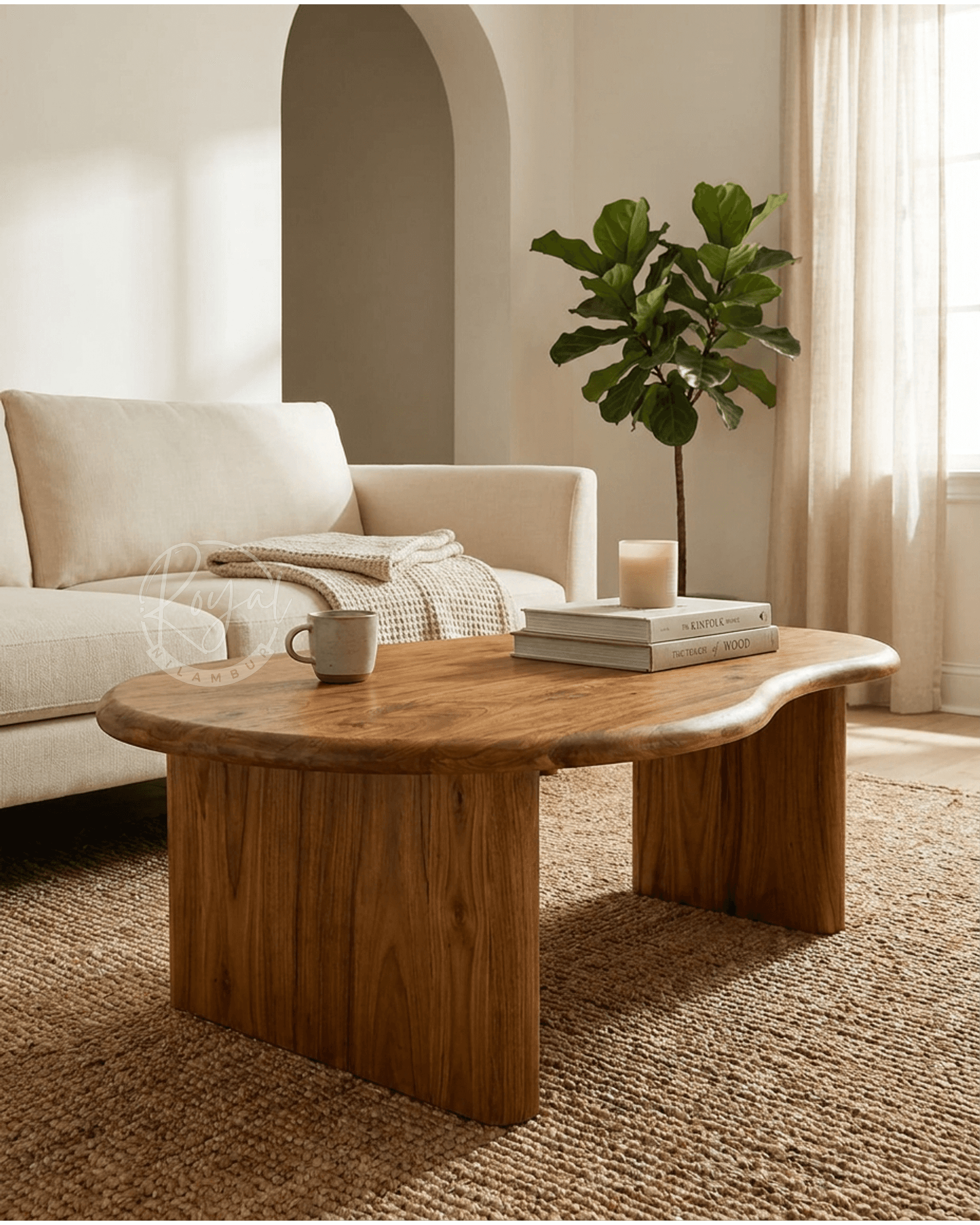


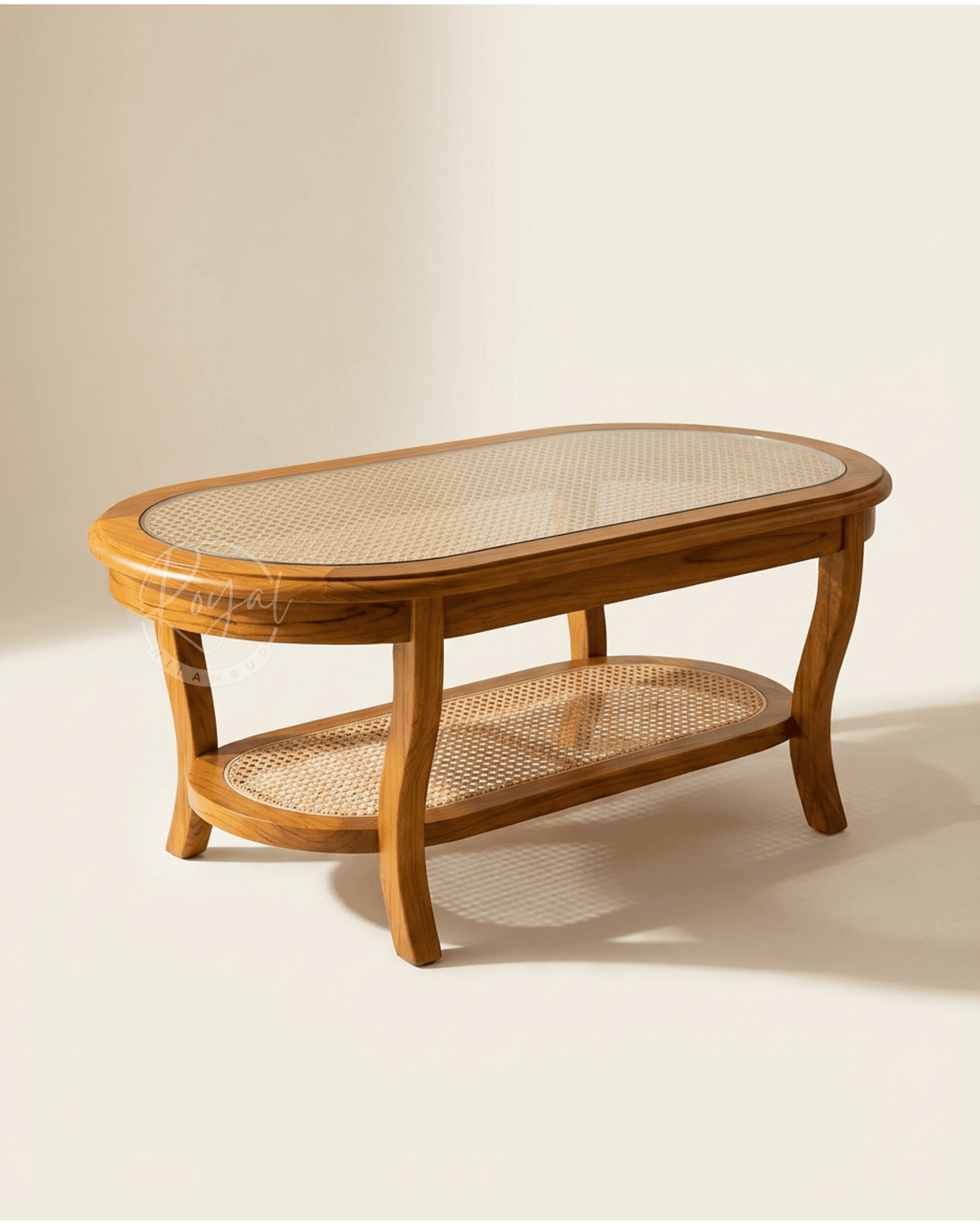
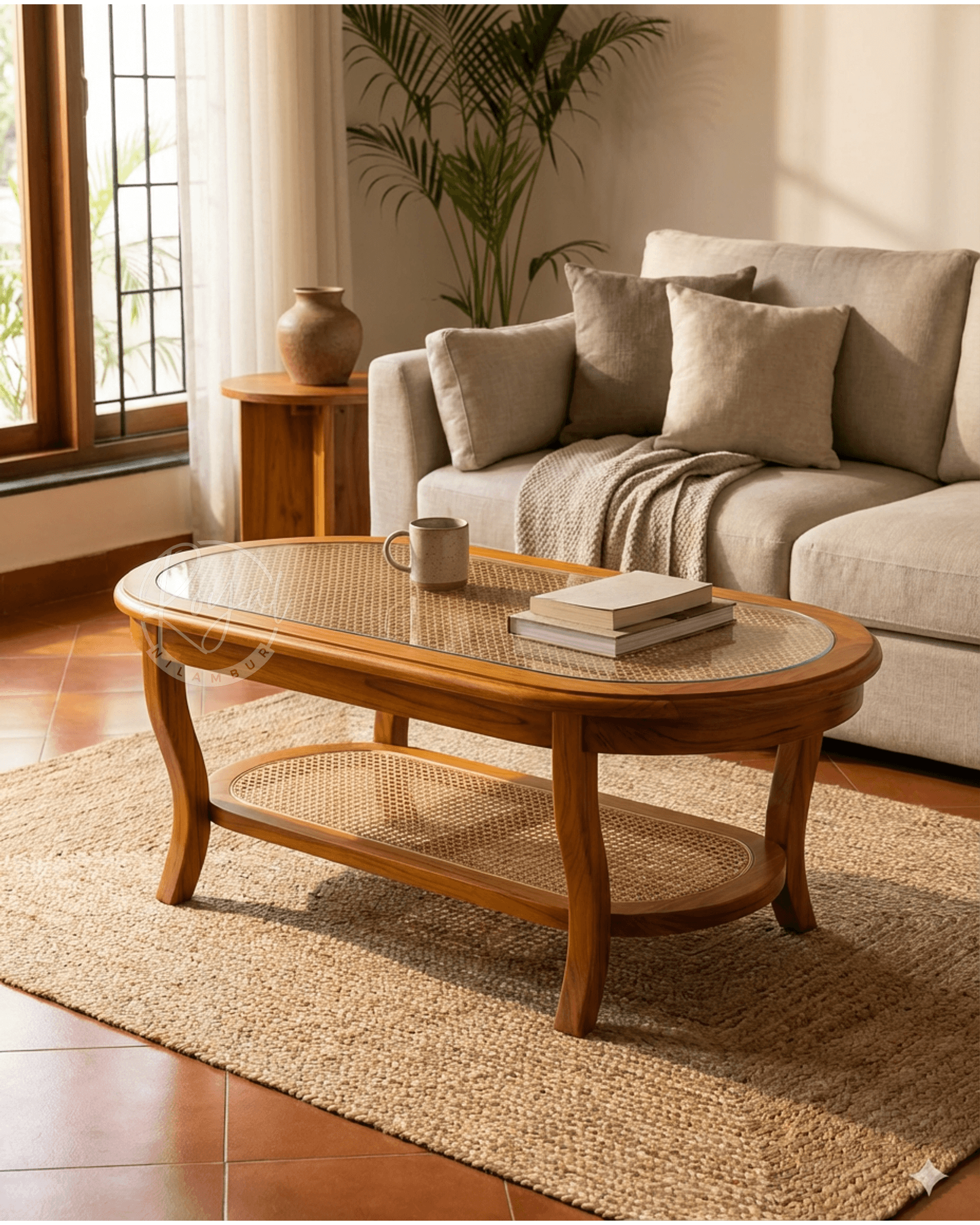


Every piece is made to order
Handcrafted in Nilambur · 10-year structural warranty · Free delivery across South India
A center table sits at the centre of more daily life than almost any other piece of furniture — morning tea, evening conversations, books left open, children doing homework on the floor beside it. Choosing a solid wood center table in genuine Nilambur wild teak means choosing a surface that will not chip at the edges, will not lift at the corners, and will look noticeably better in fifteen years than it does today. Royal Nilambur makes coffee tables for living rooms where furniture is expected to work hard and age honestly.
Most center tables in India are sold with a wood-look finish over MDF or particleboard. The surface holds for three or four years before the veneer begins to bubble near the legs or at the edges where moisture accumulates during monsoon months. A coffee table for living room use in India needs to handle humidity fluctuations, the weight of ceramic chai sets placed daily without coasters, and the occasional sharp edge of a remote control dragged across its surface. Wild teak is one of the few timbers whose hardness — combined with its natural oil content — makes it genuinely suited to this kind of continuous, everyday contact. It does not require a protective lacquer to survive; the wood itself provides the resistance.
Every coffee table we make begins with Nilambur wild teak sourced from Kerala Forest Department depots in Malappuram district — government-regulated, legally procured, and traceable. The timber is kiln-seasoned to 10–12% moisture content before any machining begins. This single step is what prevents the joint gaps and surface warping that appear in furniture made from improperly dried wood after the first monsoon season.
There are dozens of brands selling wooden furniture online in India. Most source timber from plantation teak grown in open plots in Southeast Asia, where fast growth produces wider annual rings, lower density, and significantly less natural oil. Royal Nilambur works exclusively with Nilambur wild teak — forest-grown timber from Kerala's monsoon forests that has been at the centre of India's finest teak woodworking for over 150 years. Our pieces are not manufactured on a production line. Each coffee table is made by craftsmen in Nilambur who have worked this timber their entire careers. When you buy from Royal Nilambur, you are buying a 20–30 year piece, not a five-year one.
Wild teak grown in the forests around Nilambur — in the heavy-monsoon conditions of Malappuram district — develops annual rings far more tightly than plantation-grown timber. This translates directly into surface hardness that matters for a coffee table: a cup set down firmly, a book spine dragged across the surface, a child leaning their full weight on one corner. The wood handles this without marking. For homes in Hyderabad or Pune, where air conditioning creates significant daily humidity cycling between dry interiors and humid outdoor air, kiln-seasoning to the correct moisture content before machining ensures the timber has already stabilised — there is no residual movement left to cause joint failure or surface checking.
The right coffee table size depends on your sofa configuration and the clearance you need for comfortable movement around it. As a reliable starting point: the table's length should be roughly half to two-thirds the length of your sofa, and the top surface should sit within 5 cm of your sofa seat height — typically 40–45 cm from the floor for standard Indian sofas.
A rectangle center table suits most straight sofas and L-shaped configurations — it aligns visually with the sofa's lines and provides the largest usable surface. Round tables work well in compact rooms where sharp corners create a movement hazard, and in rooms where the sofa arrangement is curved or informal. A small size center table is the right choice for rooms under 12 by 14 feet, where a full-sized table would reduce walkway clearance below the comfortable 90 cm minimum. For an L-shaped sofa with a center table, ensure the table width does not crowd the inner corner of the L — leave at least 35–40 cm of clear floor on each side. Solid teak coffee tables are heavier than particleboard alternatives; plan your room layout before delivery.
Nilambur wild teak grows slowly in Kerala's monsoon forest conditions, producing tighter annual rings, higher natural oil content, and greater surface hardness than plantation teak grown in open plots. For a coffee table — a surface in constant daily contact — this translates into genuine scratch resistance and a material that develops a richer patina rather than degrading. Plantation teak, and certainly non-teak hardwoods, do not offer the same combination of oil content and density.
A solid wood top is more forgiving in daily use — it can be lightly sanded and re-oiled if it develops surface marks over years, which glass cannot. Glass tops are visually lighter and suit smaller rooms, but the glass itself chips at the edges, the metal or wood frame often degrades faster than the glass, and cleaning fingerprints becomes a daily task. A solid Nilambur teak top requires only an occasional wipe with a lightly oiled cloth and improves in appearance with age.
Aim for a table length that is roughly half to two-thirds of your sofa's length. The table height should be within 5 cm of your sofa seat height — most Indian sofas sit at 40–45 cm, so a coffee table at 40–42 cm is comfortable for reaching without leaning. Leave a minimum of 35–40 cm of clear floor between the table edge and the sofa, and 90 cm between the table and any opposing furniture or wall to maintain comfortable walkway clearance.
With normal use and occasional maintenance — an oil application once or twice a year — a Nilambur wild teak coffee table will remain structurally sound and aesthetically rich for 25–30 years. The mortise and tenon joints at the leg connections do not loosen with humidity cycling the way dowel or bolt joints do. Royal Nilambur backs every piece with a 10-year warranty, but the material life of wild teak far exceeds that.
Very little. Wipe the surface with a dry or slightly damp cloth for daily cleaning. Once or twice a year, apply a thin coat of teak oil or raw linseed oil with a soft cloth, leave it for 20–30 minutes, and buff off the excess — this replenishes the surface and keeps the grain looking rich. Avoid placing hot vessels directly on the surface without a mat. No polishing, no chemical treatments, no re-finishing required for years of normal household use.
Each Royal Nilambur coffee table is made after your order is placed — not pulled from a warehouse shelf. The 4–6 week lead time exists because the timber is worked by hand in our Nilambur workshop, jointed correctly, and finished properly before it leaves. A center table this well-made is a single purchase that serves your living room for the next two or three decades. Browse our current designs, and reach out if you have questions about sizing, finish, or customisation — we are glad to help you find the right piece.